Open the case file at the step you are on.
Each guide answers one procedural question. Use the stage labels to move from pre-filing through service, evidence, hearing, post-judgment collection, and defendant response.
Before Filing
Confirm the claim, court, timing, and practical fit before you pay a filing fee
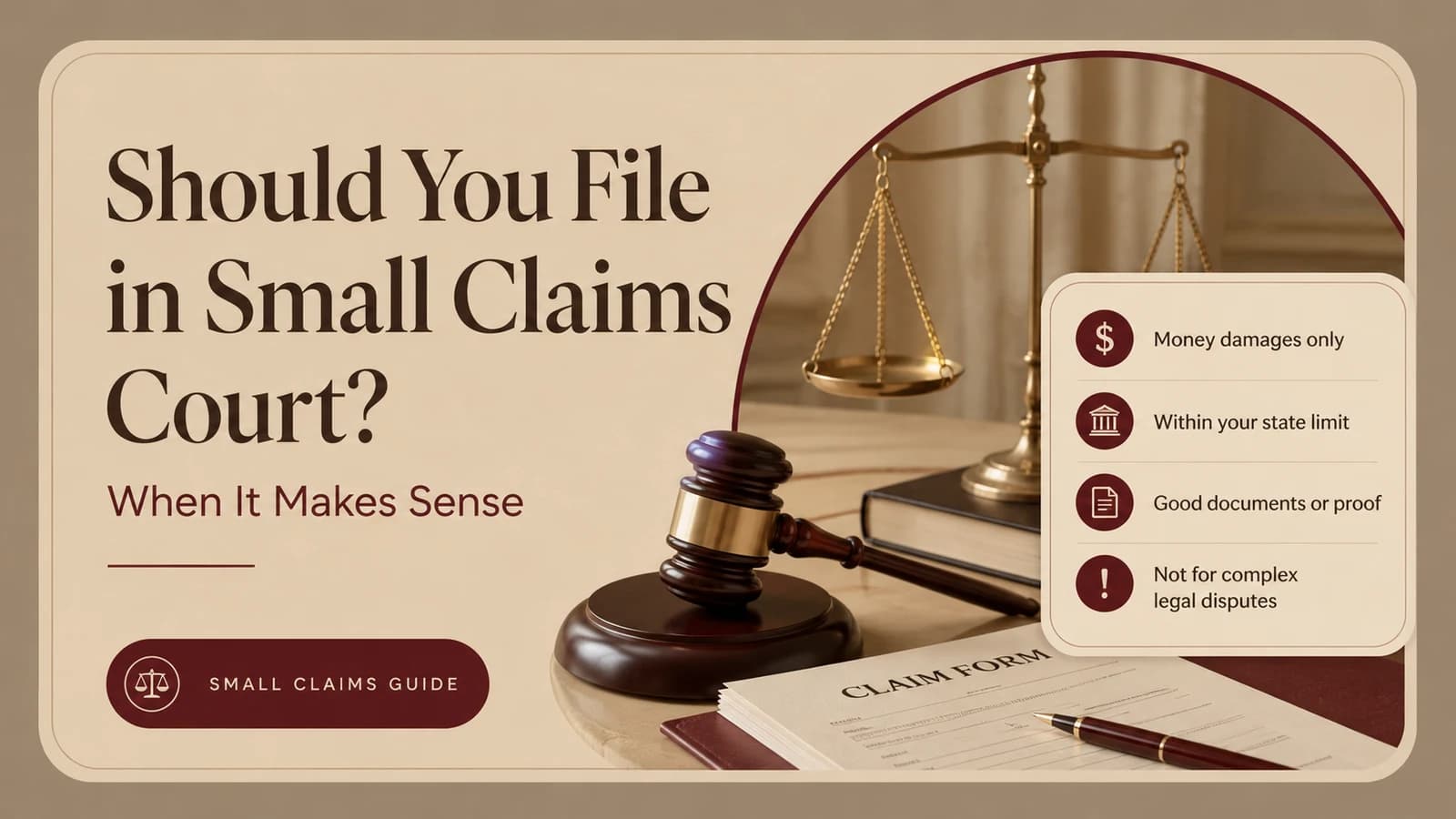
Is Small Claims Court the Right Place for Your Dispute?
Small claims is usually designed for relatively modest money disputes, but the label alone does not tell you whether your case belongs there.
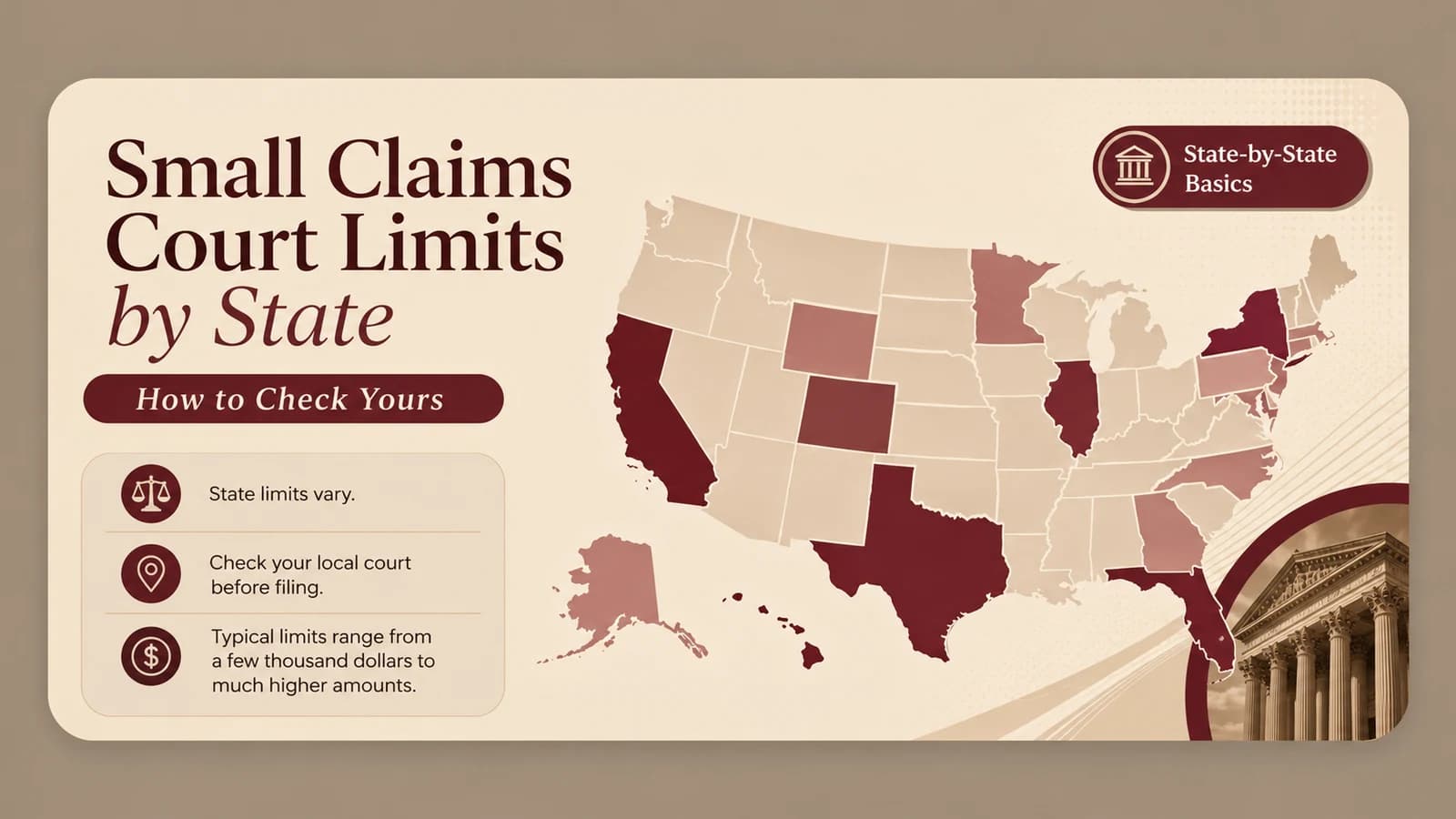
How Small Claims Dollar Limits Work Across States
There is no single U.S. small-claims dollar limit; the ceiling and any special restrictions come from the state and court rules that apply to the filer and claim.
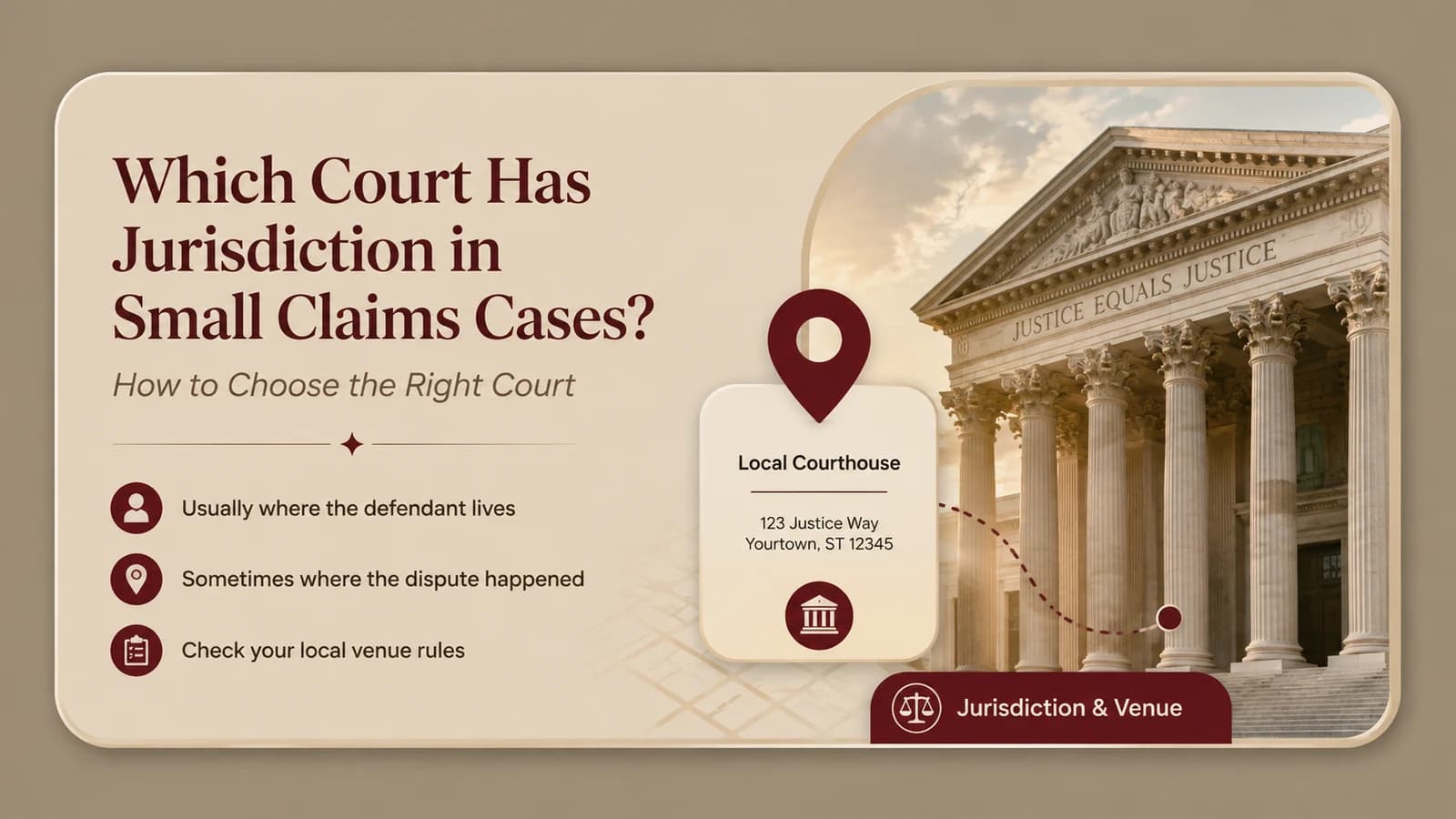
How to Find the Right Small Claims Court to File In
Choosing the court has two parts: confirm that small claims is the right court type, then confirm the geographic place where the case may be filed.
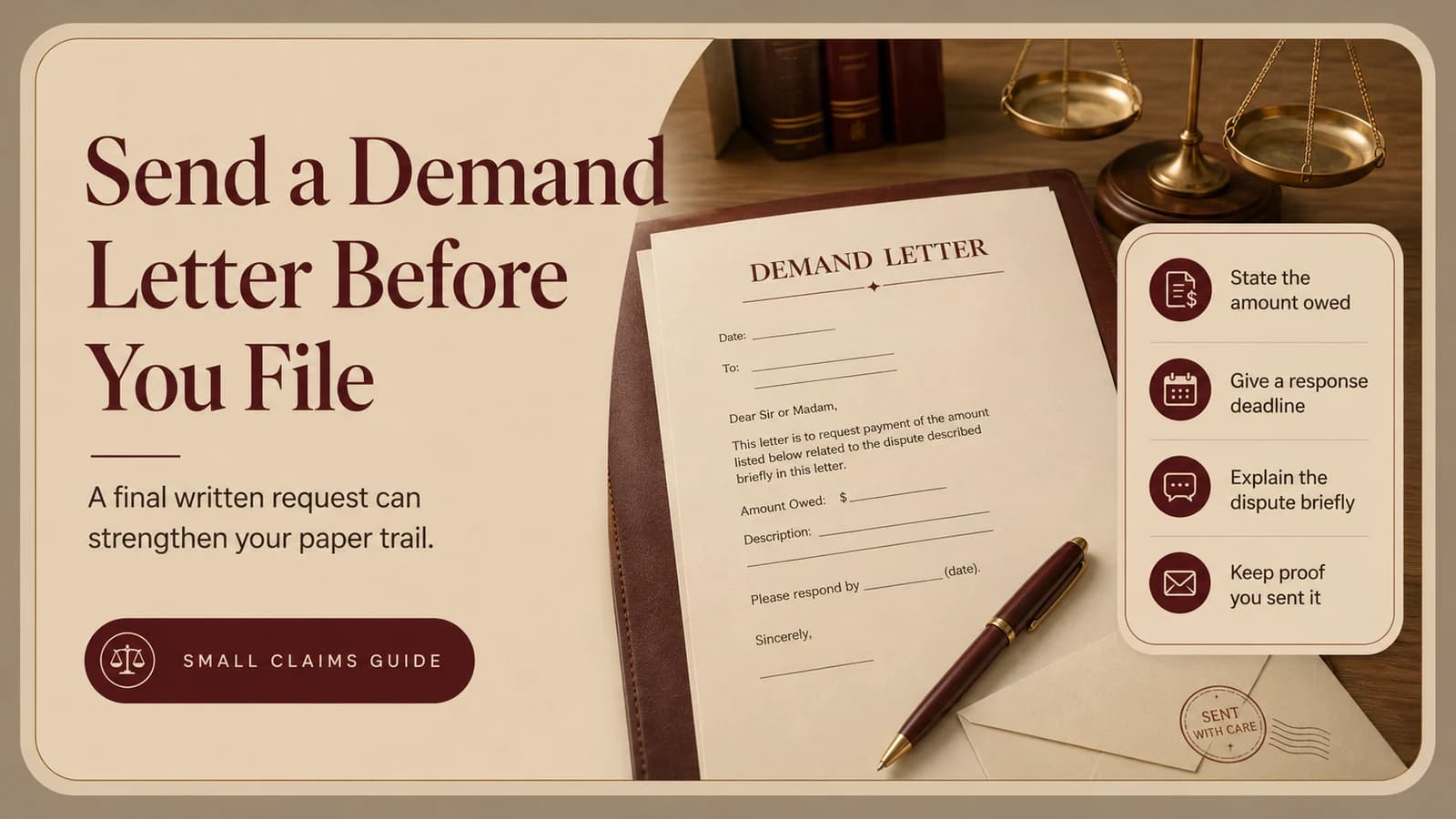
Should You Demand Payment Before Filing a Small Claim?
Asking the other side for payment before filing is often useful and may be required in some small-claims systems or claim types.
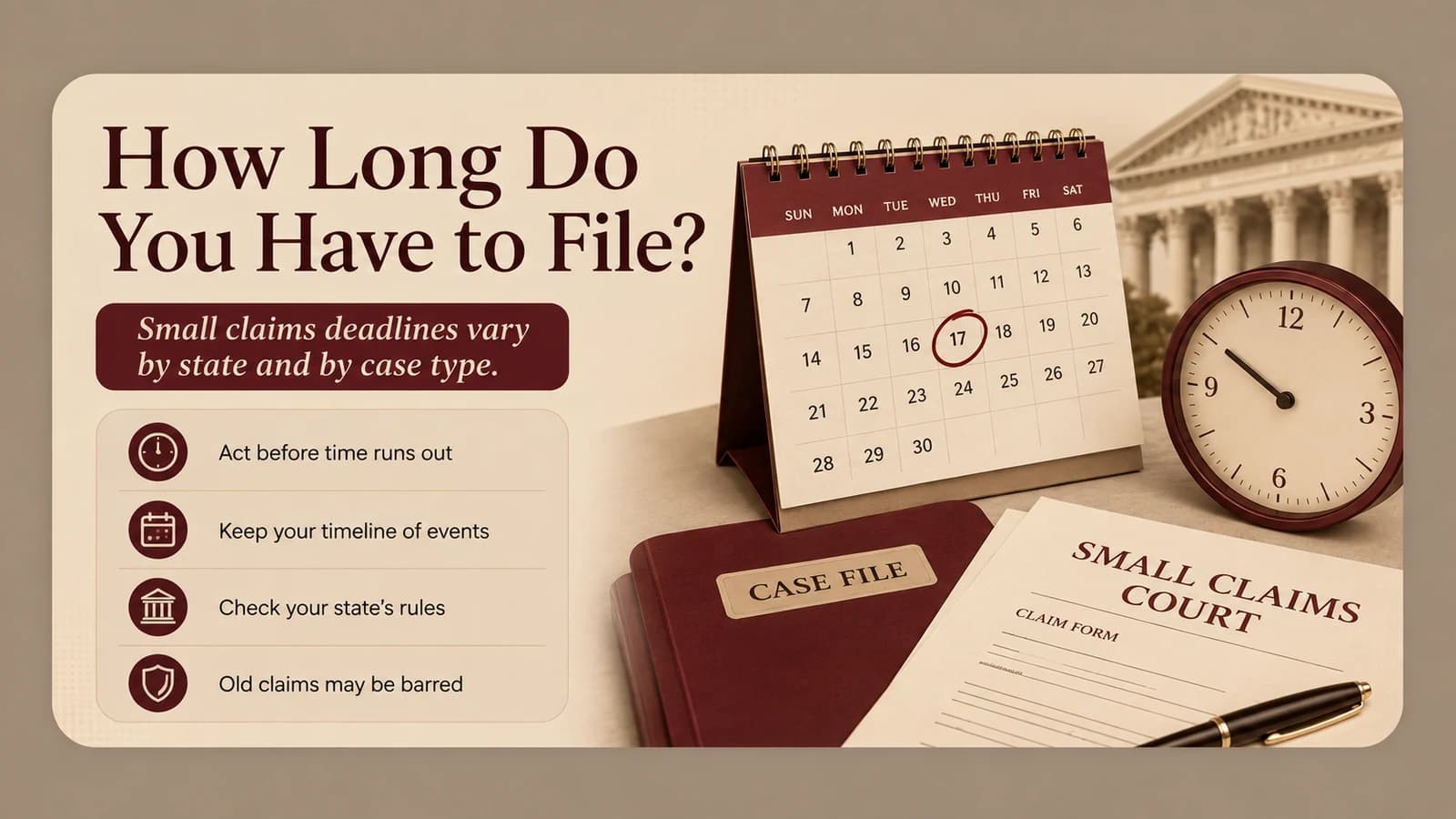
How to Check the Filing Deadline for a Small Claim
The filing deadline usually comes from the law governing the underlying claim, not from a universal small-claims deadline.
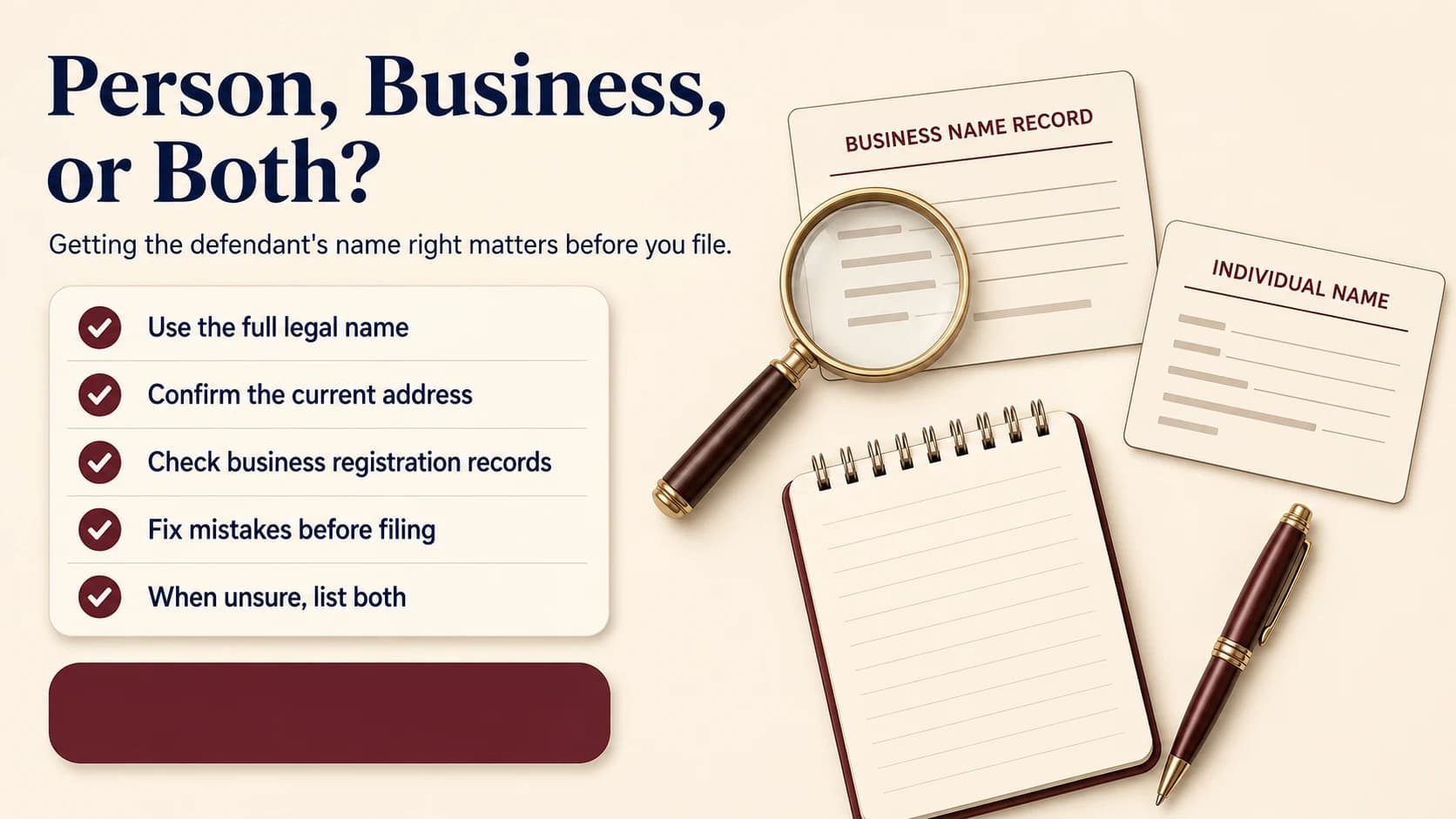
Who Exactly Should You Sue: Person, Business, or Both?
The name on the claim should identify the legal person or entity that is responsible, not merely a storefront, nickname, social-media handle, or brand.
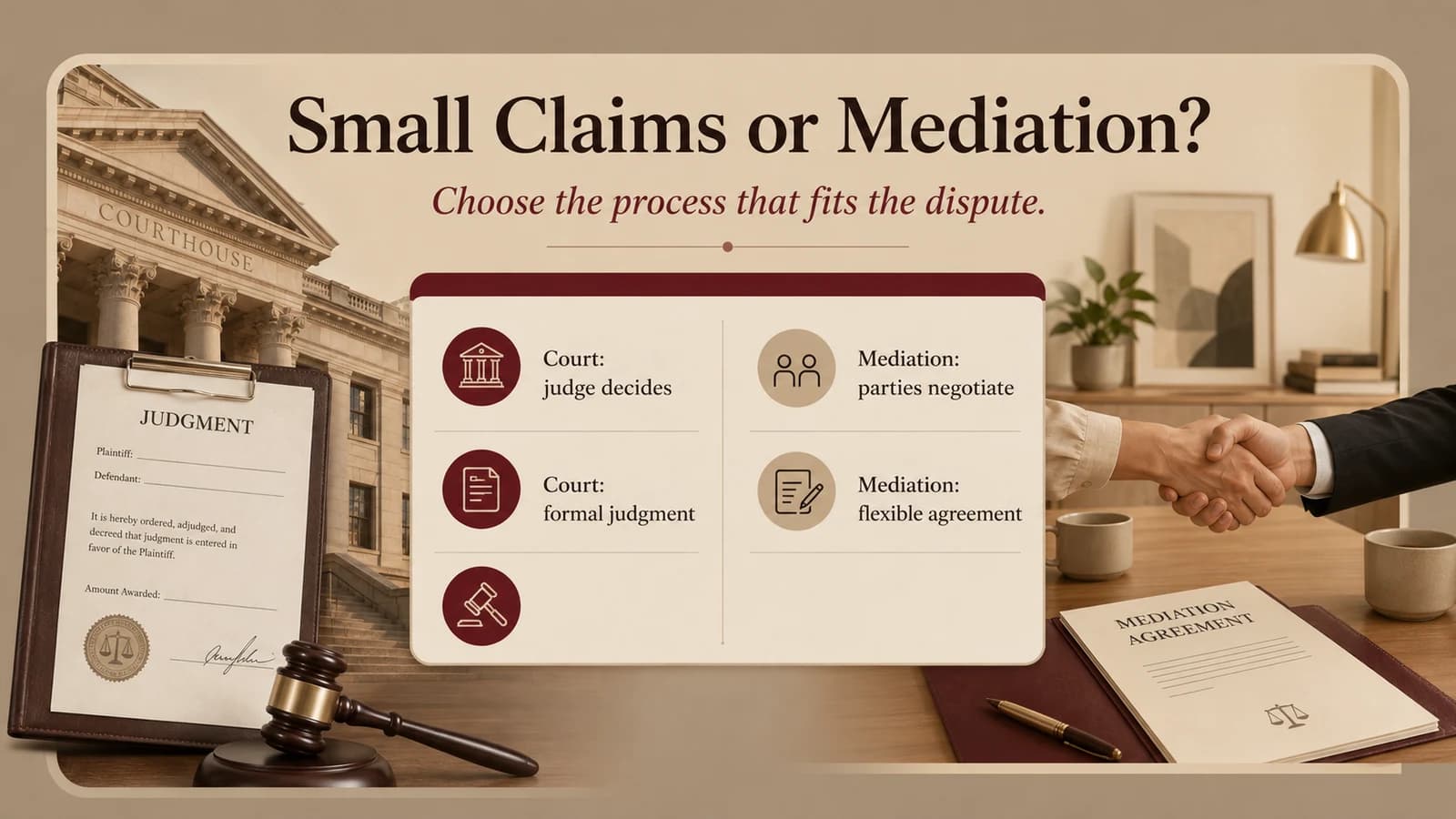
Small Claims or Mediation: How the Processes Differ
Small claims and mediation solve disputes in different ways.
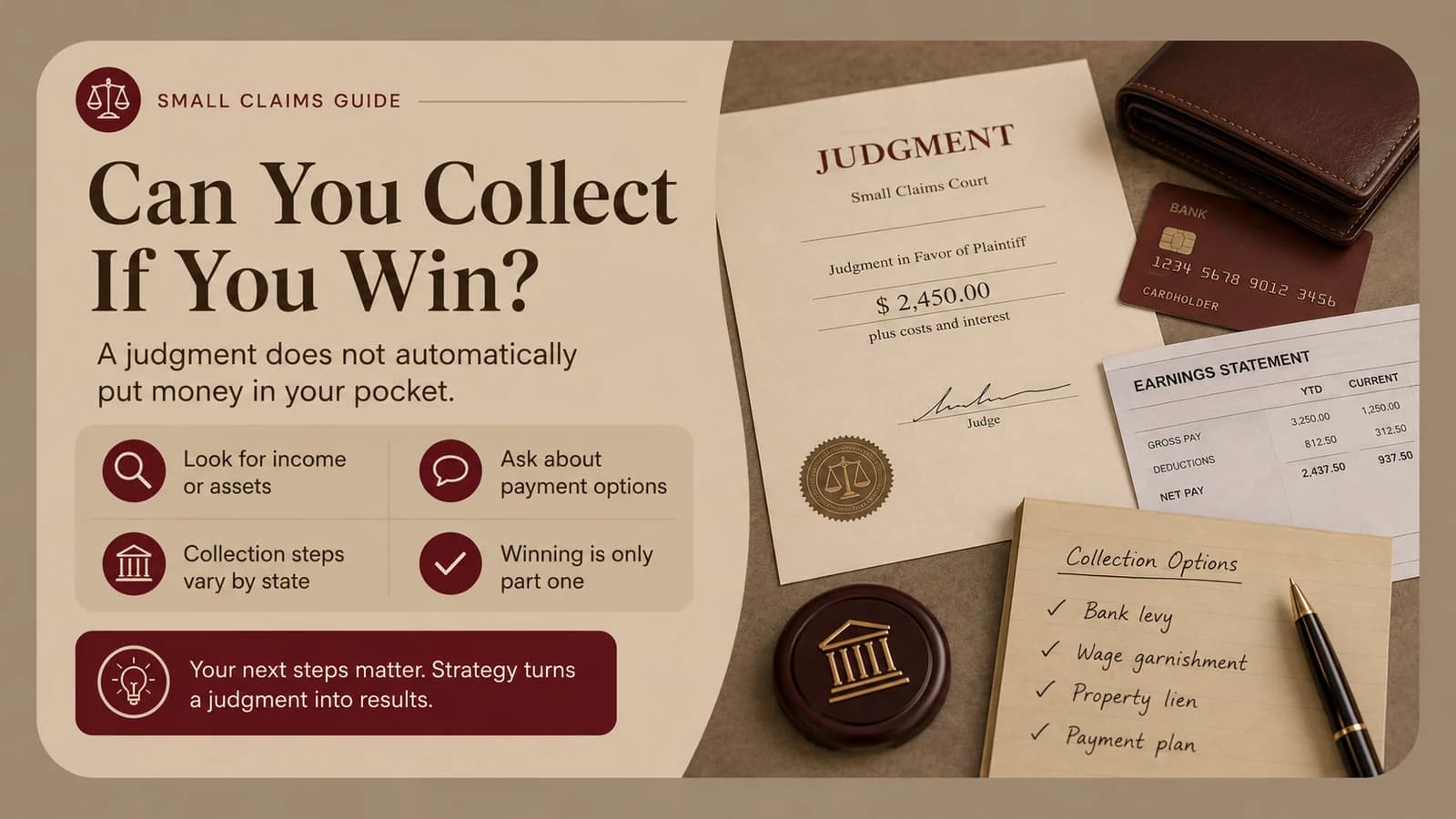
Before You Sue, Ask: Can a Judgment Actually Be Collected?
A judgment is a legal determination that money is owed; it is not an automatic transfer of money.
Filing the Case
Turn the dispute into a clean court filing with the correct party names and local forms
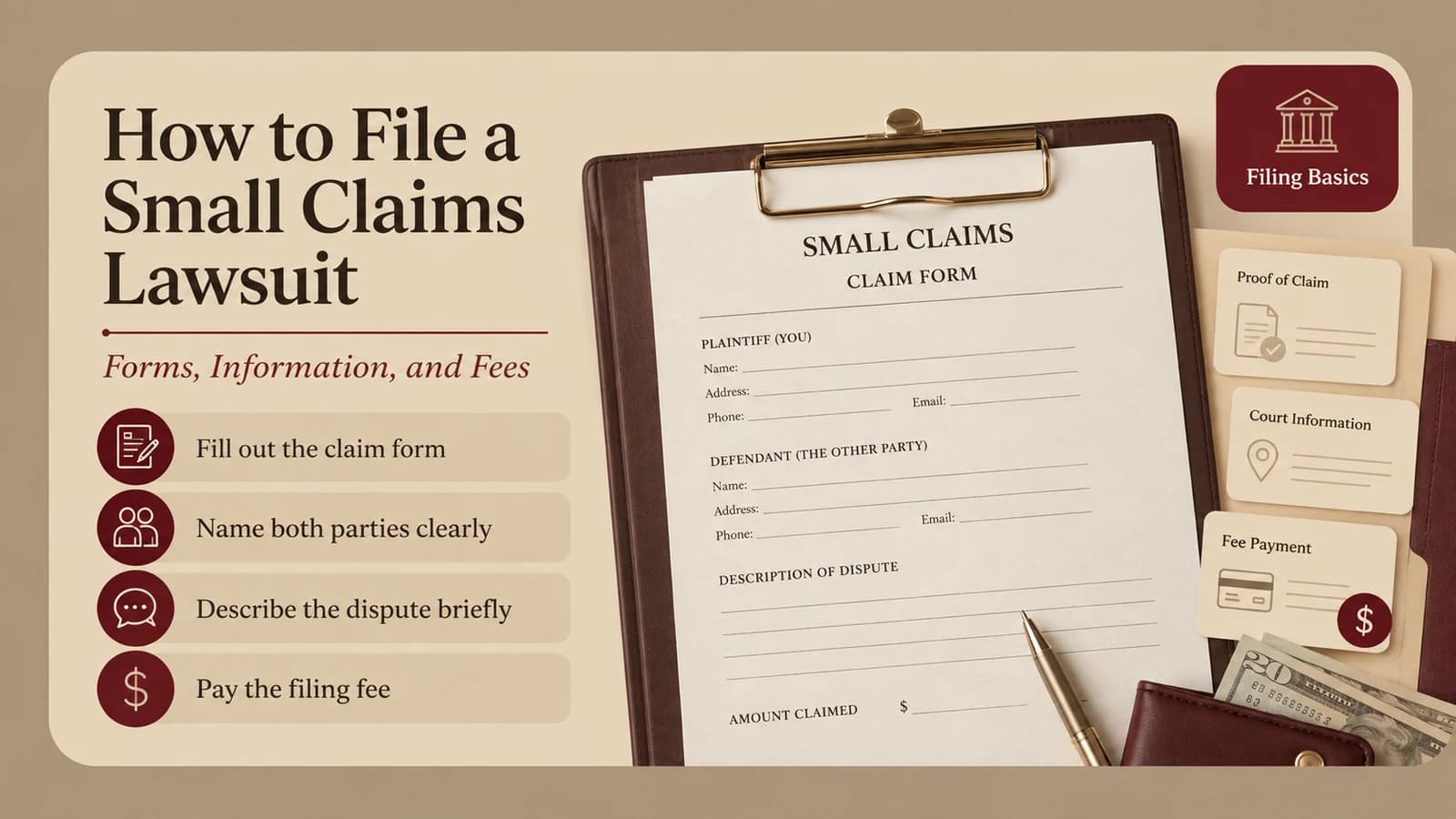
What Information Usually Goes on a Small Claims Complaint?
A small-claims complaint usually asks for the parties, the amount sought, a short explanation of what happened, and facts showing why the chosen court is proper.
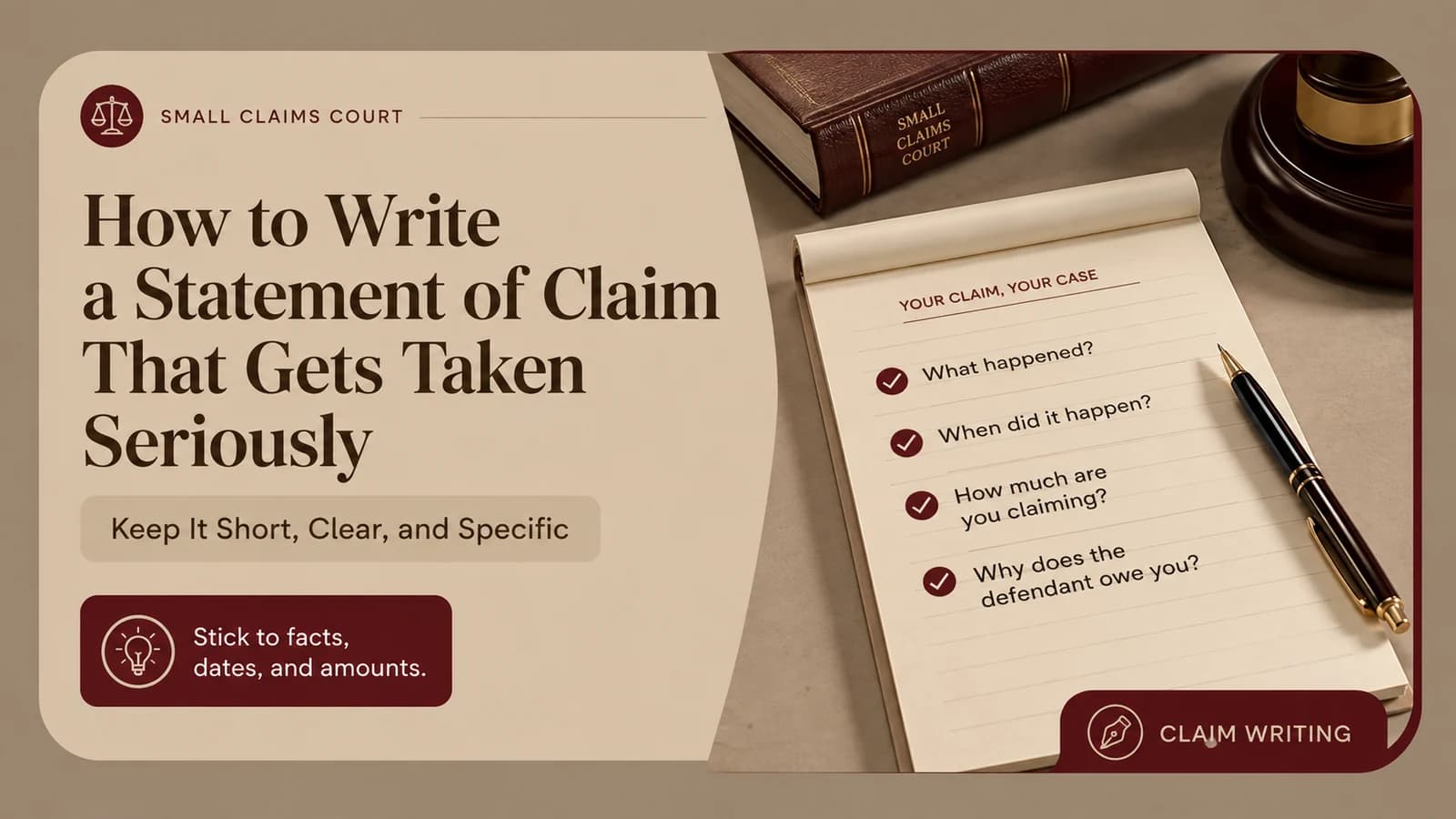
How to Write a Short, Clear Statement of Your Small Claim
The claim statement should make the dispute easy to understand quickly.
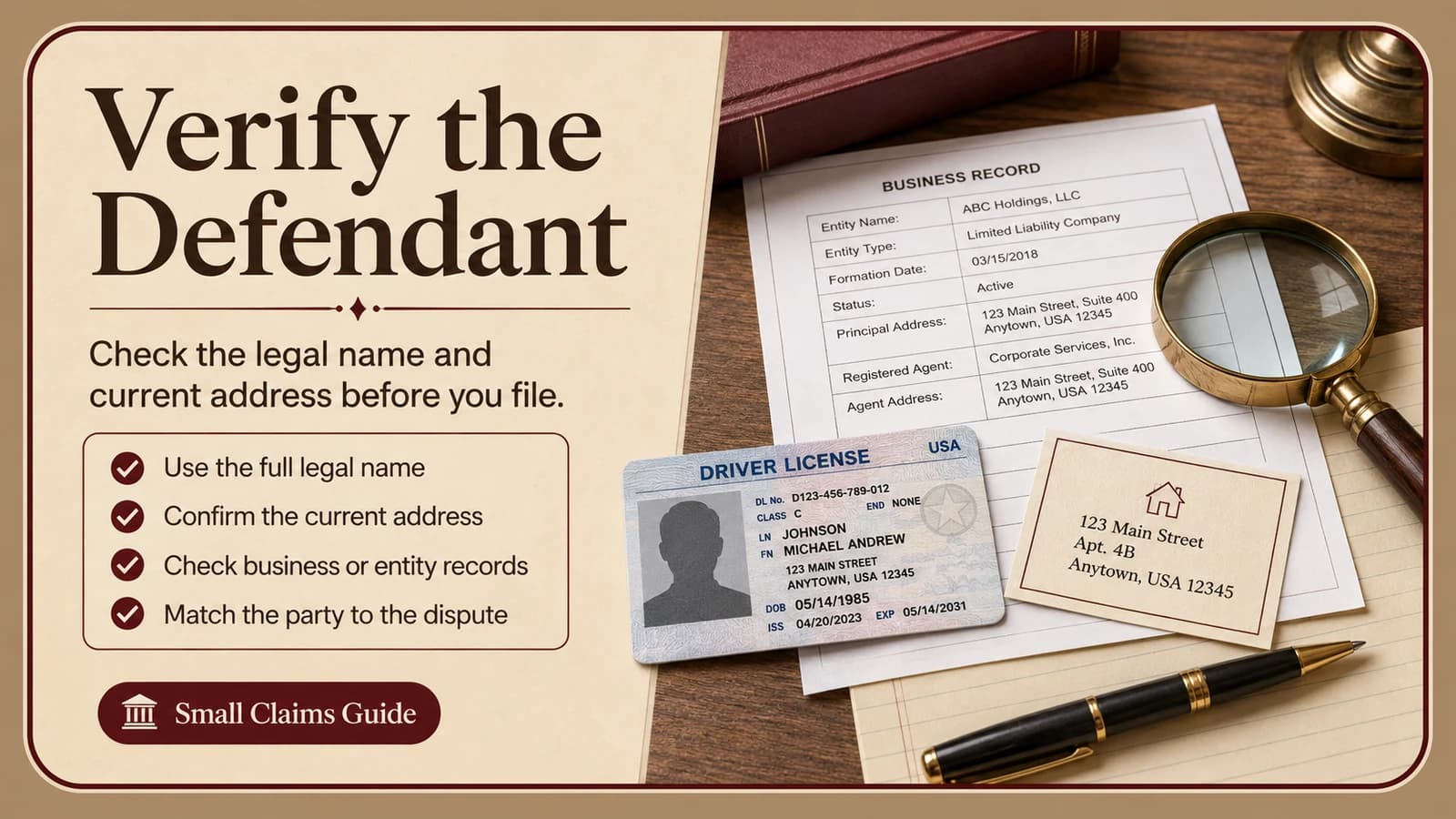
How to Verify a Defendant’s Legal Name and Address
Verify the defendant’s legal name and a usable service address before filing, because the complaint and later service steps depend on identifying the correct person or entity.
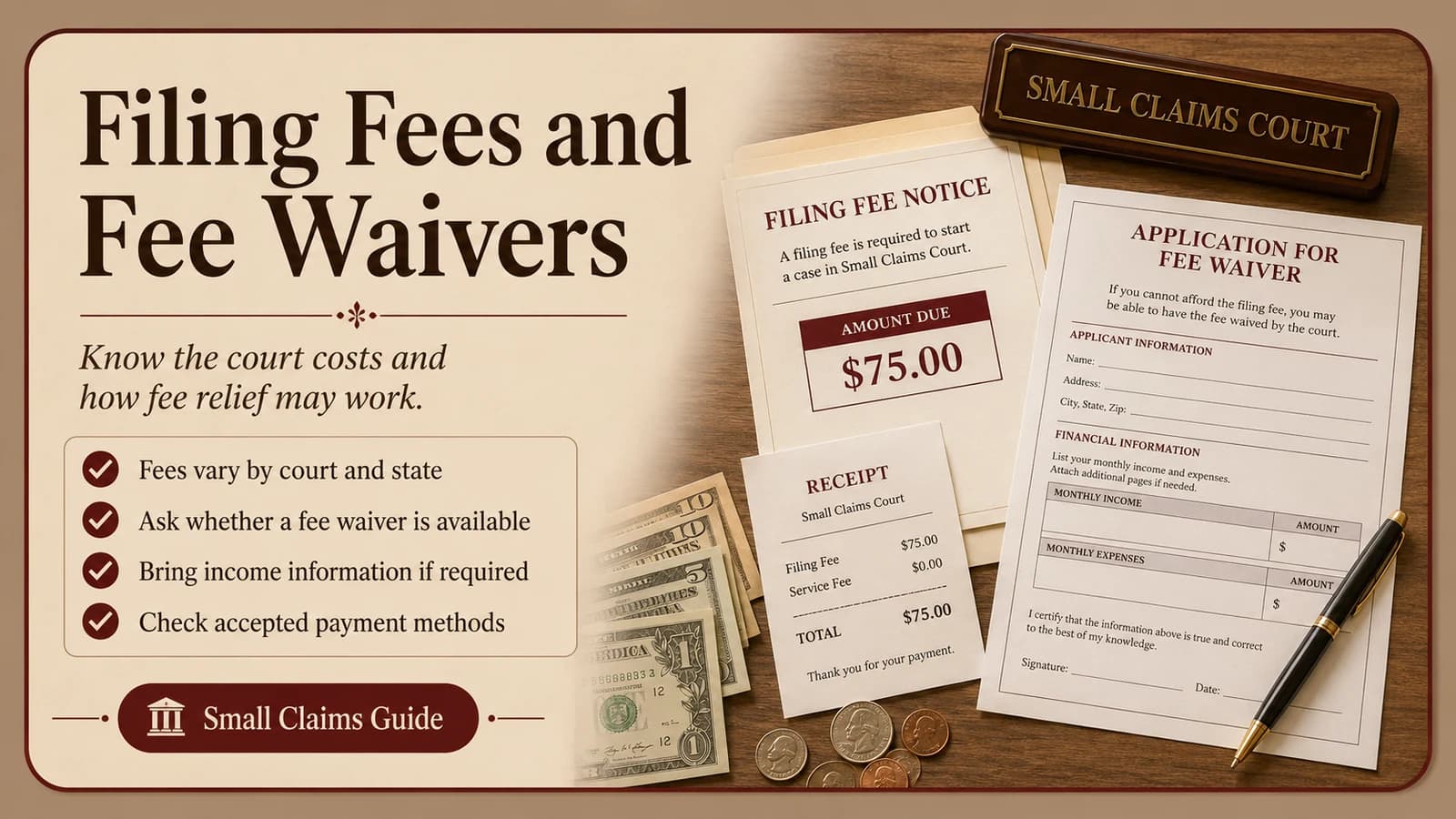
Filing Fees and Fee Waivers in Small Claims Court
Small-claims filing fees and fee-waiver procedures vary by court, claim amount, filing method, and the filer’s eligibility for relief from costs.
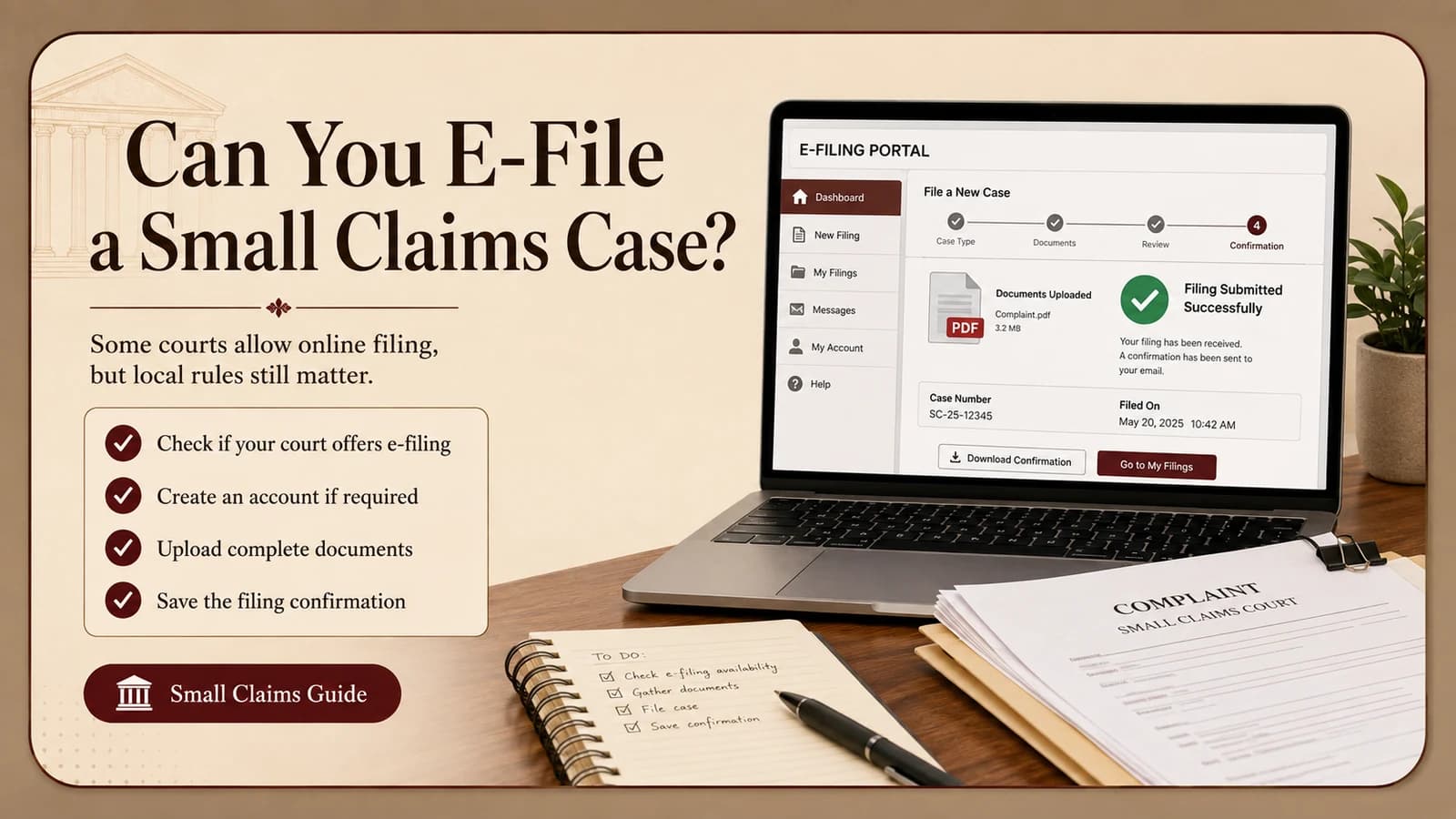
Can You E-File a Small Claims Case?
Whether you can or must e-file depends on the court system.
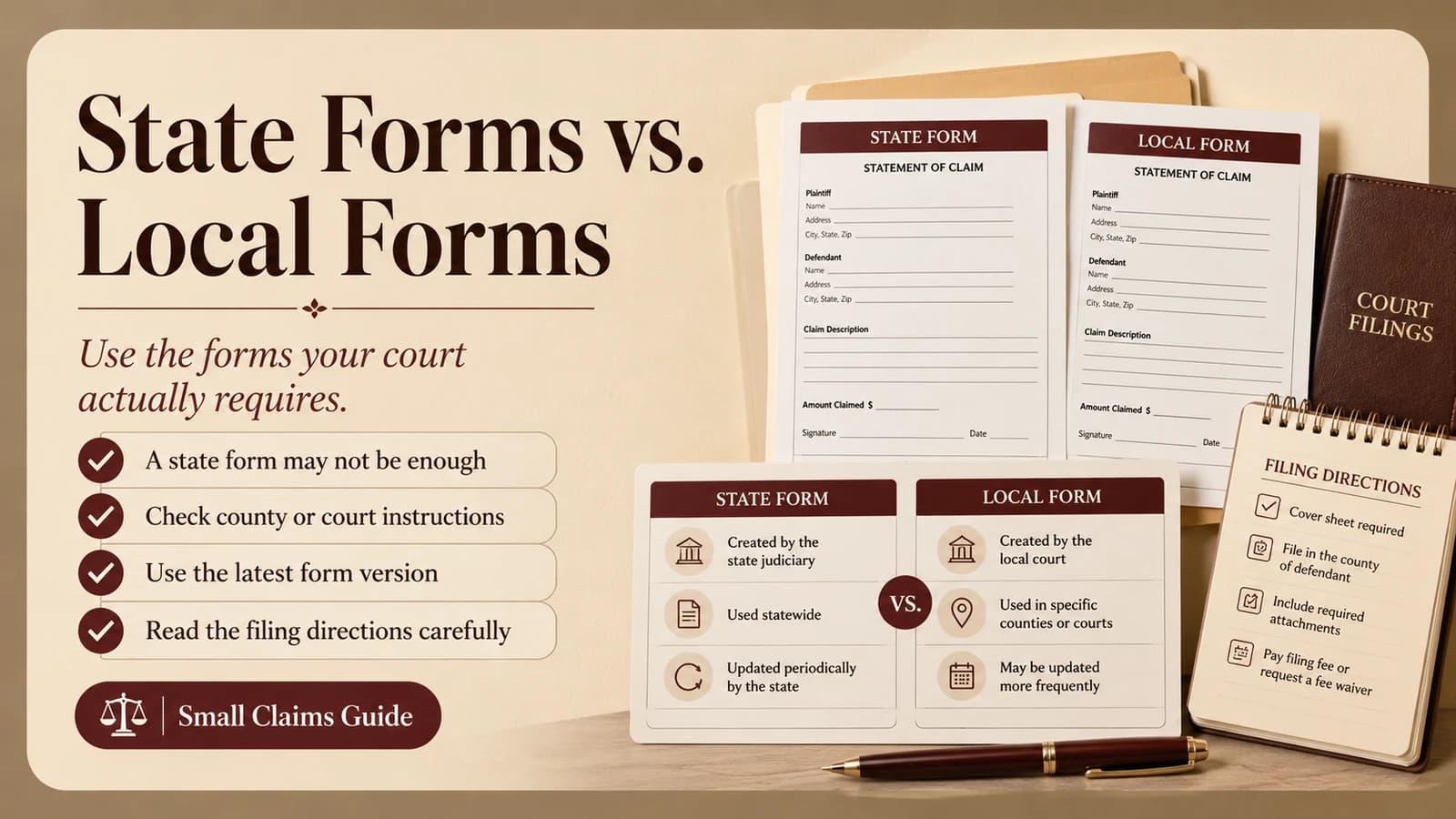
State Forms vs. Local Forms: What You Need to Check
A statewide small-claims form may not be the complete filing packet.
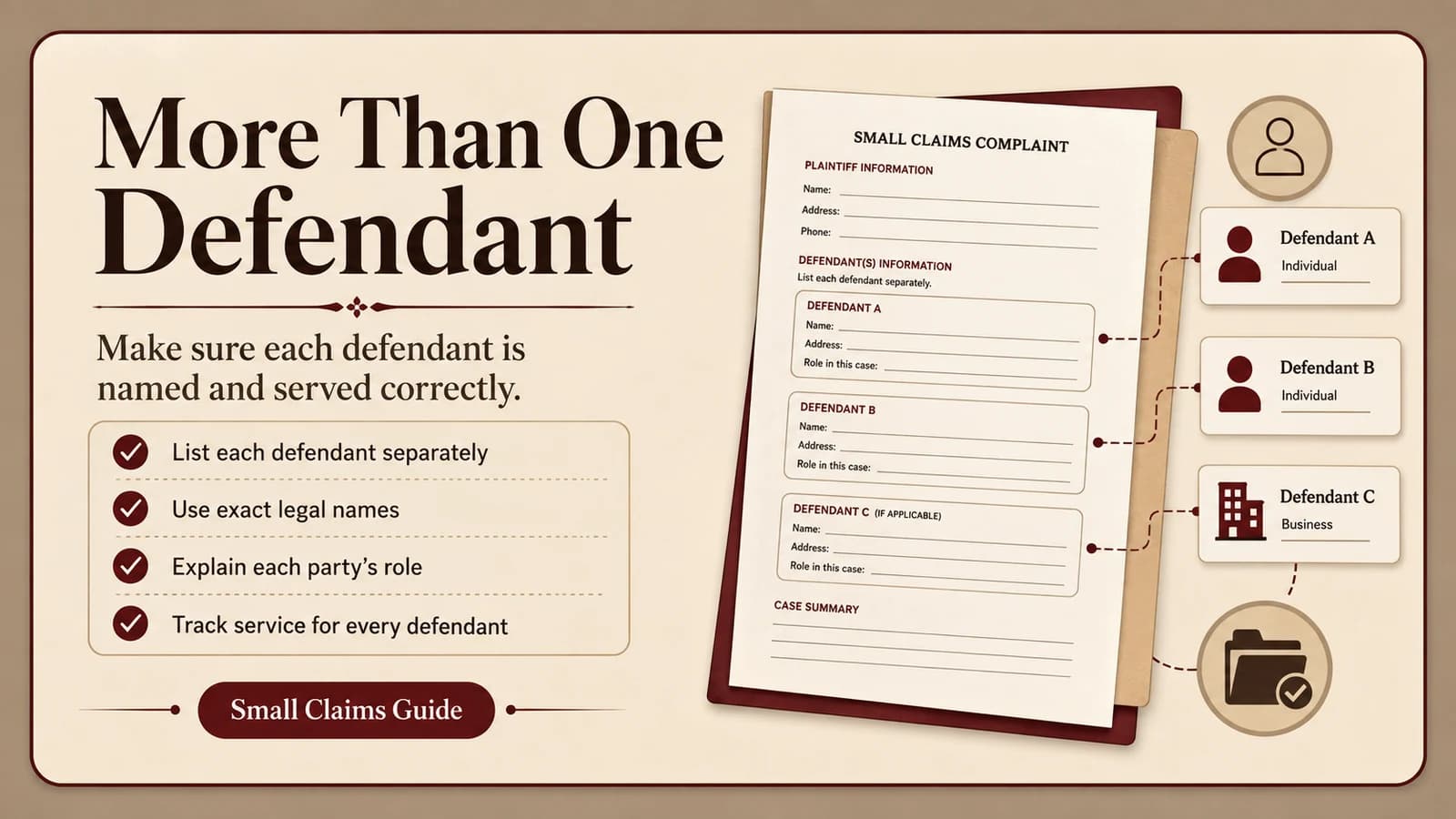
How to File Against More Than One Defendant
When more than one defendant is involved, keep each person or entity separate in your file.
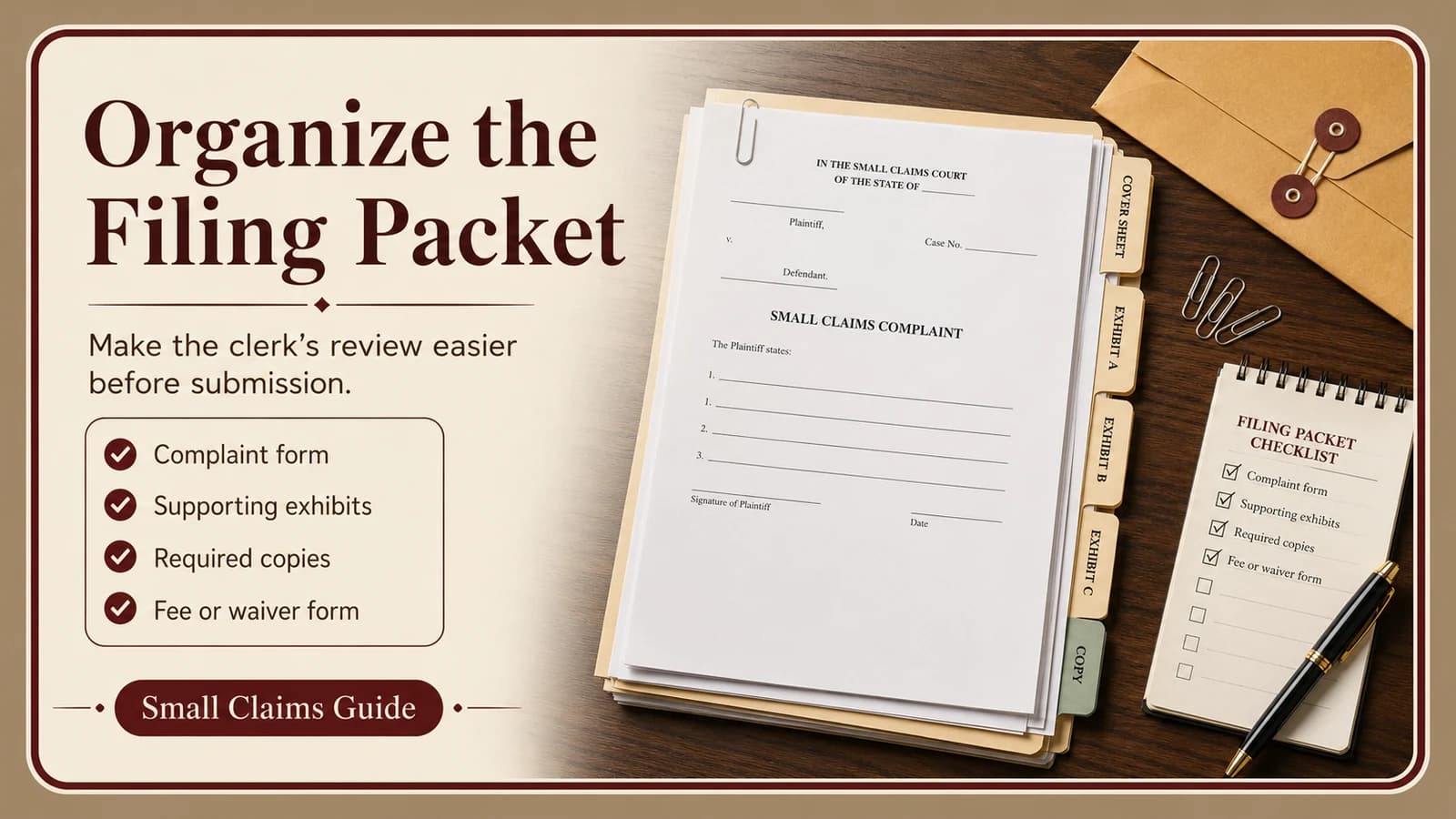
How to Organize a Small Claims Filing Packet Before Submission
A filing packet should make it easy to see what is being filed, what is only supporting material, and what copy belongs to you.
Serving the Defendant
Get the filed papers to the other side in a court-approved way and preserve proof
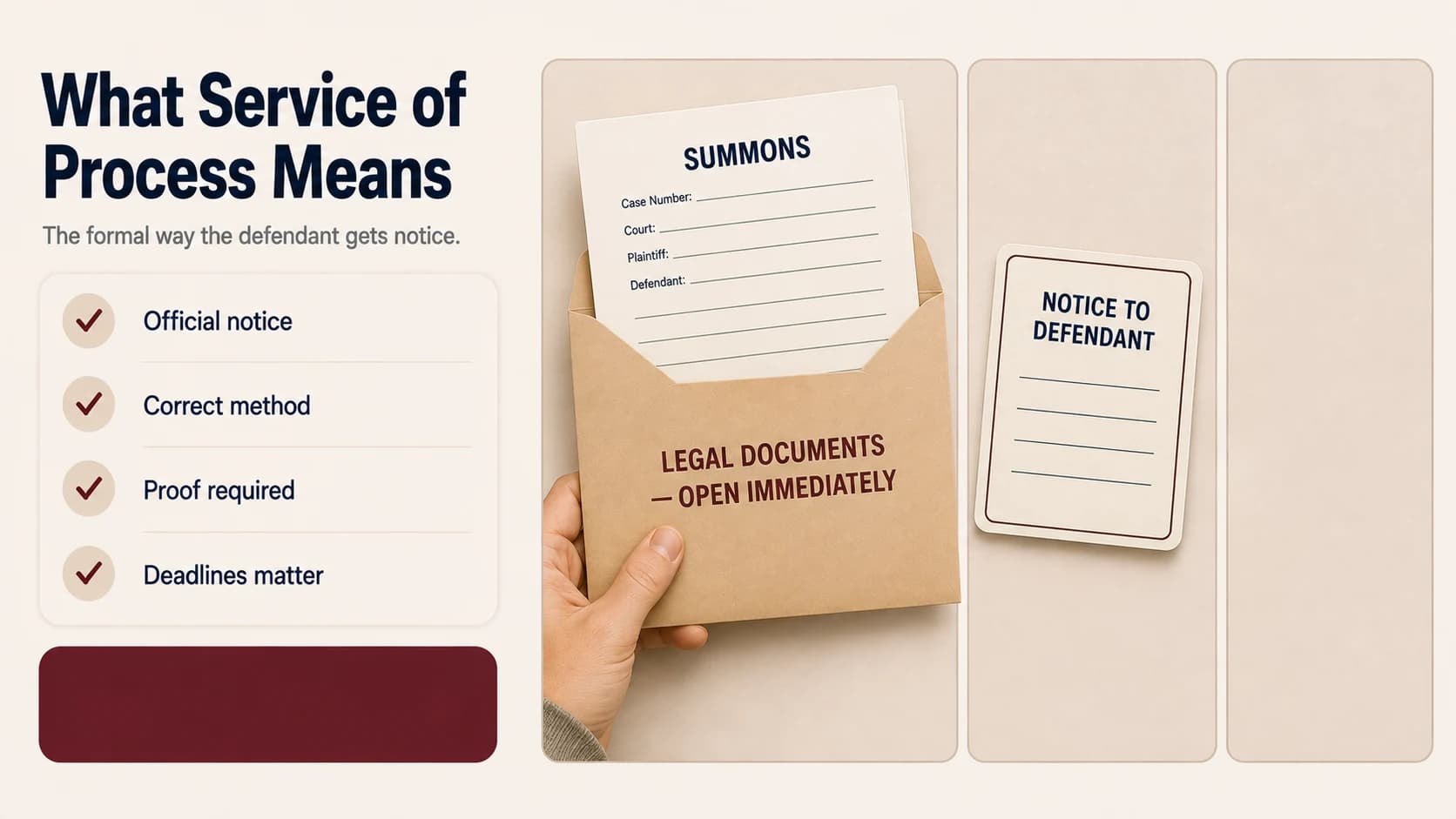
What “Service of Process” Means in a Small Claims Case
Service of process is the formal step used to give the defendant the filed court papers and notice of the case.
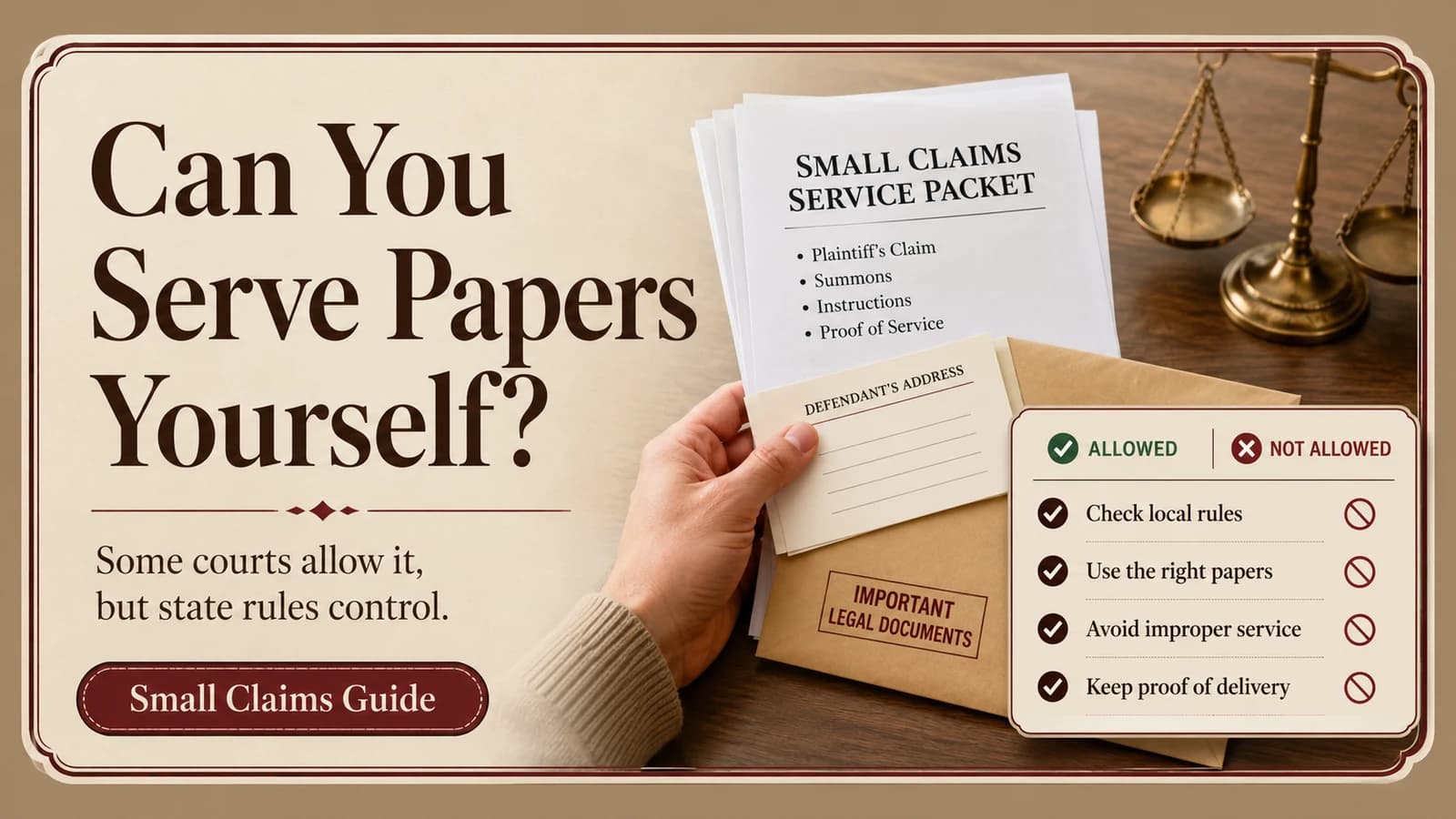
Can You Serve Small Claims Papers Yourself?
Do not assume you can personally hand the papers to the defendant.
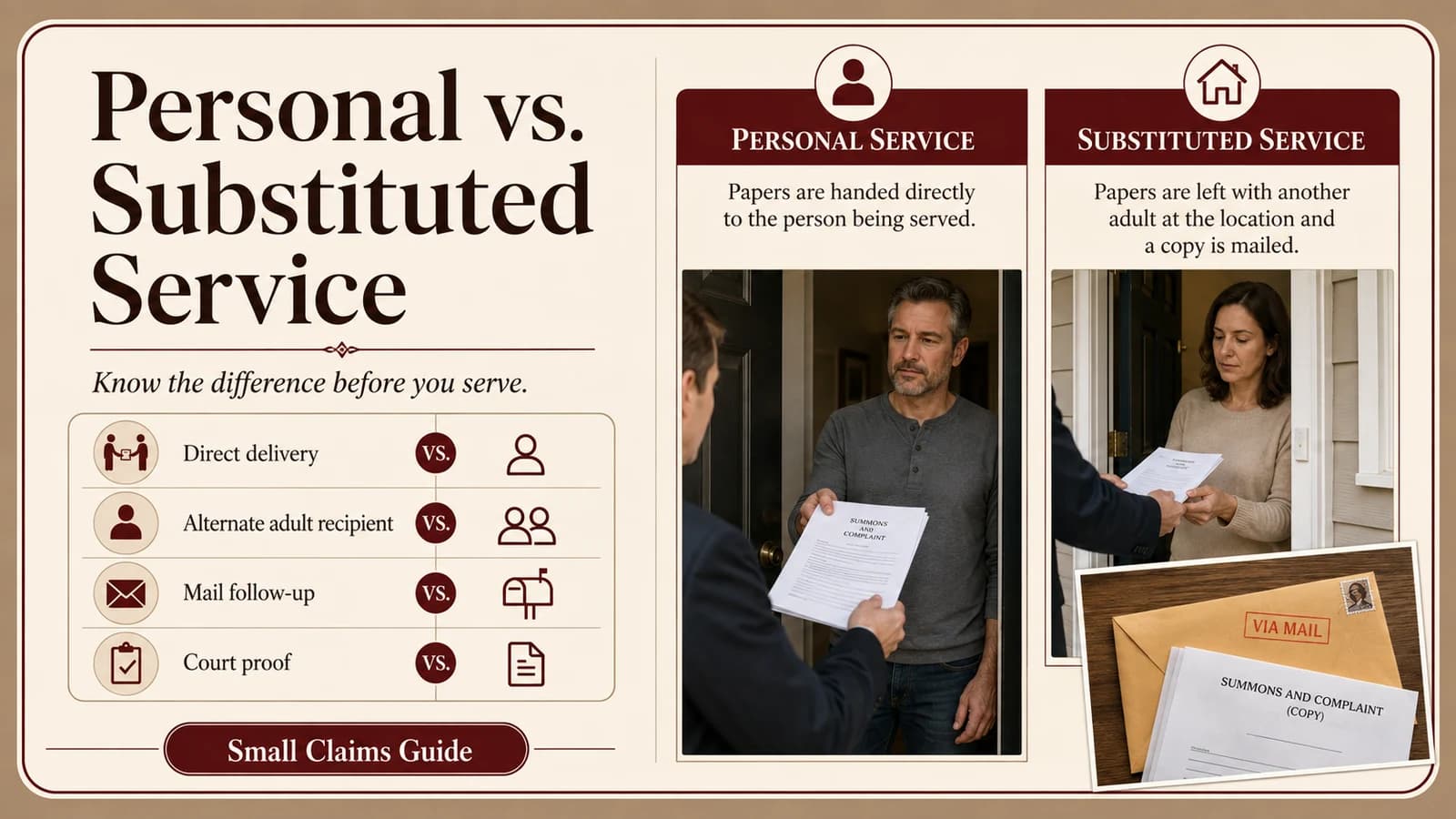
Personal Service vs. Substituted Service
Personal service generally means handing the papers directly to the person who must receive them.
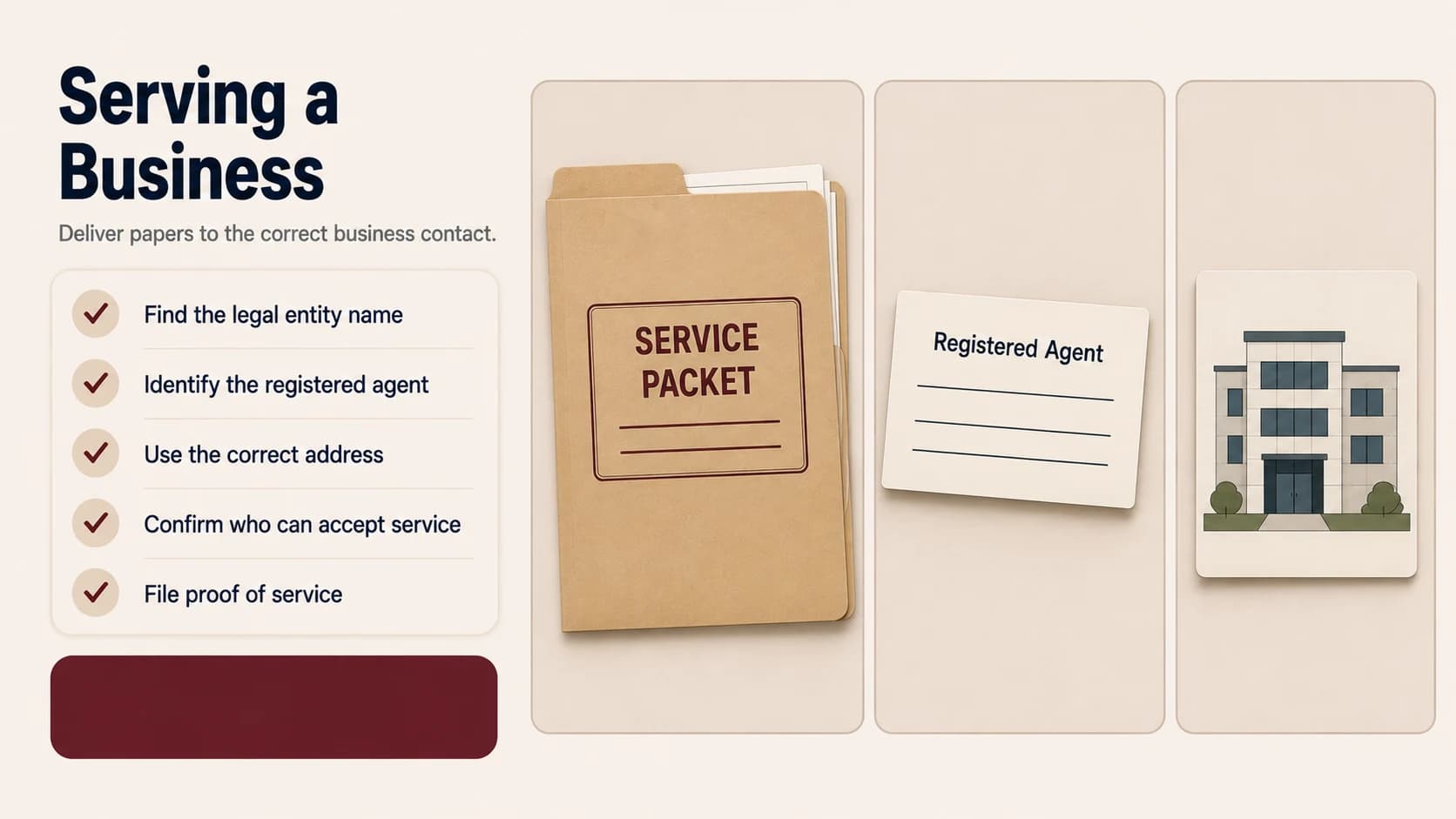
How to Serve a Business in a Small Claims Case
Serving a business usually means delivering the filed papers to a person legally authorized to receive process for the correct legal entity.
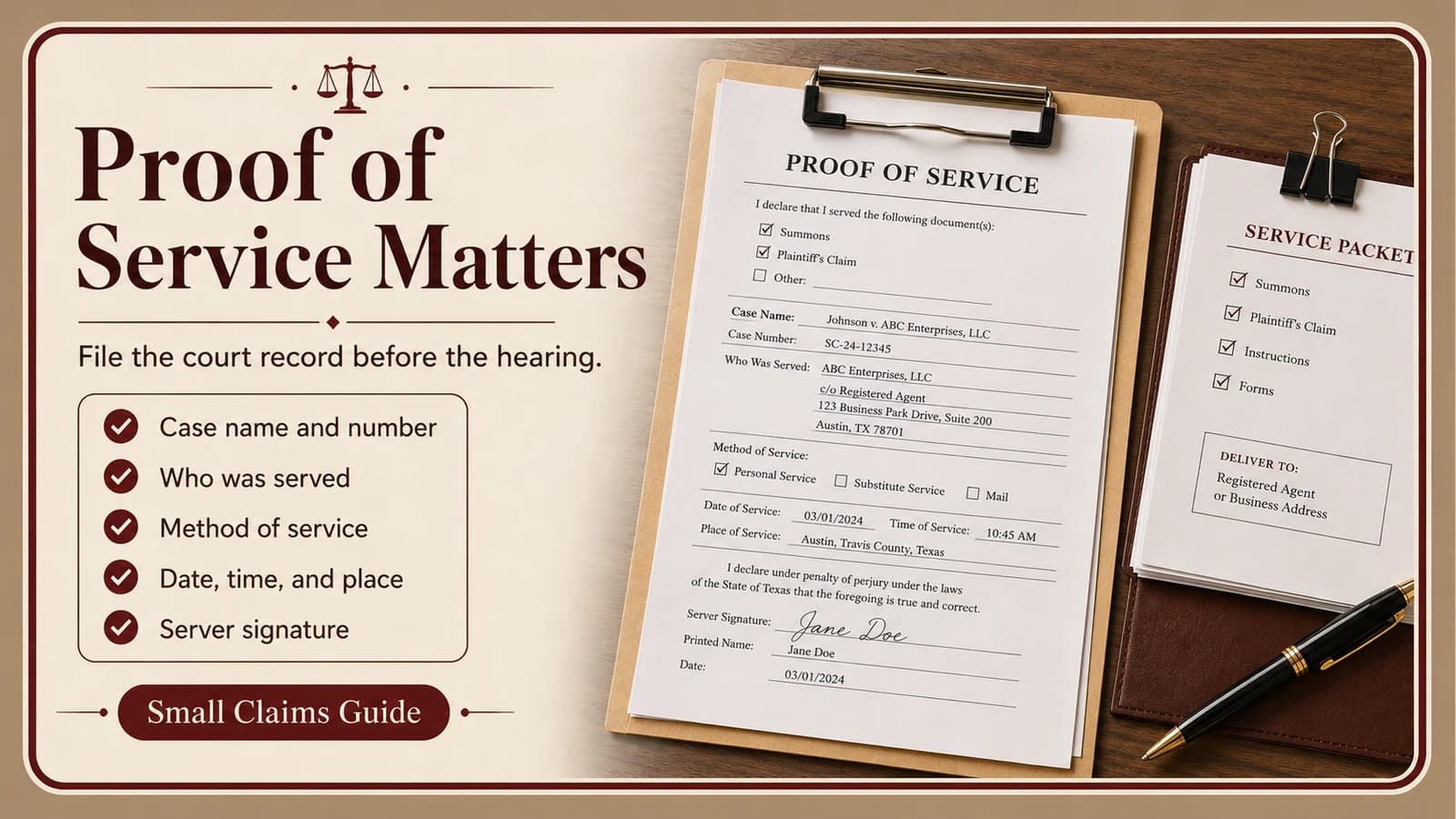
Why Proof of Service Matters Before the Hearing
Proof of service is the court record showing how, when, where, and by whom the defendant was served.
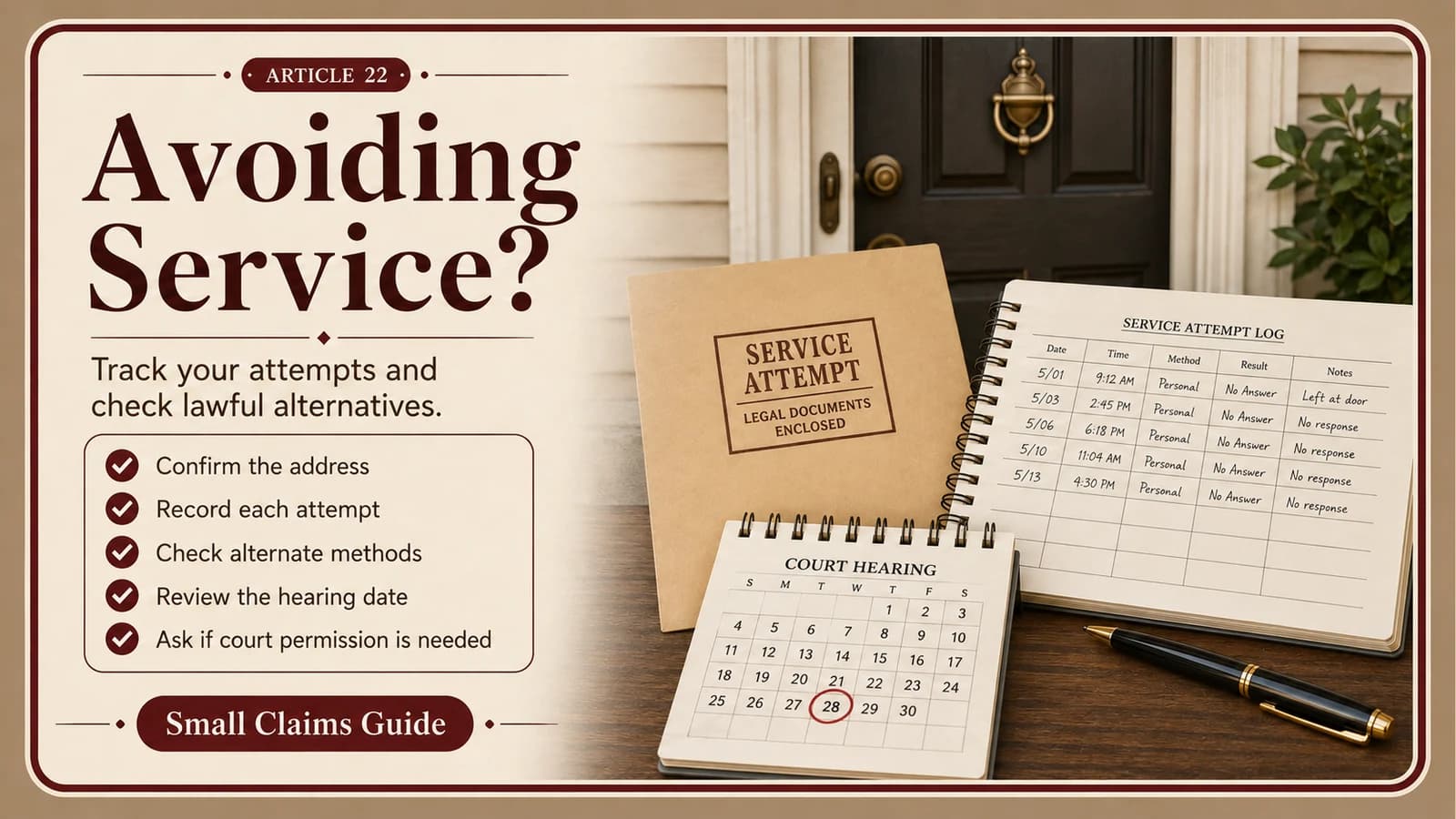
What If the Defendant Is Avoiding Service?
If the defendant appears to be avoiding service, keep a record of legitimate attempts and check what alternative methods or scheduling options the court permits.
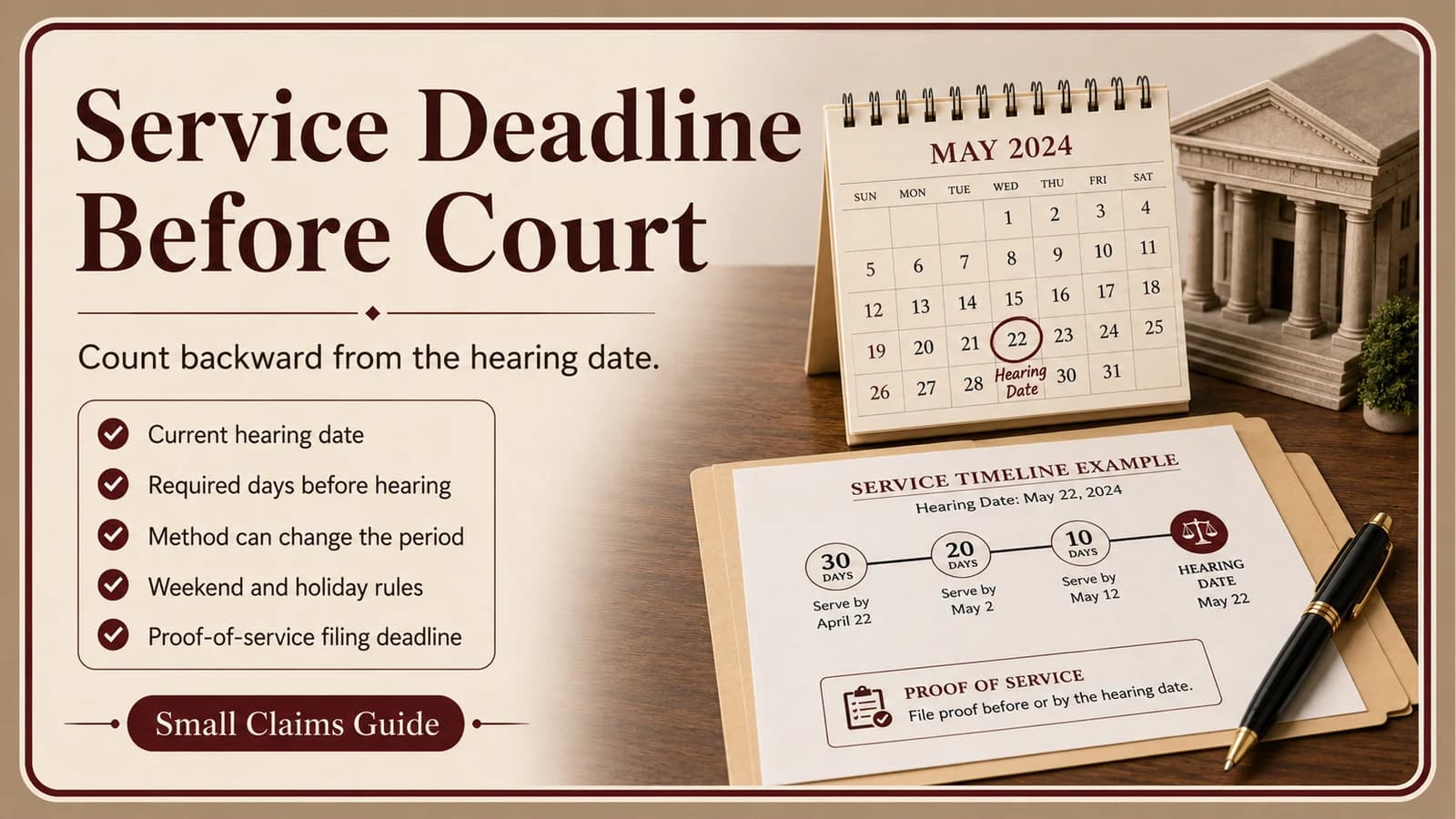
How to Check the Service Deadline Before Your Court Date
The service deadline is usually tied to the hearing date and may change based on the method of service or where the defendant is located.
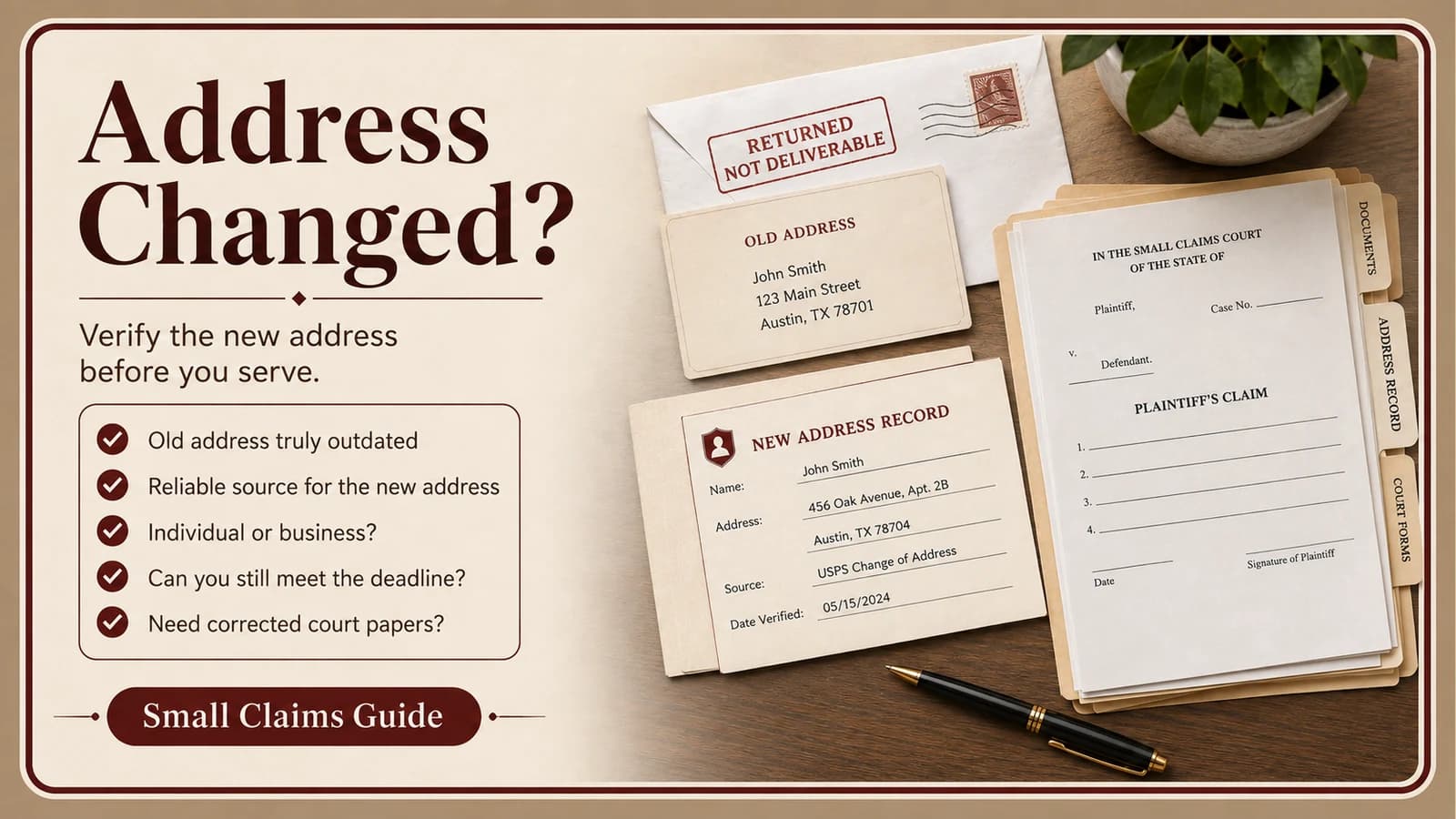
What to Do If the Defendant’s Address Has Changed
A changed address is a service problem, not permission to guess.
Evidence & Preparation
Build a compact, chronological proof set that a judge can follow quickly
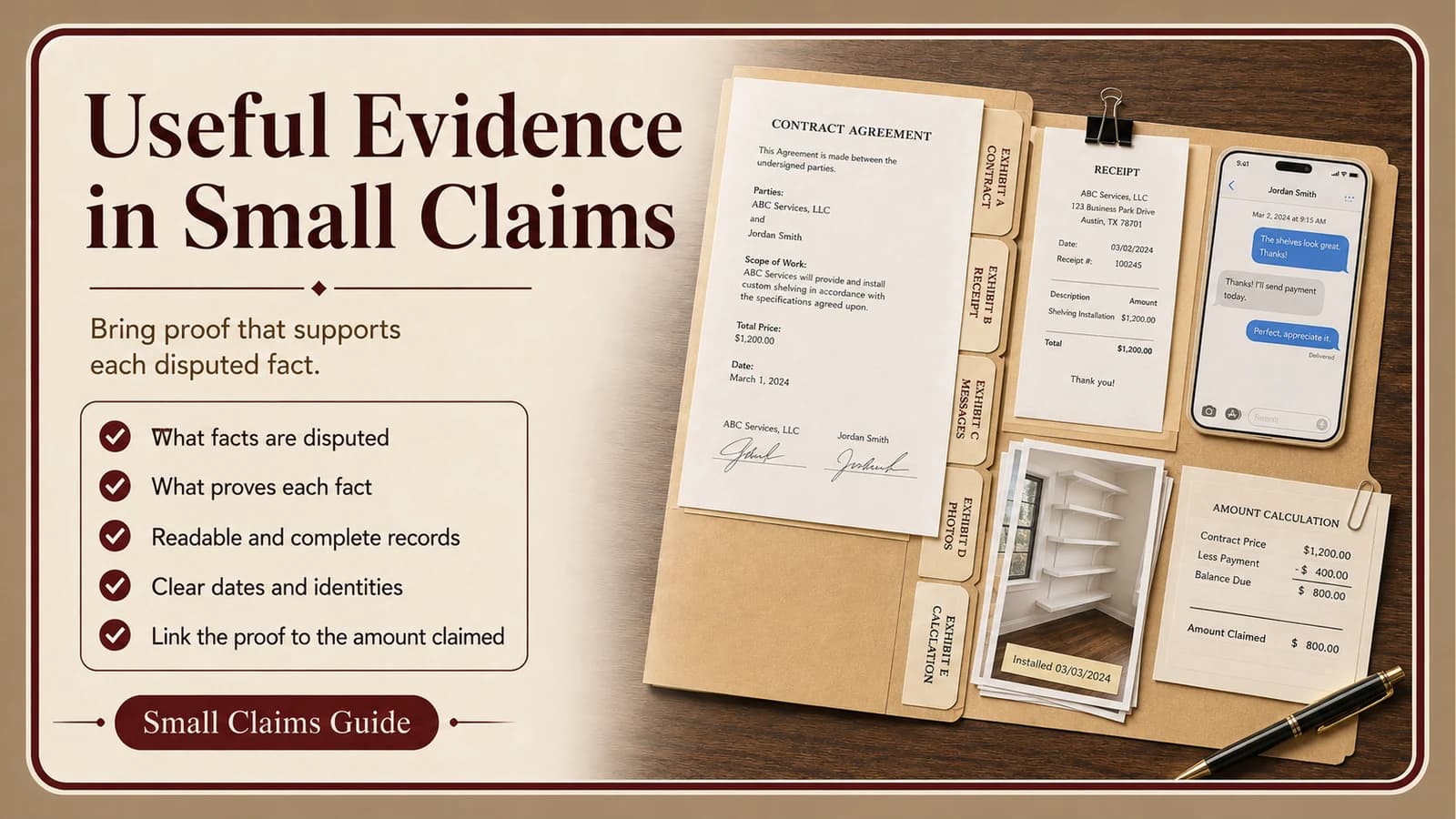
What Evidence Is Useful in Small Claims Court?
Useful evidence is evidence that proves a fact the judge needs to decide: what was agreed, what happened, what was paid or not paid, and how the claimed amount was calculated.
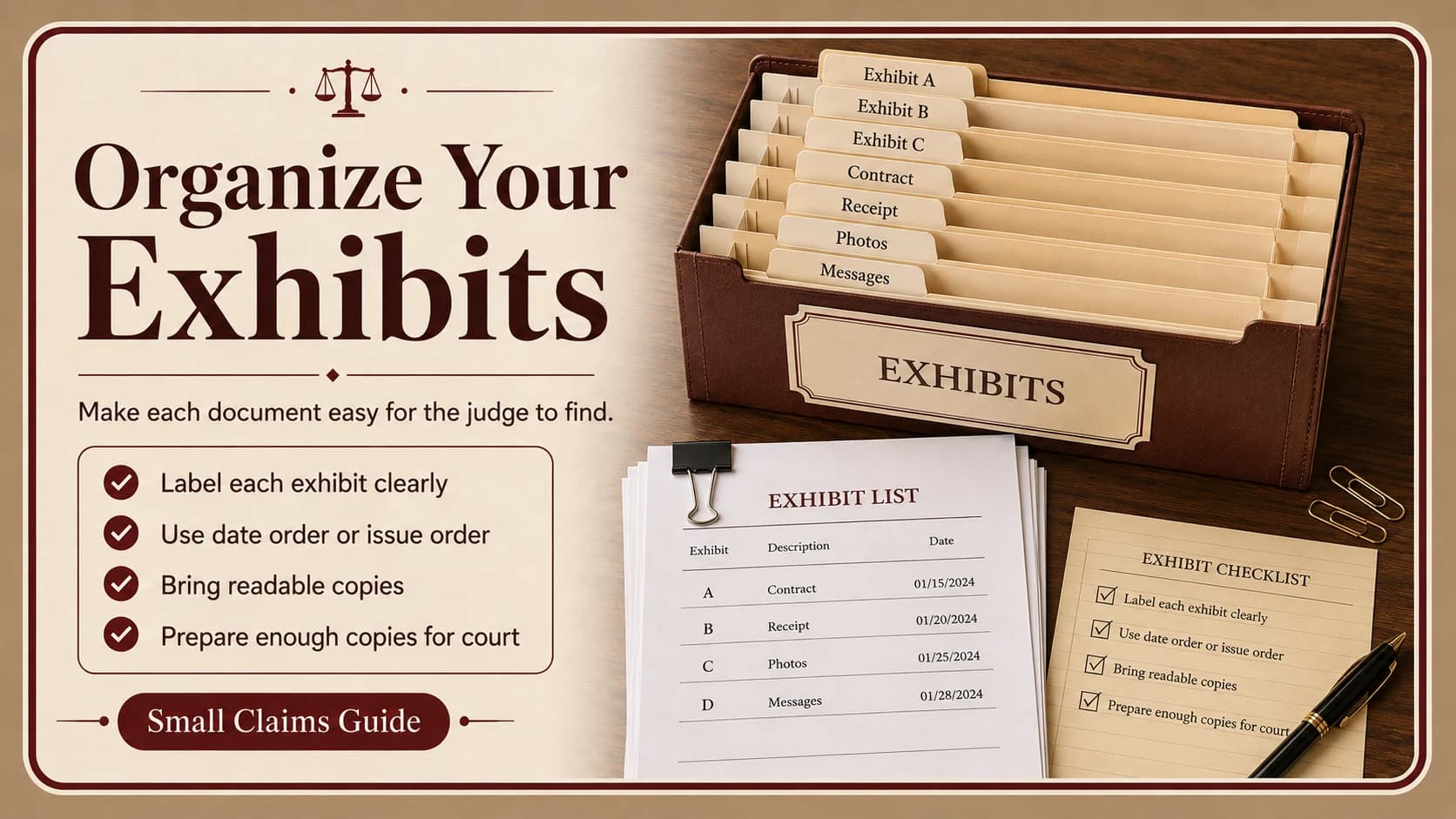
How to Organize Exhibits for a Small Claims Hearing
Organize exhibits so you and the judge can find the same item quickly.
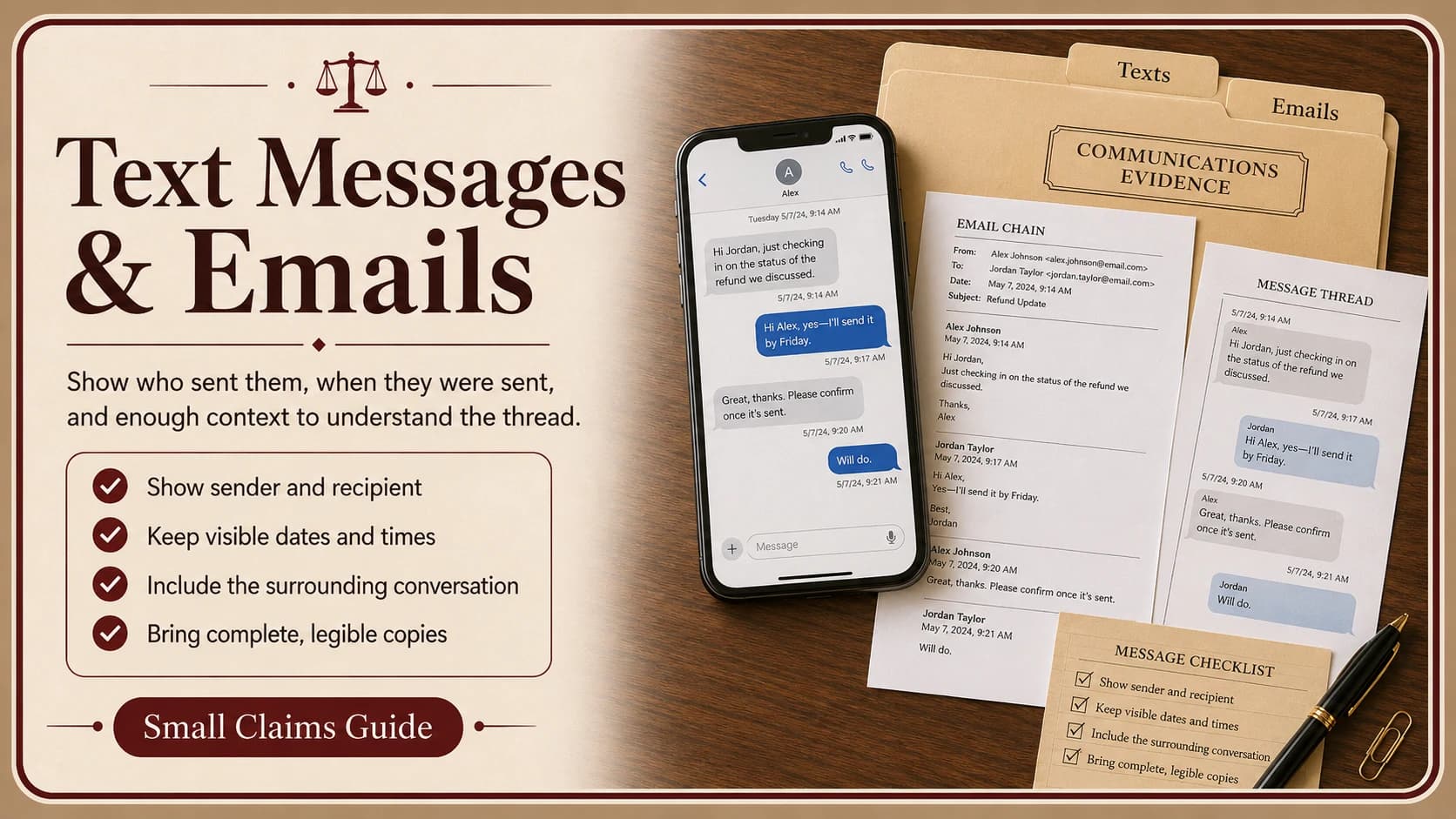
How to Prepare Text Messages and Emails for Small Claims Court
Text messages and emails are easier to use when they show who sent them, when they were sent, and enough surrounding conversation to understand the context.
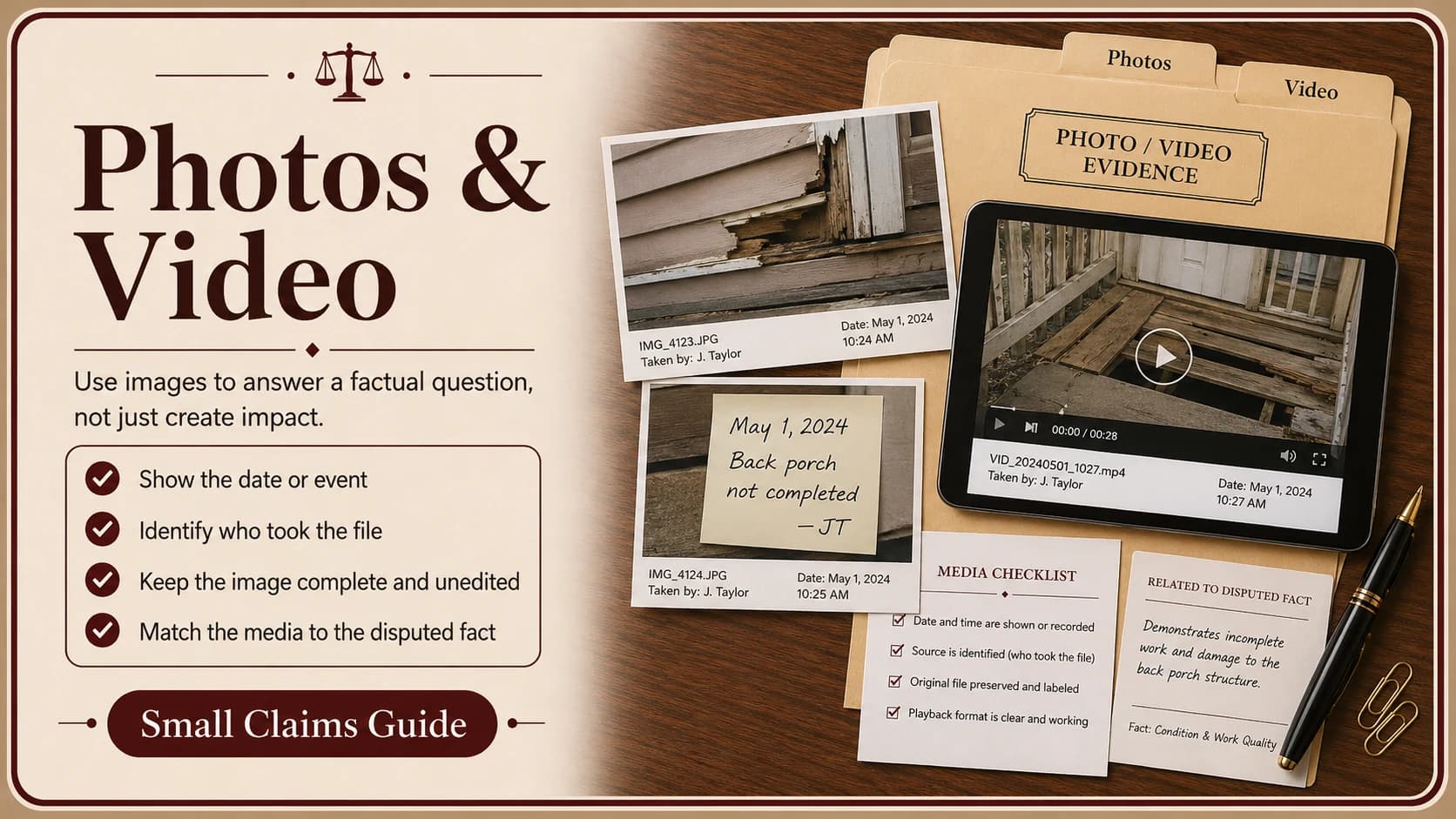
How to Prepare Photos and Video for a Small Claims Hearing
Photos and video should help answer a factual question, not simply create visual impact.
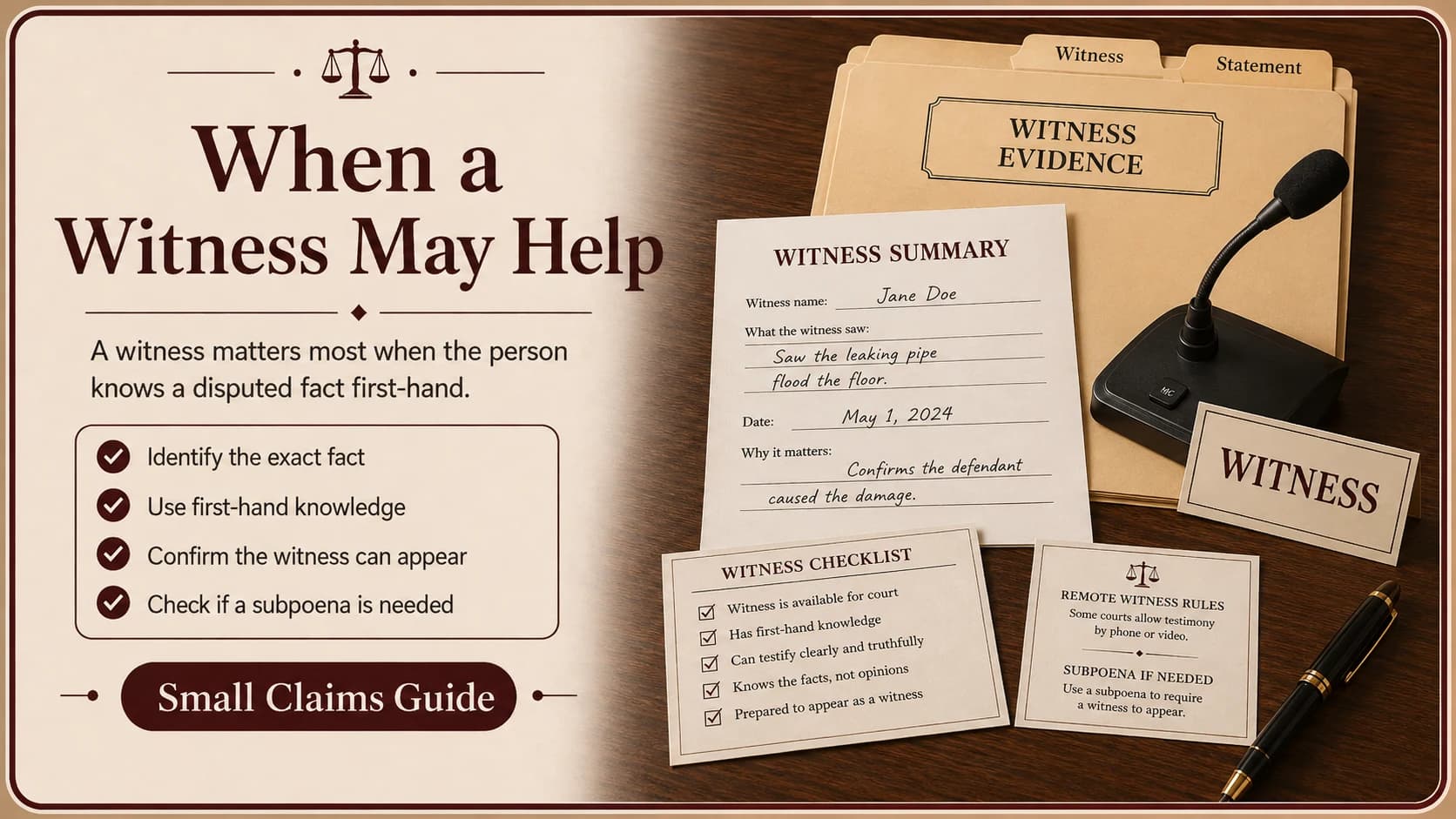
When a Witness May Help in Small Claims Court
A witness is most useful when the person has first-hand knowledge of an important disputed fact.
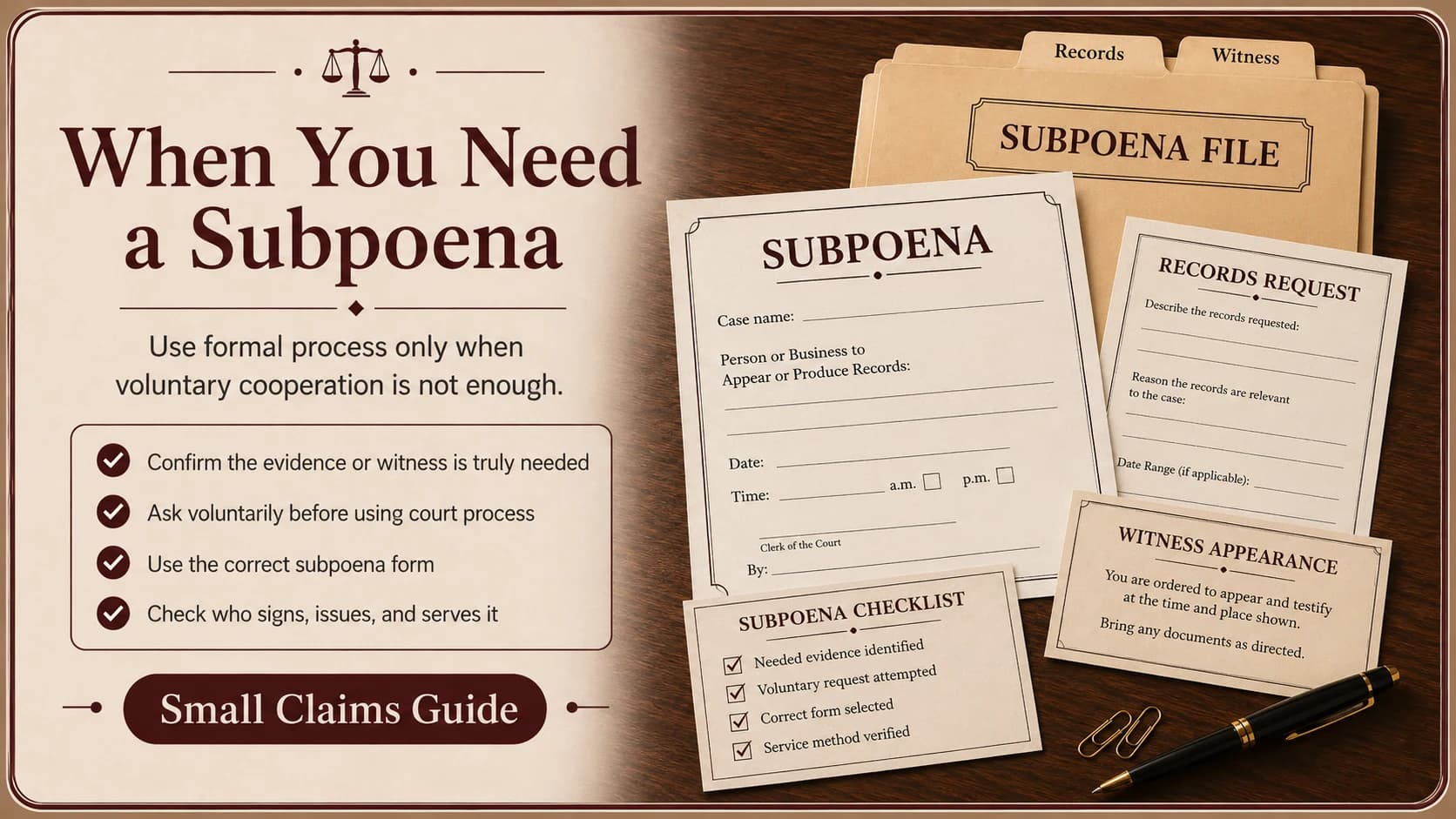
When You May Need a Subpoena for Records or a Witness
A subpoena is a formal court process used to require a person to appear or to produce records when voluntary cooperation is not enough.
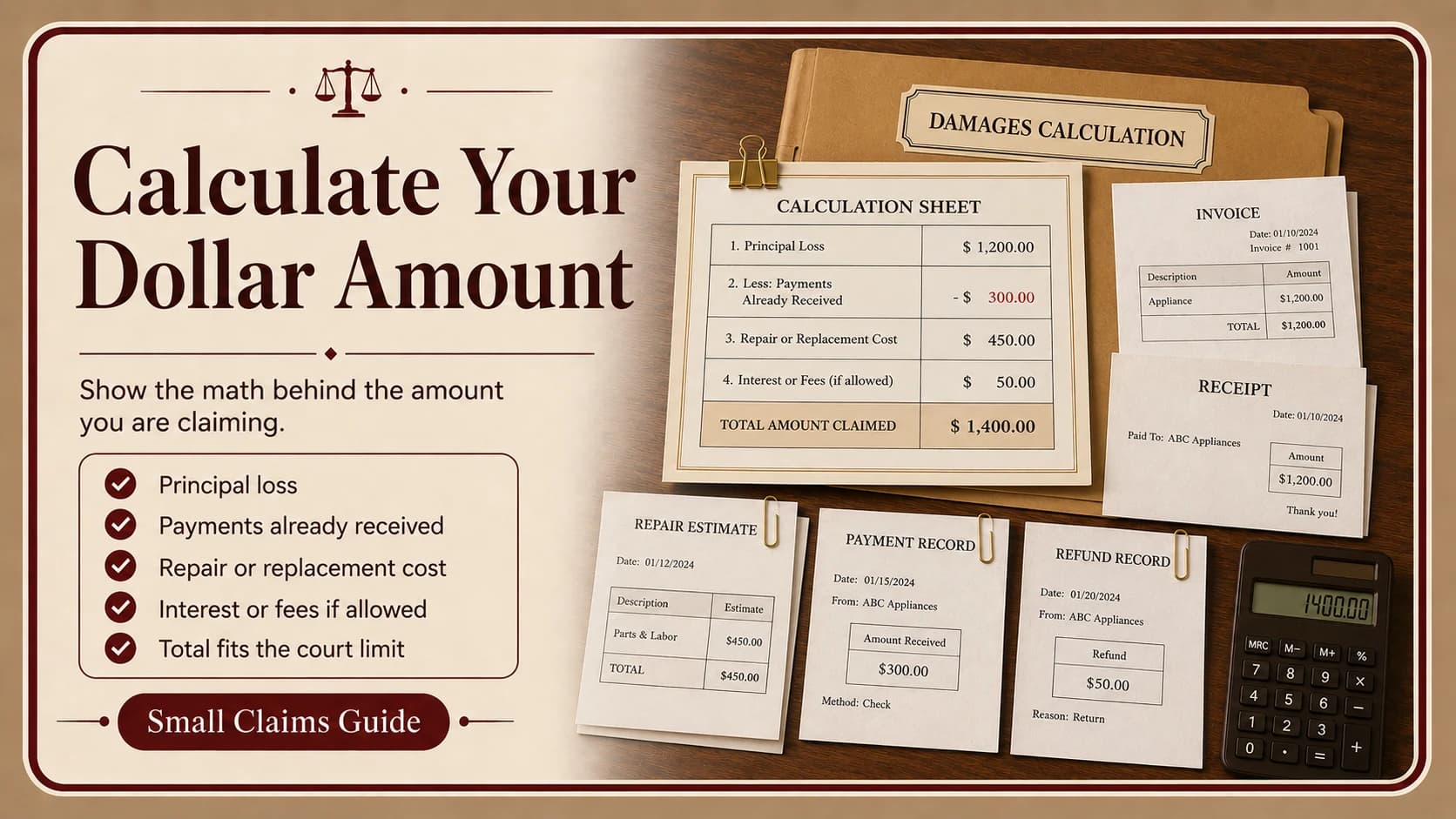
How to Show the Judge How You Calculated Your Dollar Amount
The amount claimed should be a calculation you can show, not a round number chosen because it feels fair.
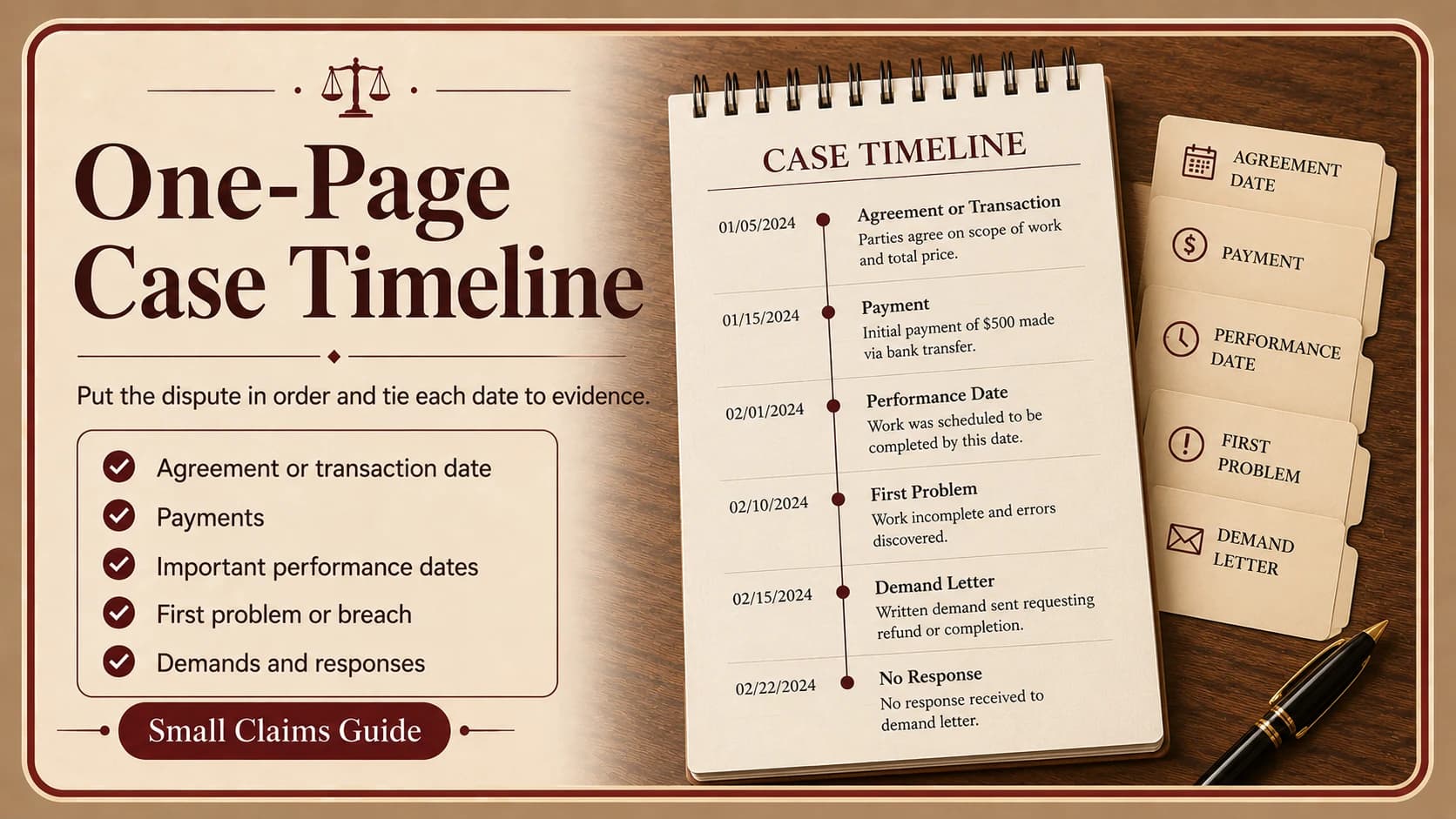
Build a One-Page Timeline for Your Small Claims Hearing
A one-page timeline helps you present the dispute in order and quickly locate the evidence tied to each date.
At the Hearing
Present the case in a short, organized sequence and respond to the judge’s questions
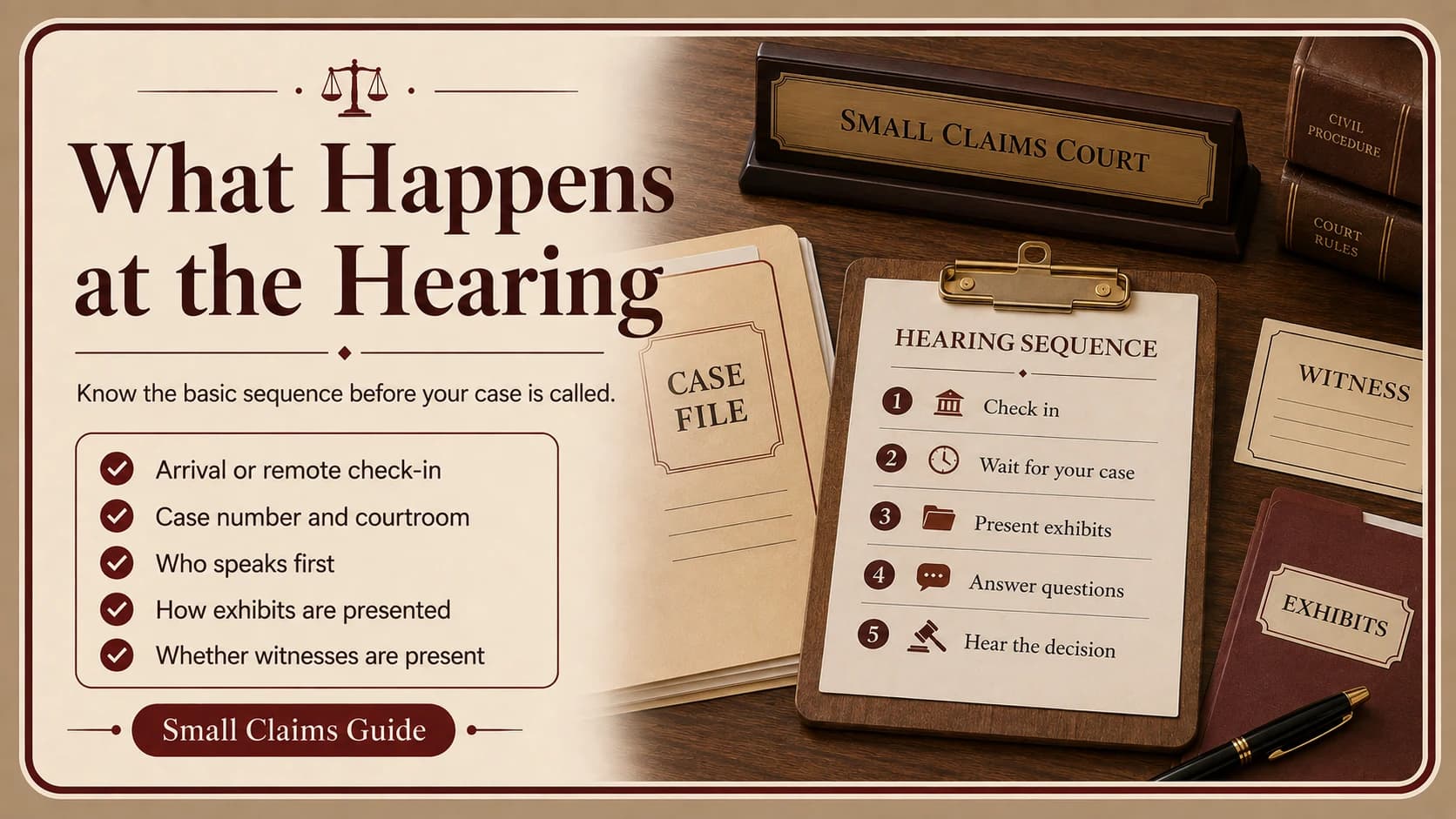
What Usually Happens at a Small Claims Hearing?
A small-claims hearing usually moves quickly, so both sides should know the basic sequence, the disputed facts, the amount at issue, and where the supporting evidence is located.
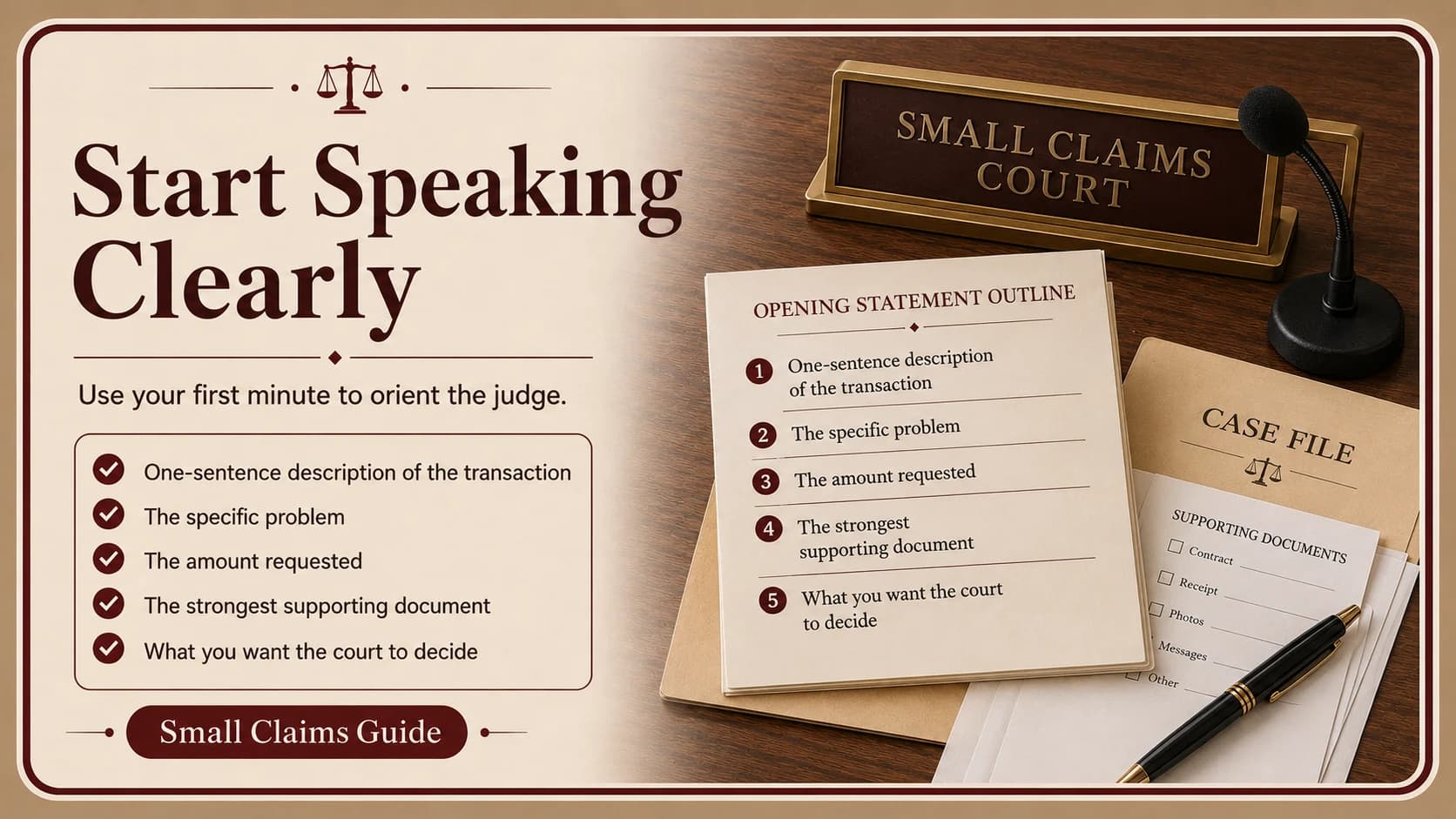
How to Start Speaking When the Judge Calls Your Small Claims Case
Your first minute should orient the judge, not tell the entire history.
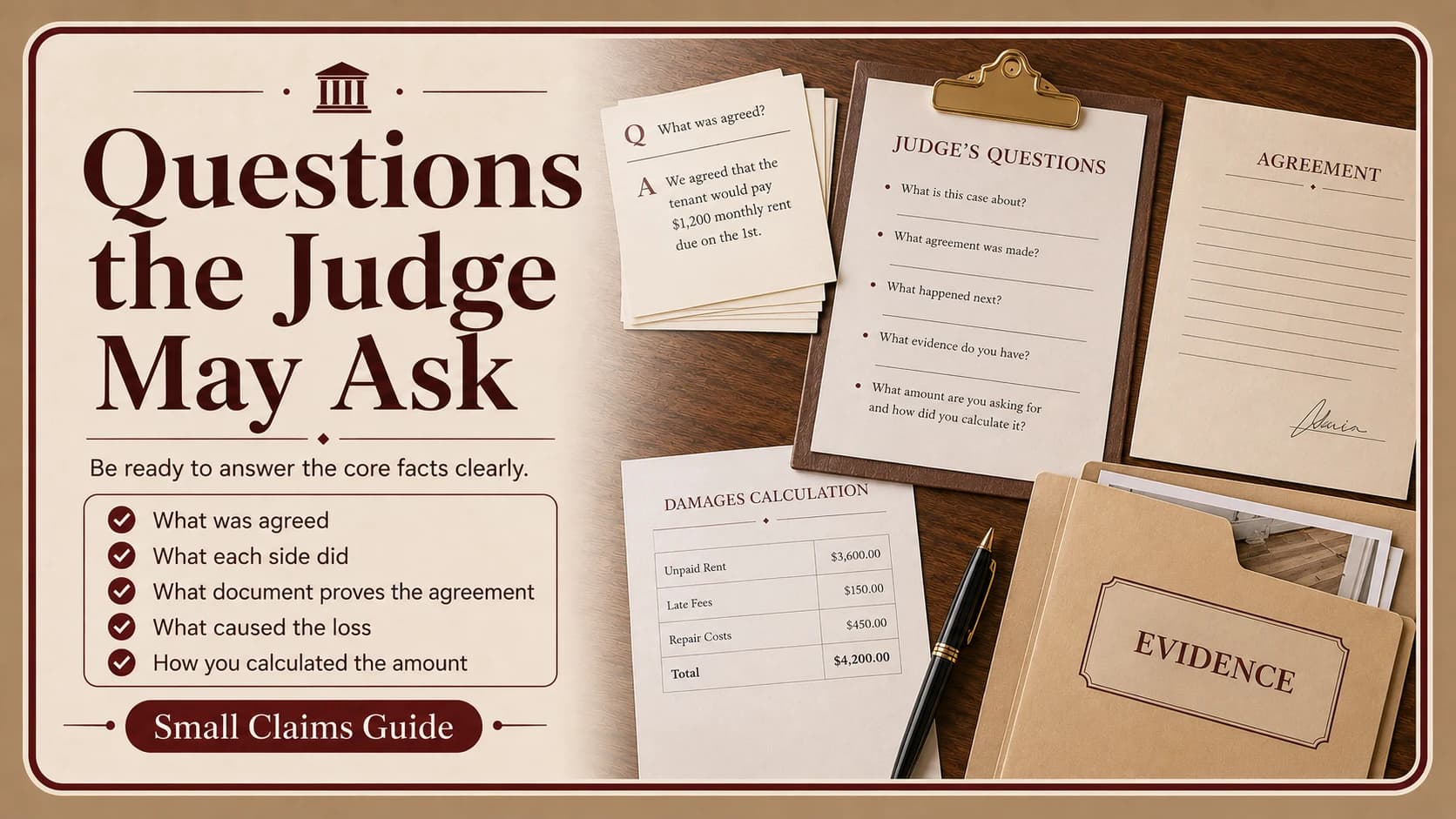
Questions a Small Claims Judge May Ask
Judges often ask questions that test the agreement, disputed event, evidence, damages calculation, and the other side’s explanation of what happened.
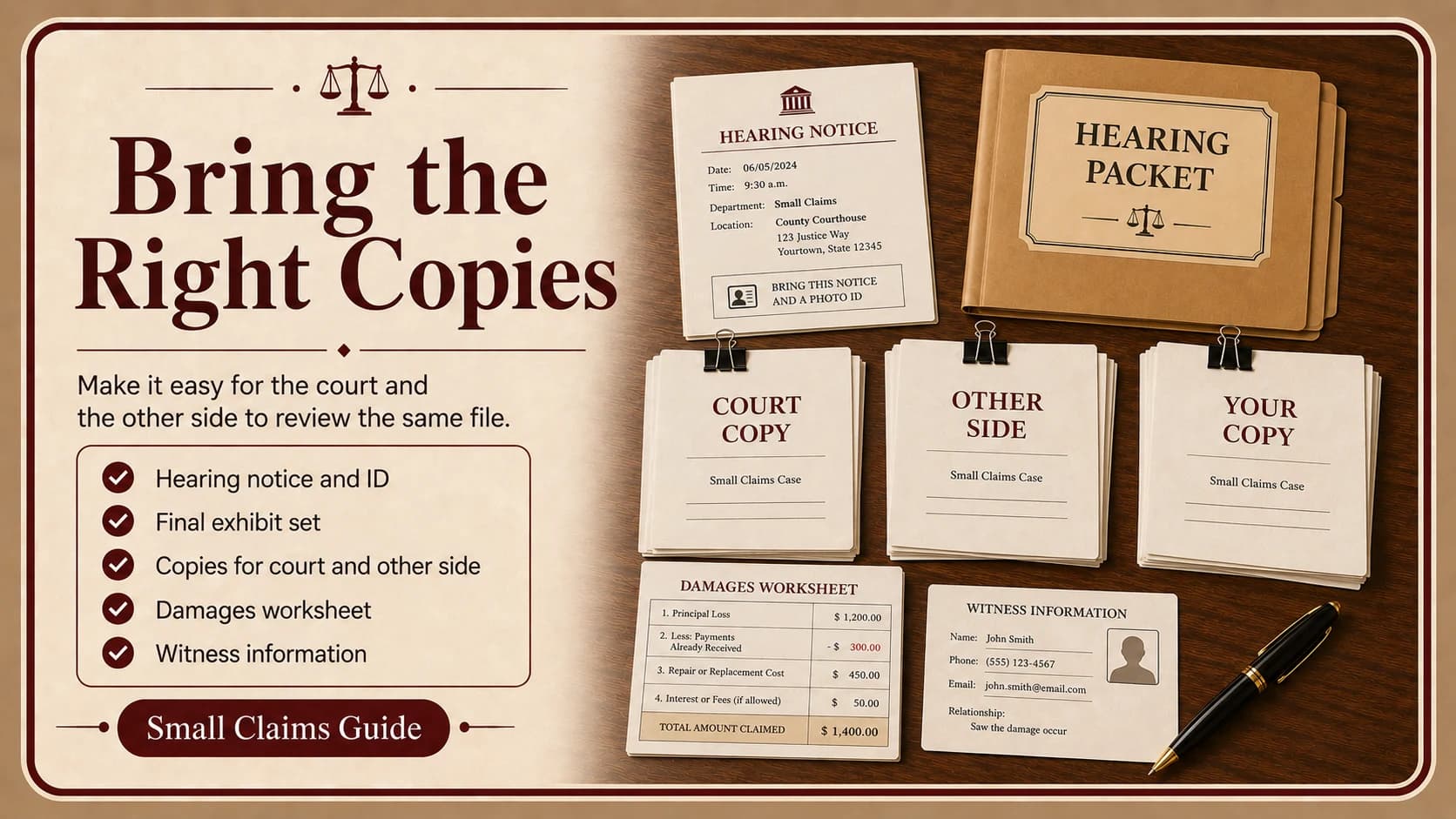
How Many Copies and What Should You Bring to the Hearing?
Bring a hearing packet that lets the judge and the other side review the same documents you are discussing.
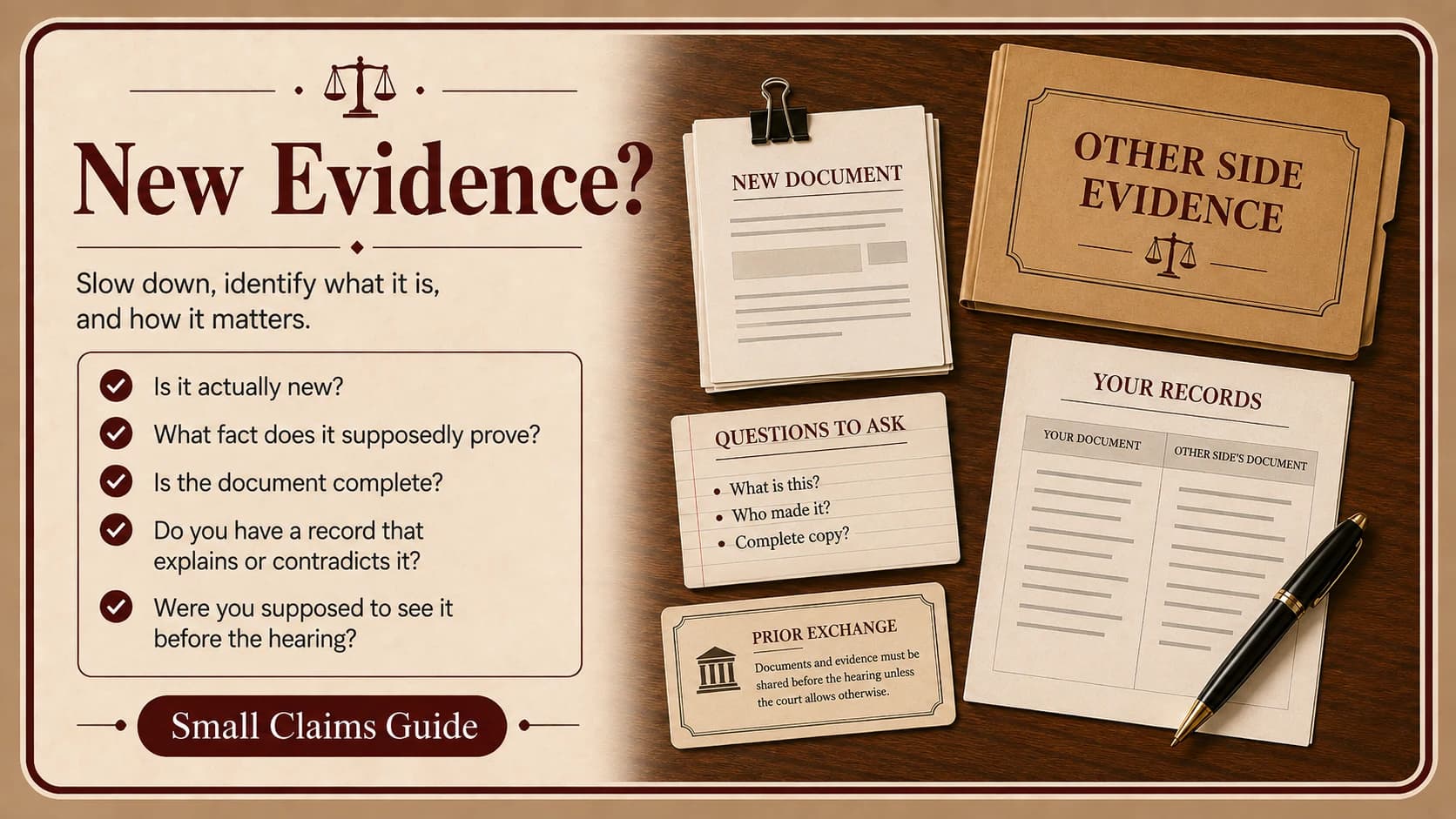
What If the Other Side Brings Evidence You Have Never Seen?
If the other side presents evidence you have not seen, focus first on understanding what it is and what fact it is supposed to prove.
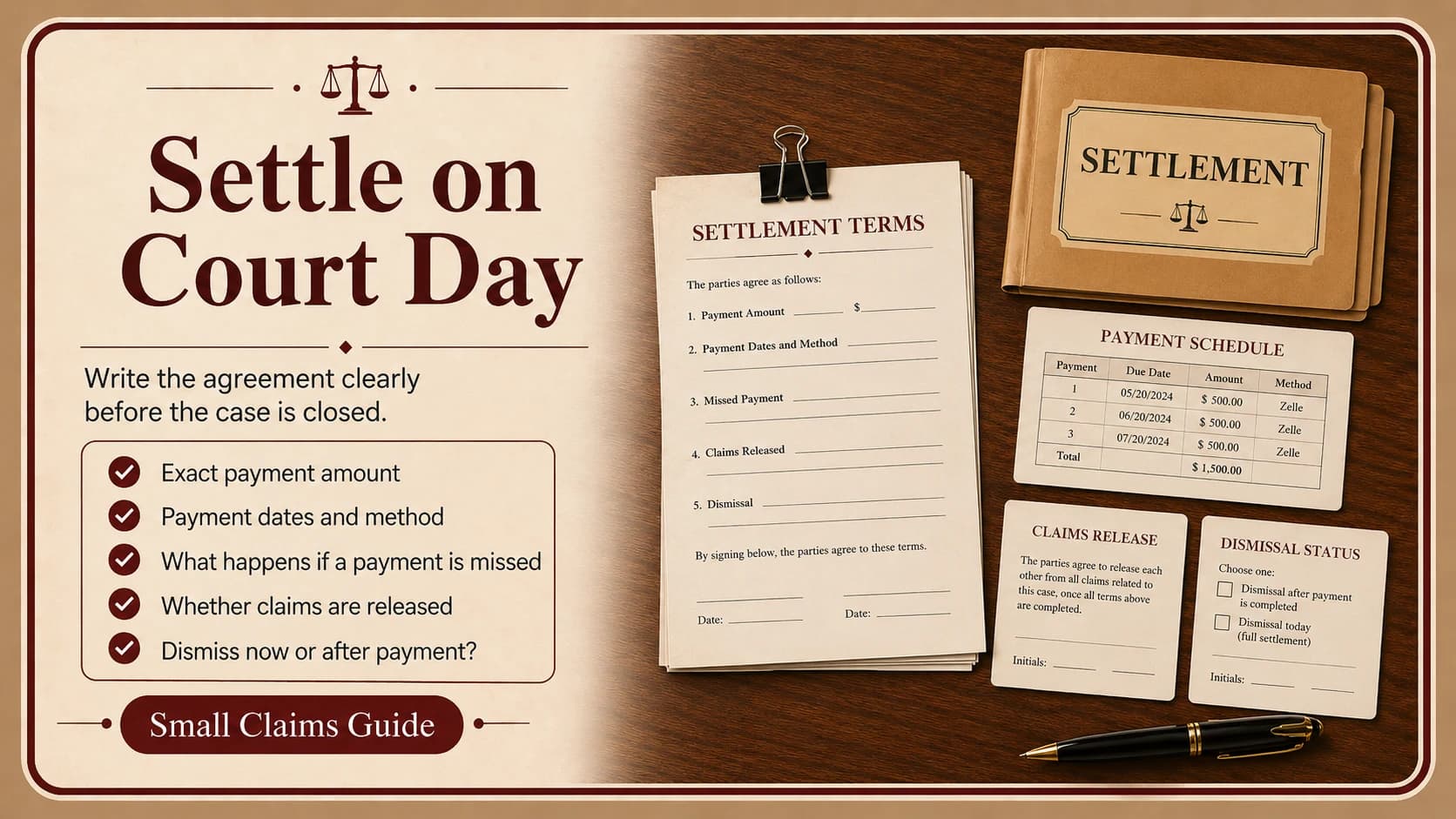
Can You Settle a Small Claims Case on the Court Date?
Parties can sometimes settle on the court date, but the case is not necessarily finished until the agreement and court status are handled correctly.
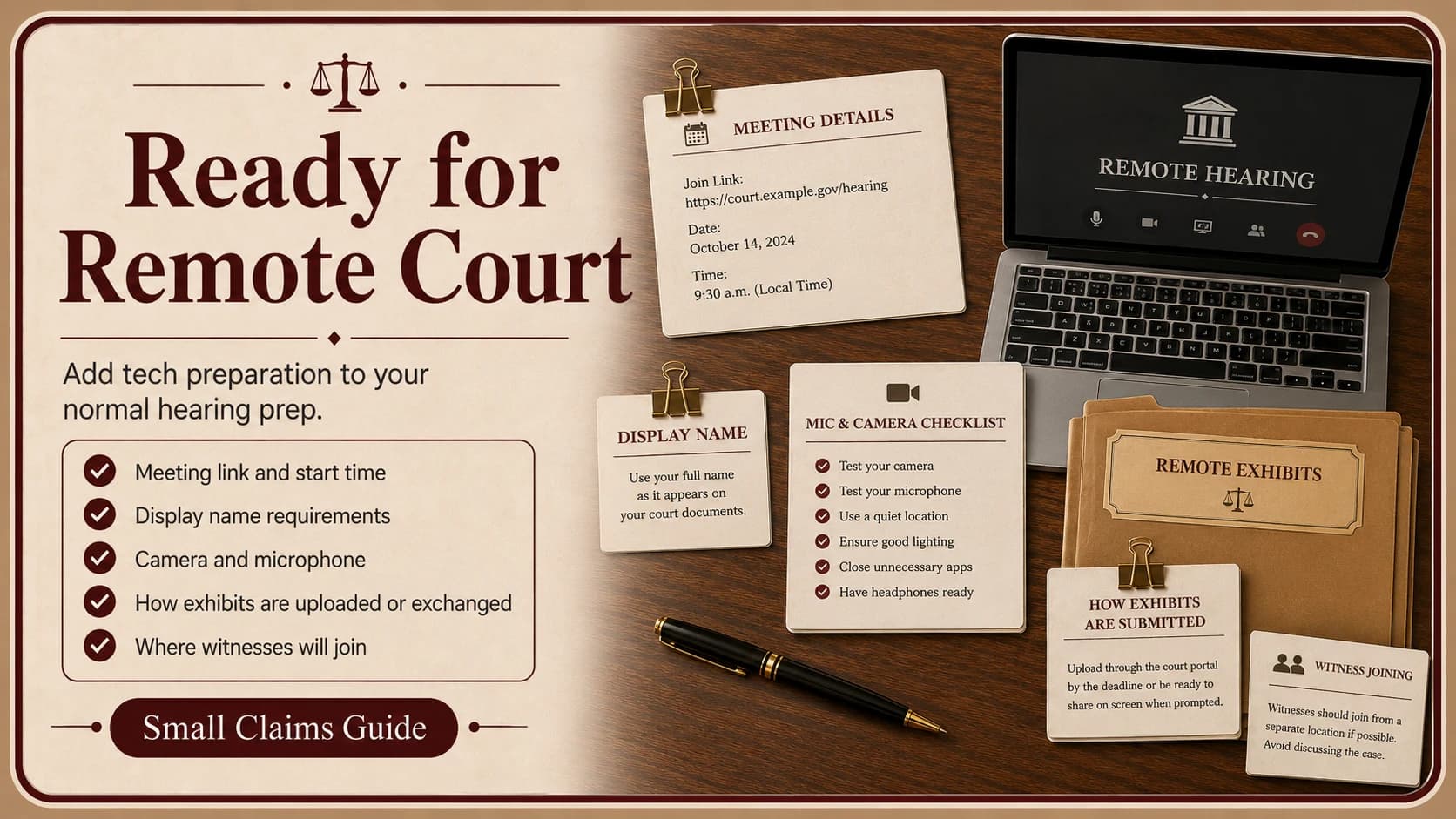
How to Prepare for a Remote Small Claims Hearing
A remote hearing adds technology to the usual hearing preparation.
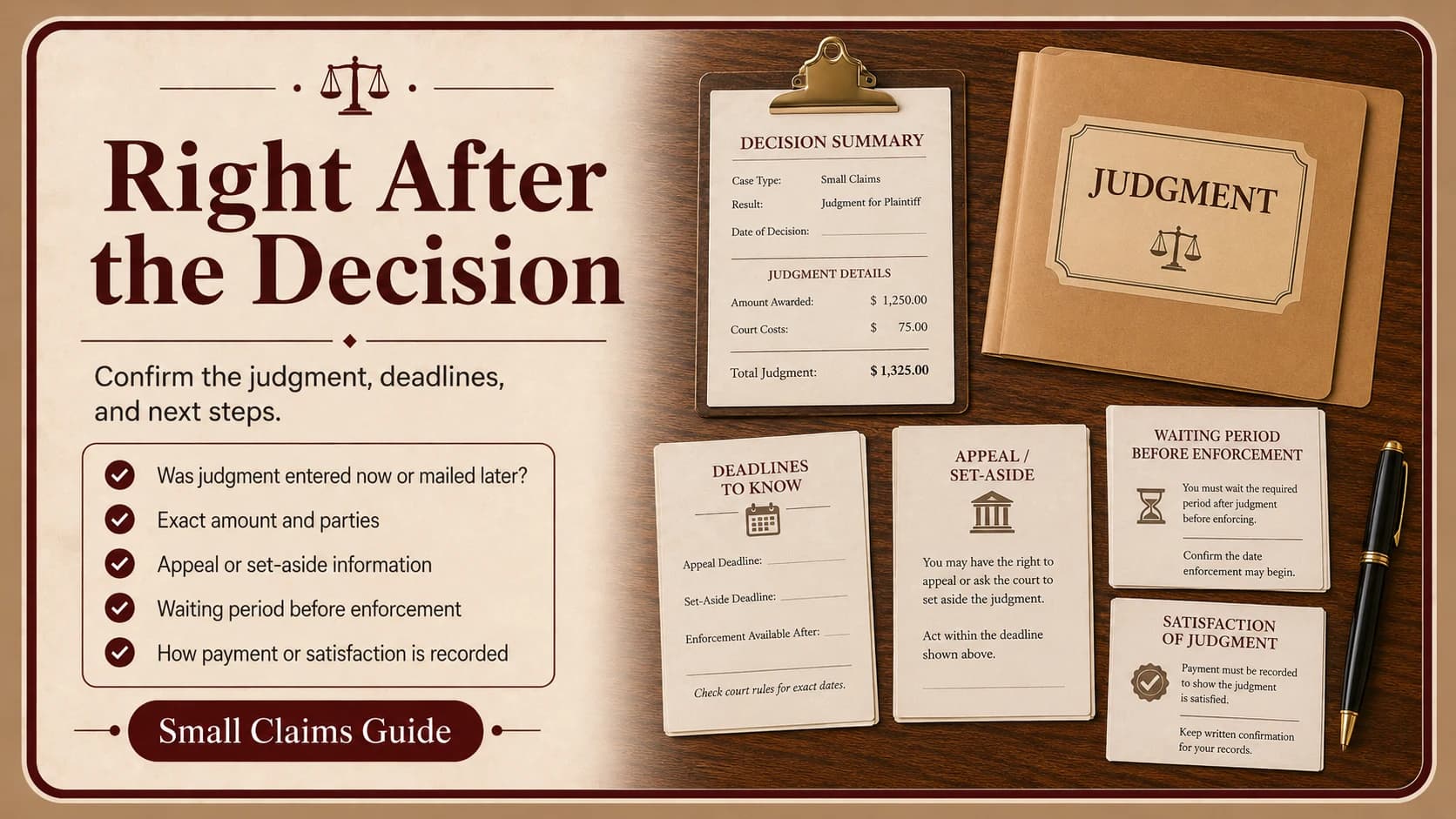
What Happens Right After the Judge Decides a Small Claims Case?
After the judge decides the case, confirm what the decision says, when it becomes effective, how you will receive the written judgment, and what deadlines or next steps apply.
Collecting a Judgment
Treat a money judgment as the start of a separate enforcement workflow when payment is not voluntary
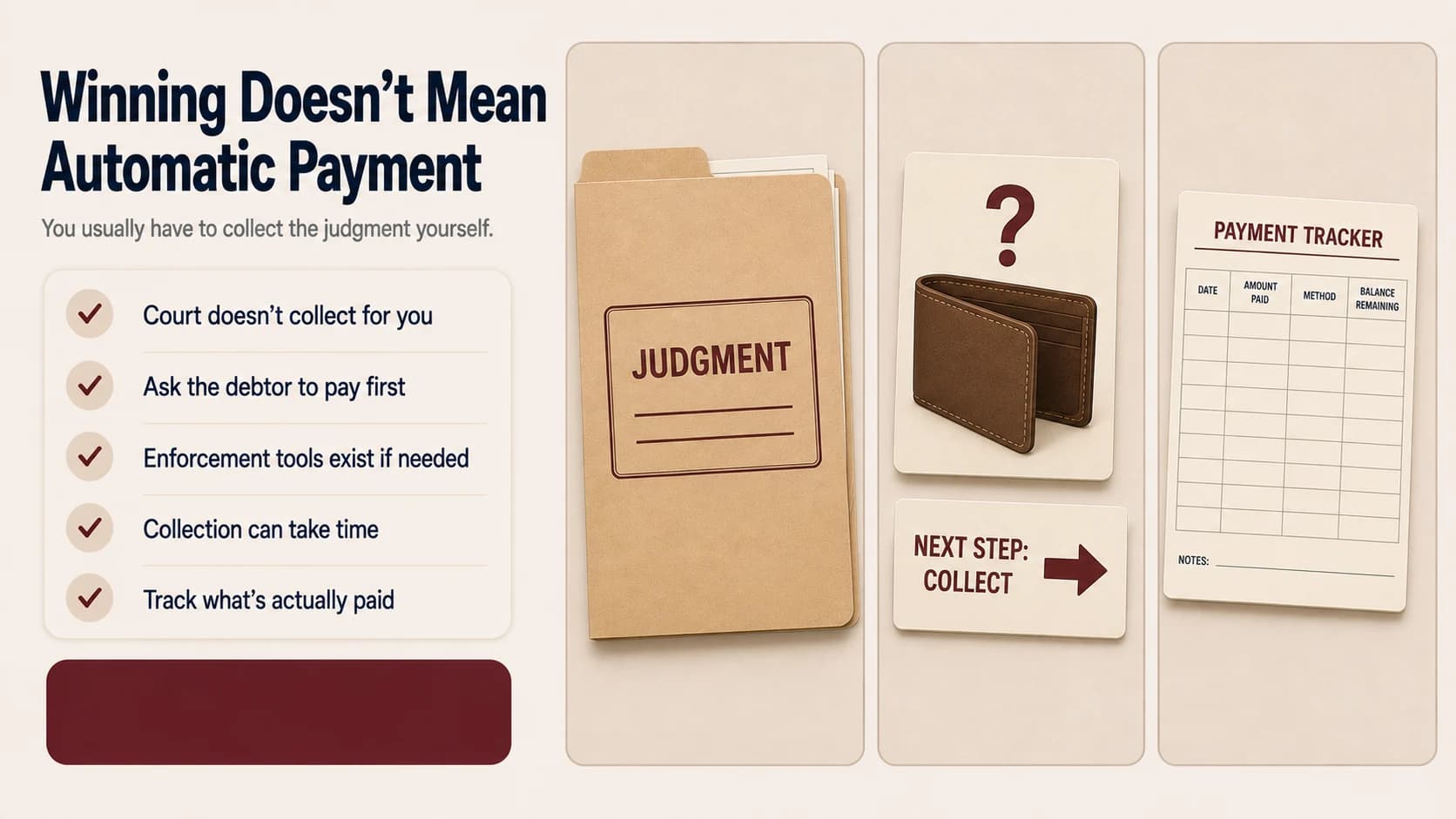
Why Winning Small Claims Does Not Automatically Put Money in Your Account
Winning a money judgment does not automatically move funds into your account.
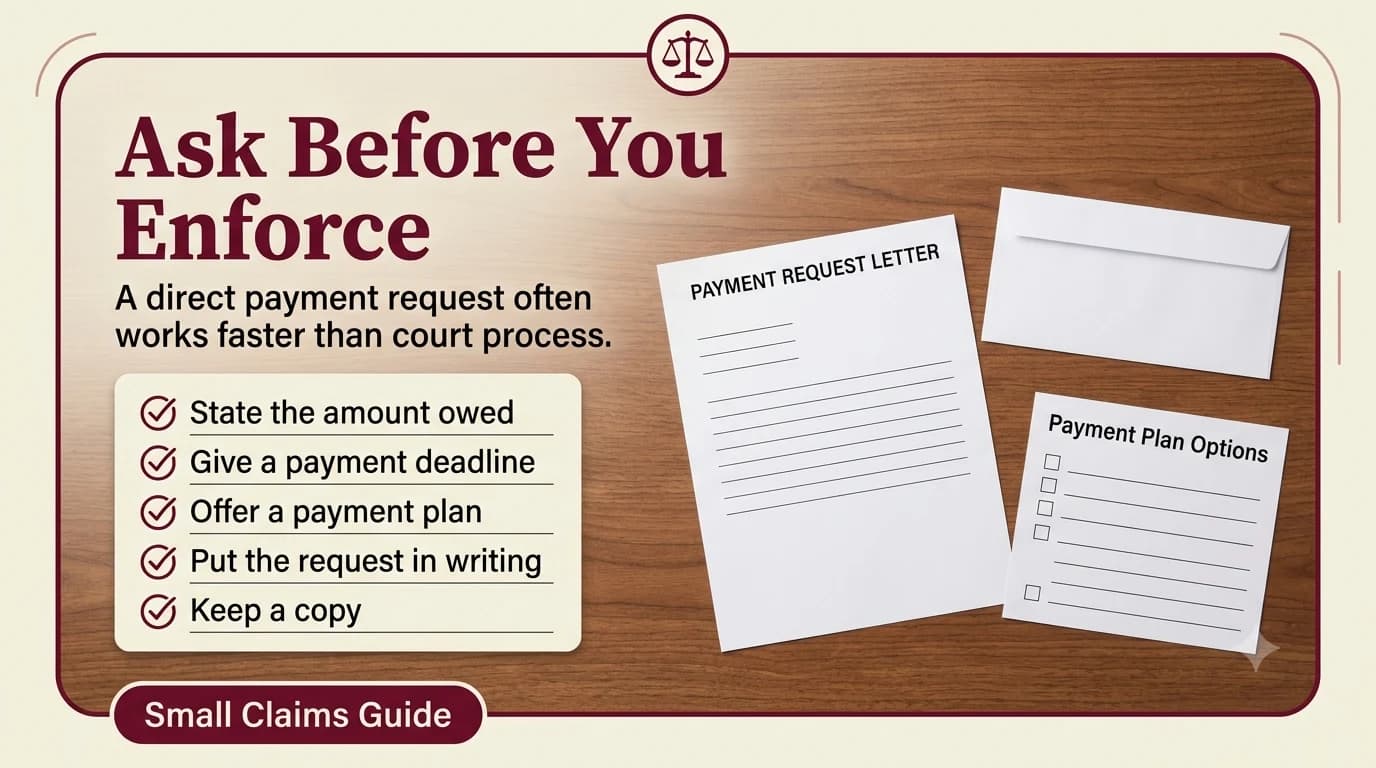
How to Ask the Judgment Debtor to Pay Before Using Enforcement
Before using formal enforcement, a written request for voluntary payment can be the simplest next step.
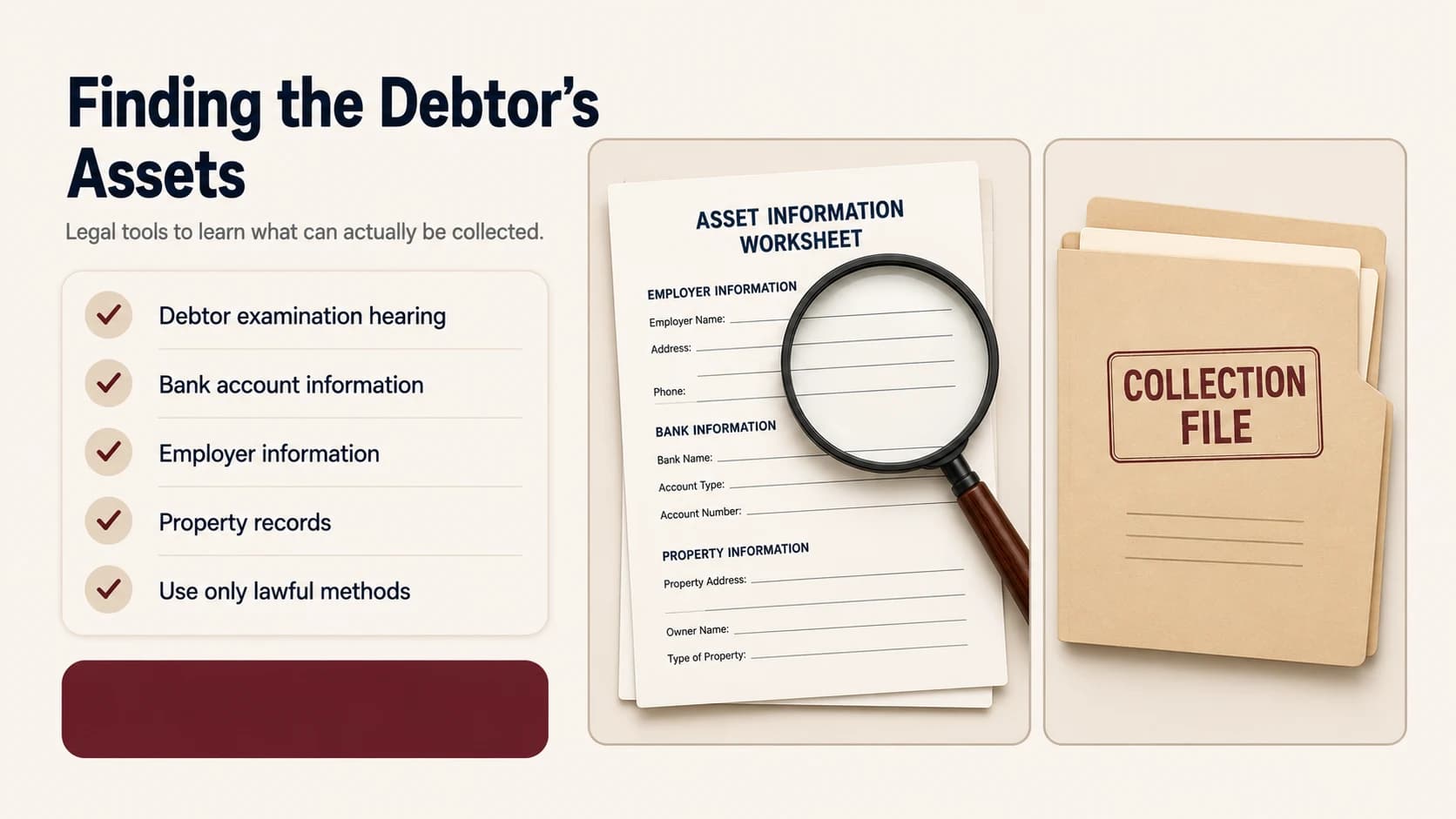
How Judgment Creditors Find Information About Income and Assets
Formal enforcement usually requires useful information about where the debtor’s wages, bank funds, or other reachable property are located.
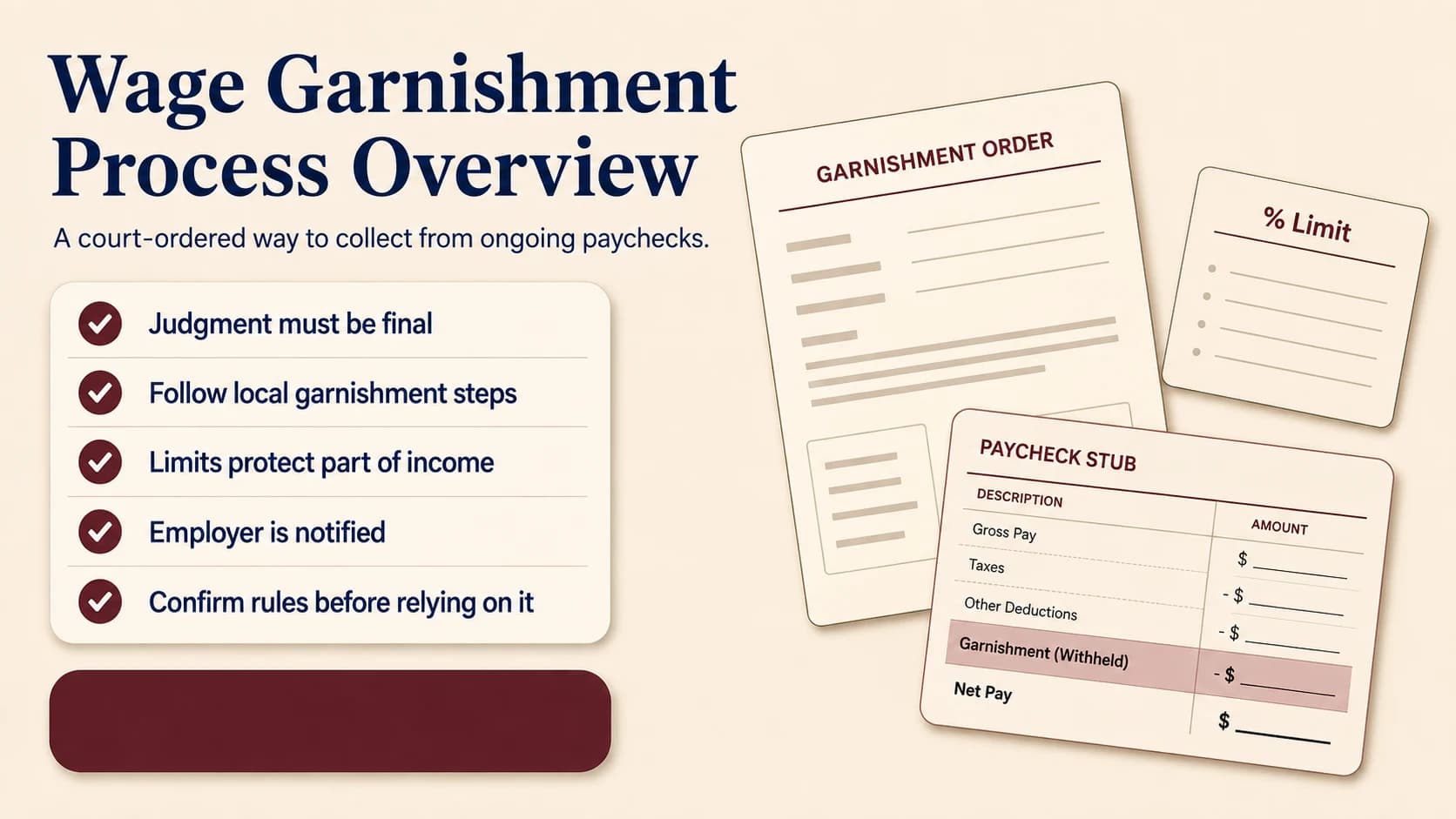
Wage Garnishment After a Small Claims Judgment: Process Overview
Wage garnishment is a post-judgment enforcement process that can direct part of a debtor’s earnings toward the judgment when state law allows it.
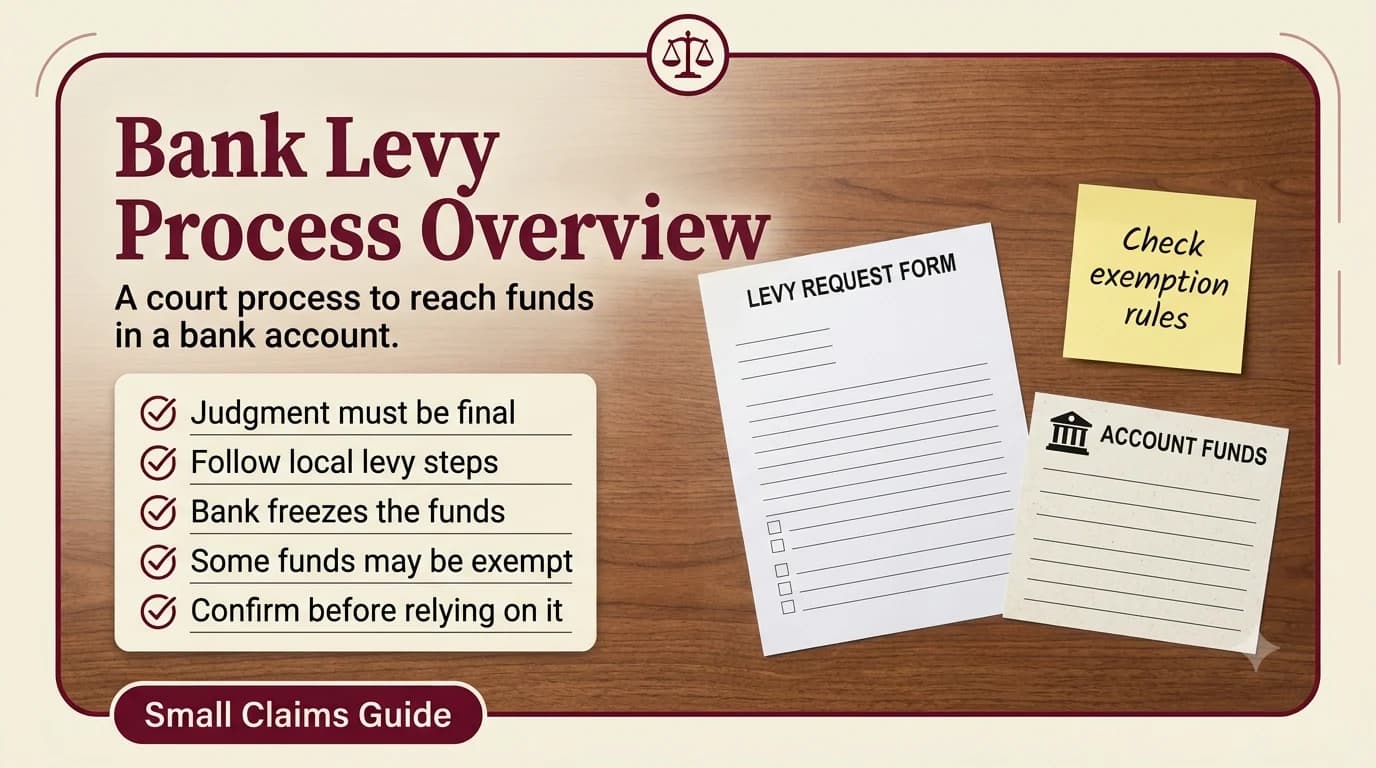
Bank Levy After a Small Claims Judgment: Process Overview
A bank levy is a formal enforcement method used in some jurisdictions to reach non-exempt funds held for the judgment debtor.
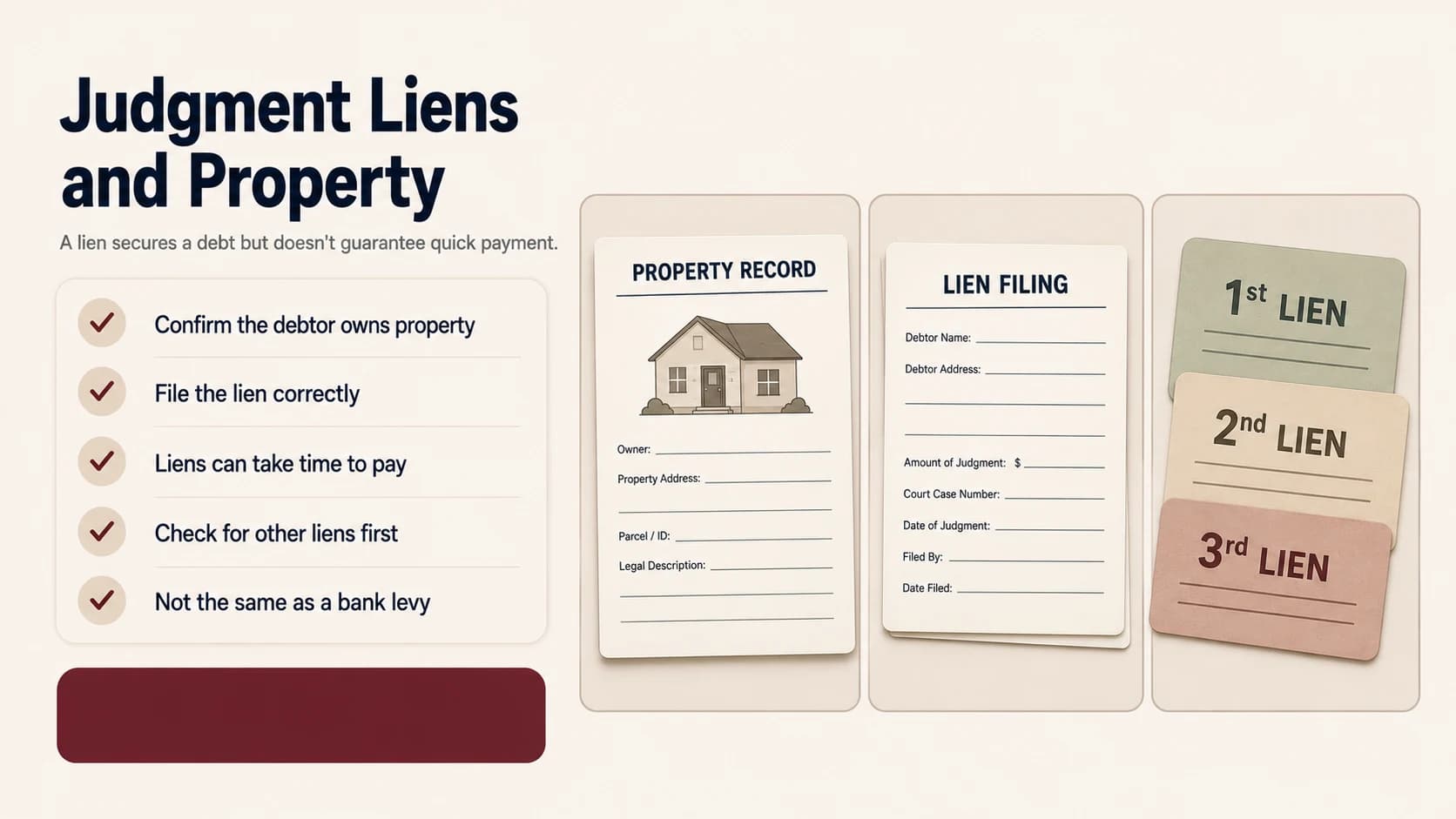
Judgment Liens and Property: What to Check Before You Rely on One
A judgment lien can attach to certain property when the judgment is recorded or filed in the manner required by state law.
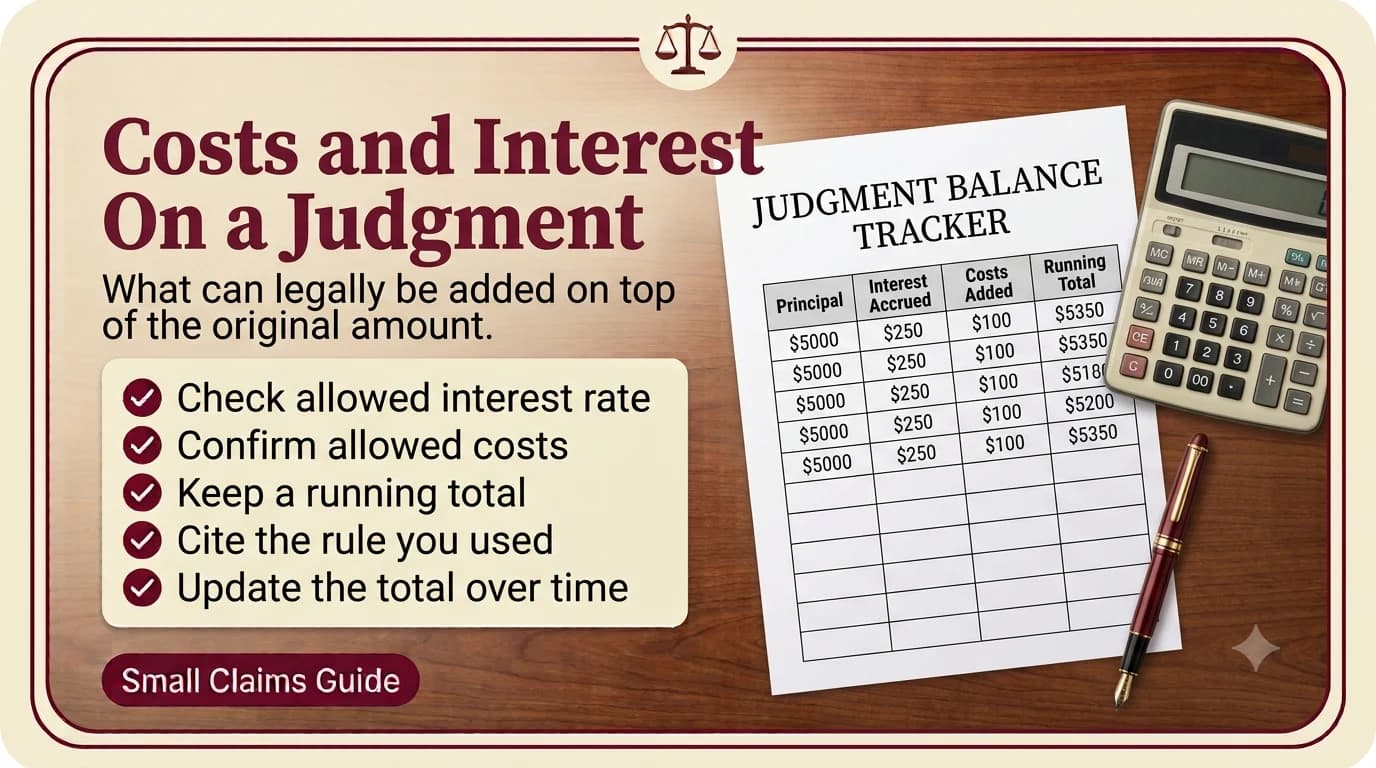
Can Collection Costs or Interest Be Added to a Small Claims Judgment?
Some jurisdictions allow post-judgment interest and certain enforcement costs to be added, but the categories and calculation rules are not universal.
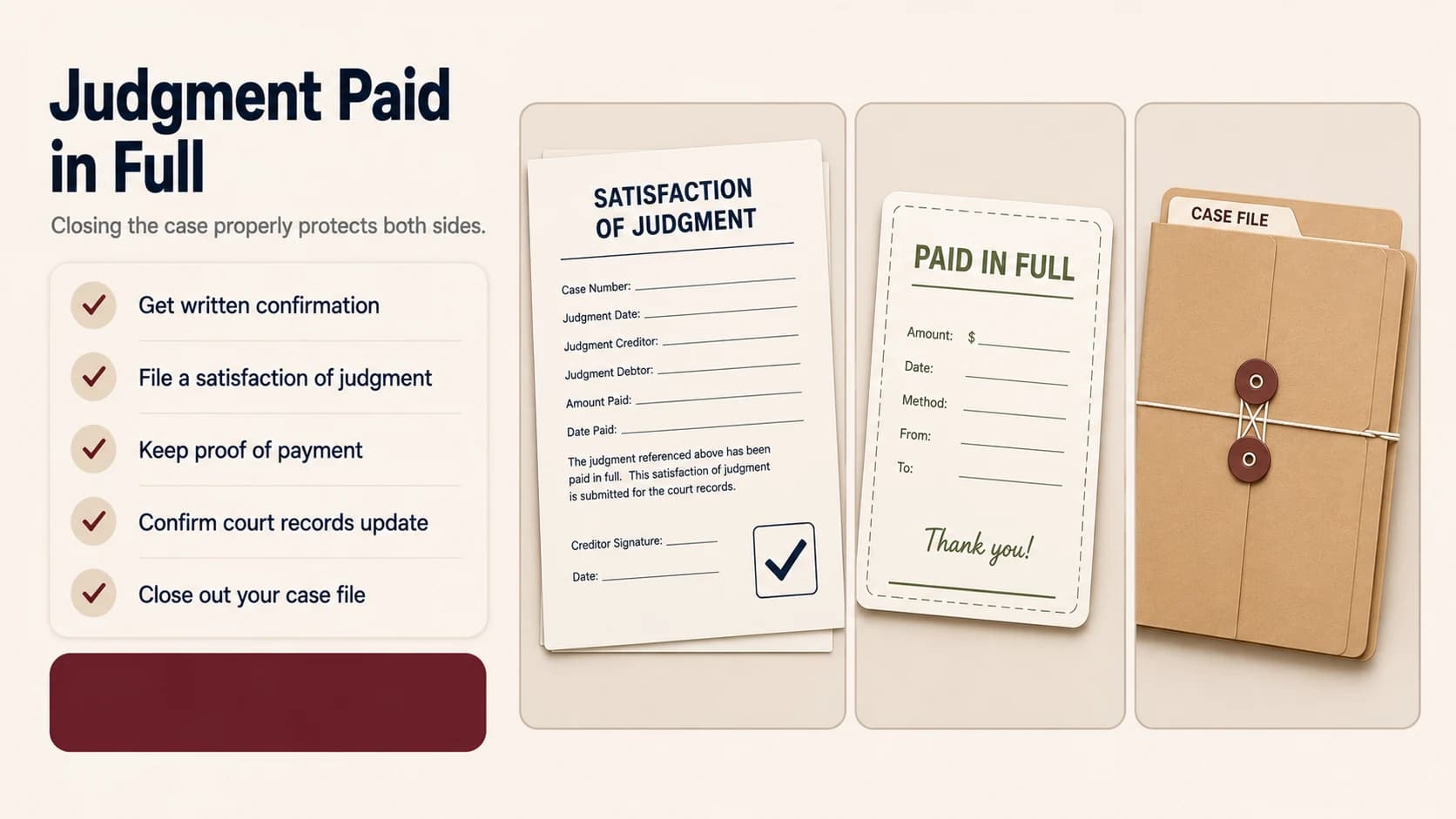
What to Do After a Small Claims Judgment Is Paid in Full
When the judgment has been paid in full, the creditor usually has a duty to acknowledge satisfaction in the manner required by the court or recording system.
Defaults & Appeals
Know what a missed appearance or post-trial challenge can change, and what it cannot
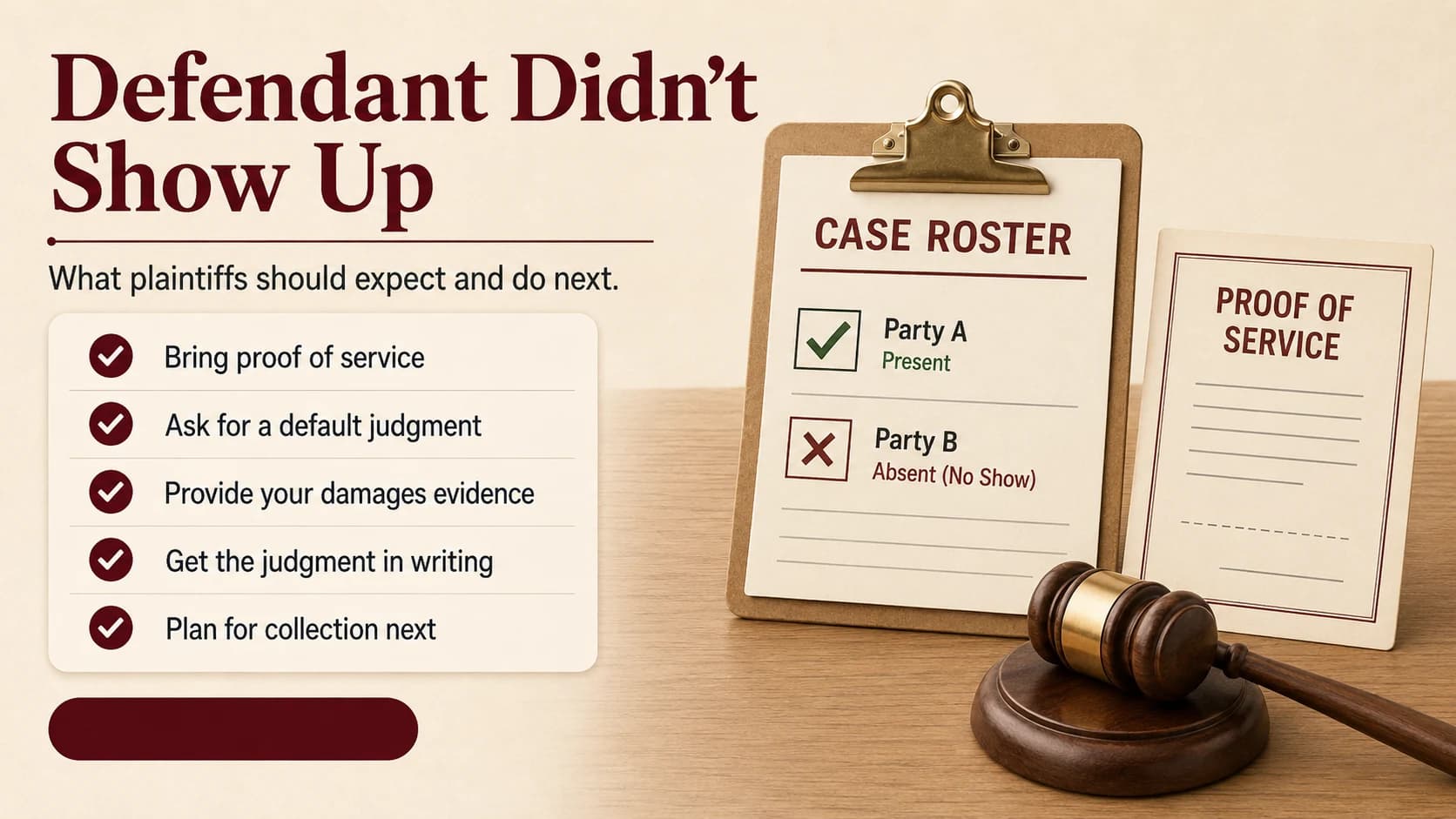
What If the Defendant Does Not Show Up to Small Claims Court?
A defendant’s absence does not automatically mean the plaintiff receives everything requested.
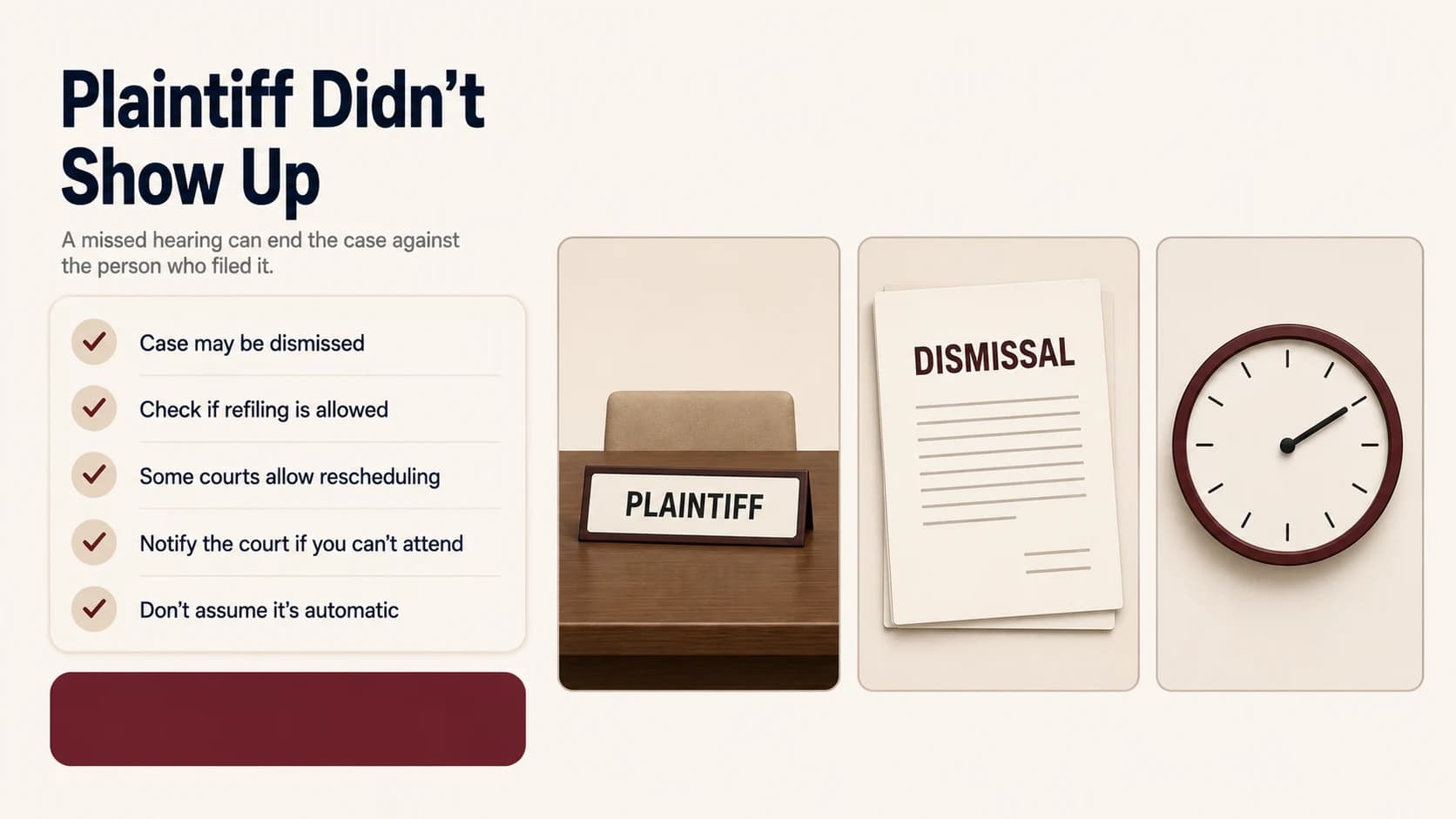
What If the Plaintiff Misses the Small Claims Hearing?
If the plaintiff misses the hearing, the court may dismiss the case, continue it, or take another action allowed by local rules.
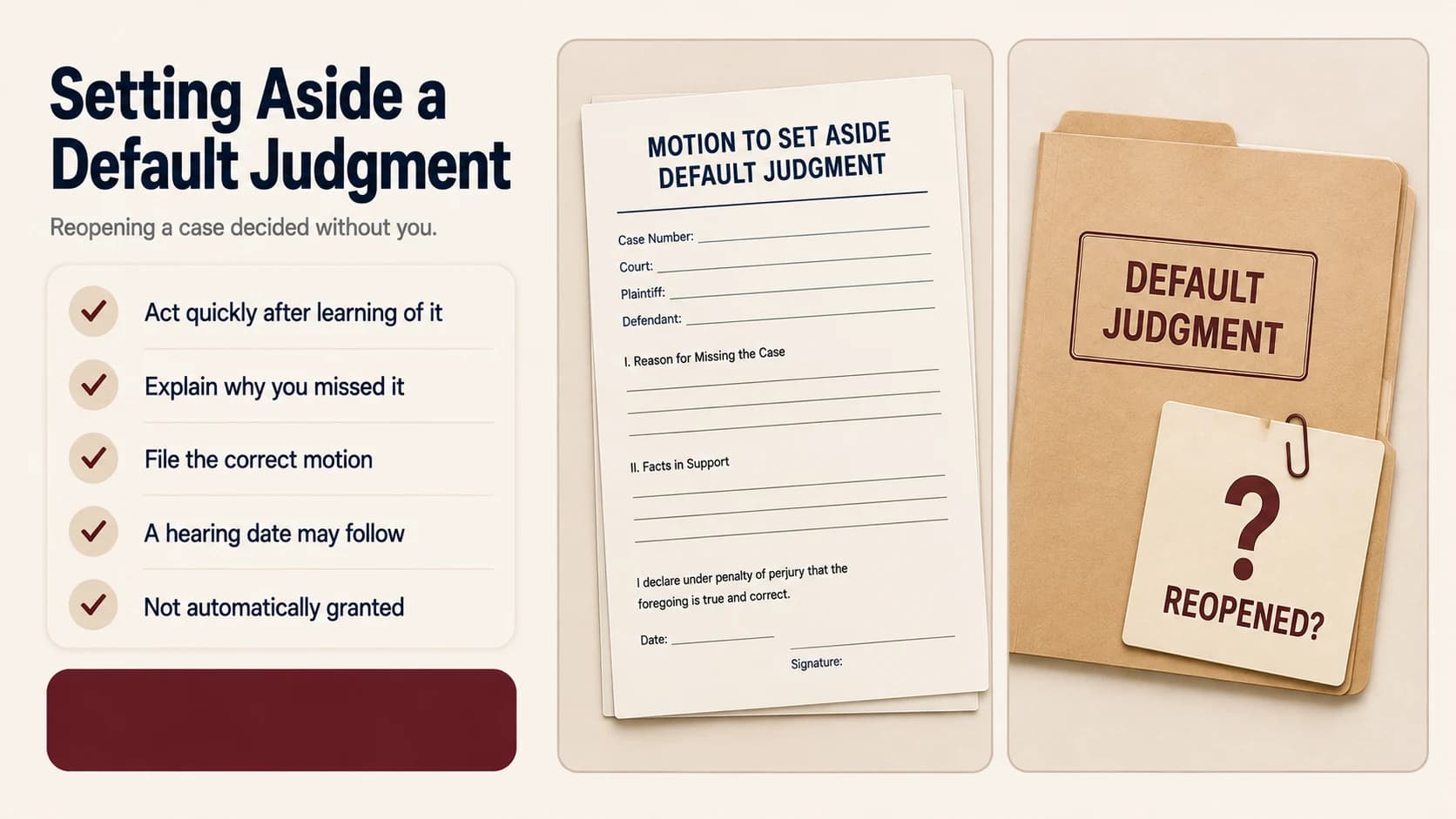
What Does It Mean to Ask to Set Aside a Small Claims Default?
A request to set aside a default asks the court to undo a judgment or default entered when a party did not participate as required.
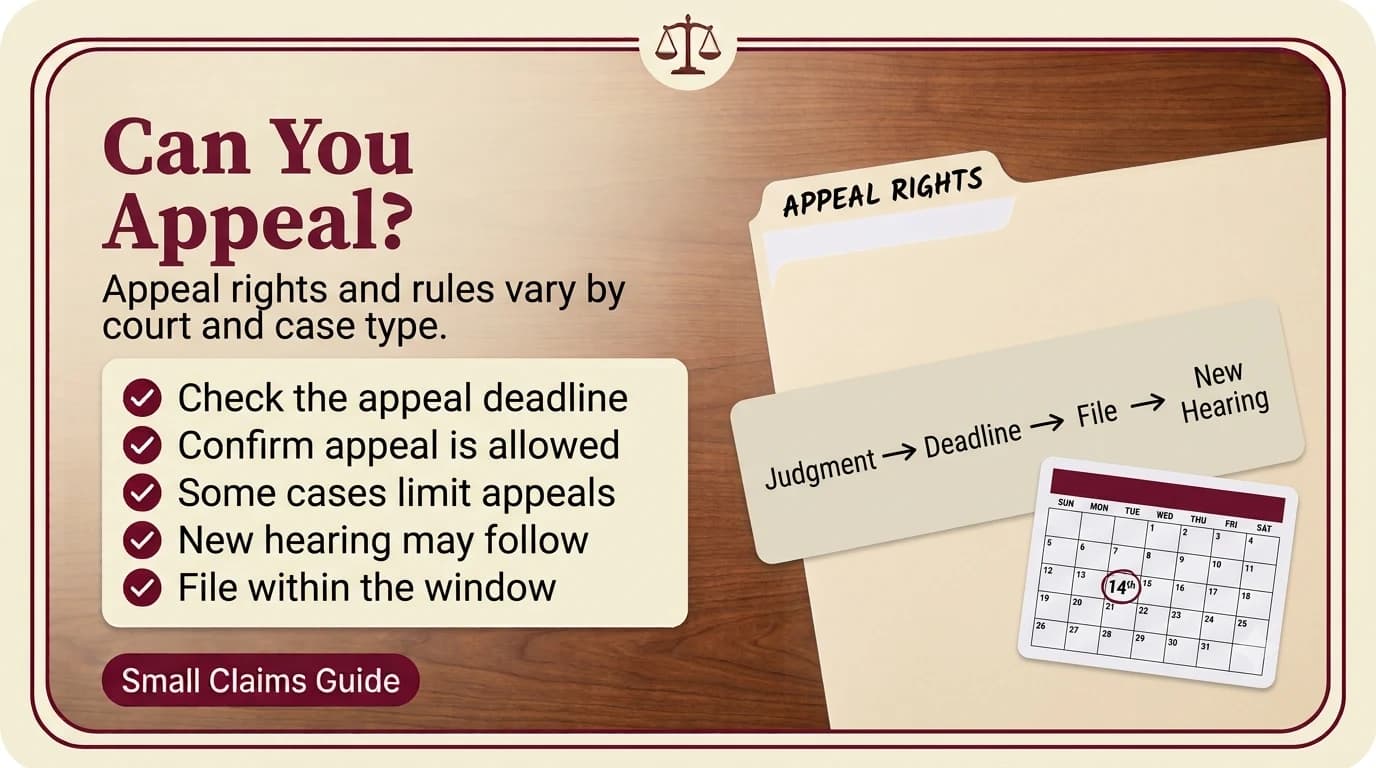
Can a Small Claims Judgment Be Appealed?
Small-claims appeal rights are not uniform; who may appeal, what may be appealed, the deadline, and the form of review depend on the jurisdiction.
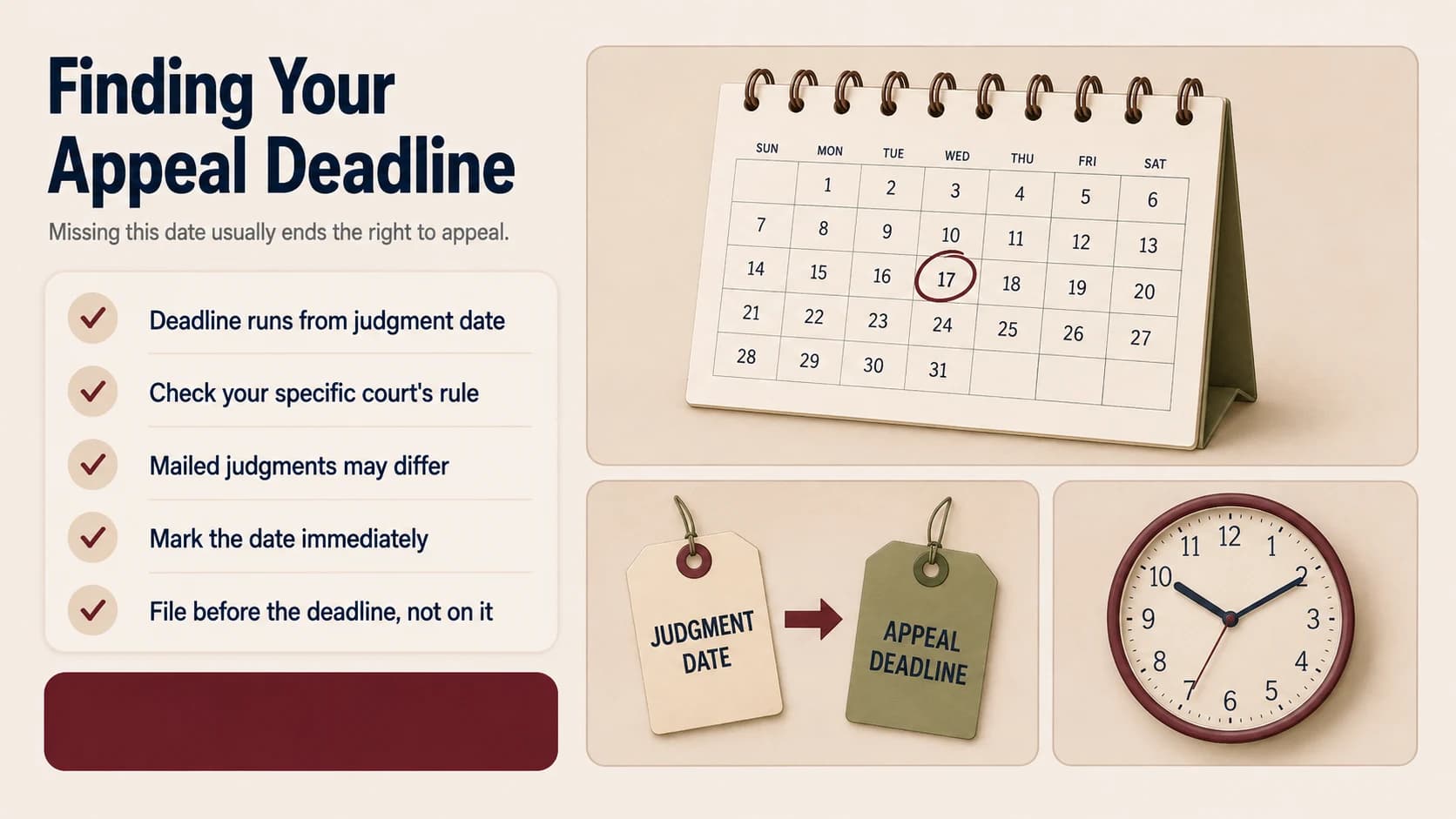
How to Find the Appeal Deadline After a Small Claims Judgment
The appeal deadline usually runs from a specific event such as entry or notice of judgment, and small-claims periods can be short.
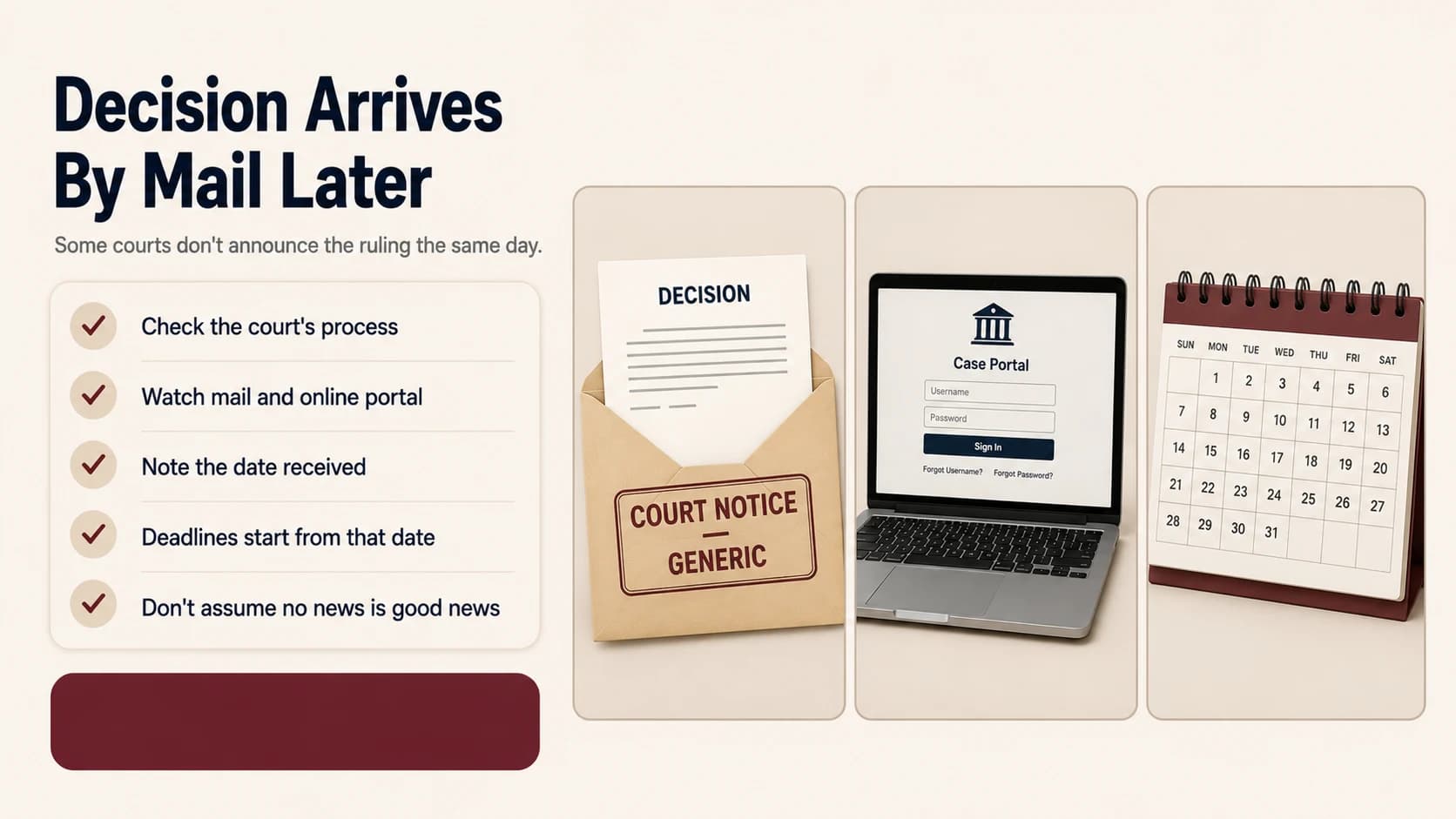
What If the Small Claims Decision Arrives Later by Mail or Online?
Some courts do not announce a final decision at the hearing and instead mail or post it later.
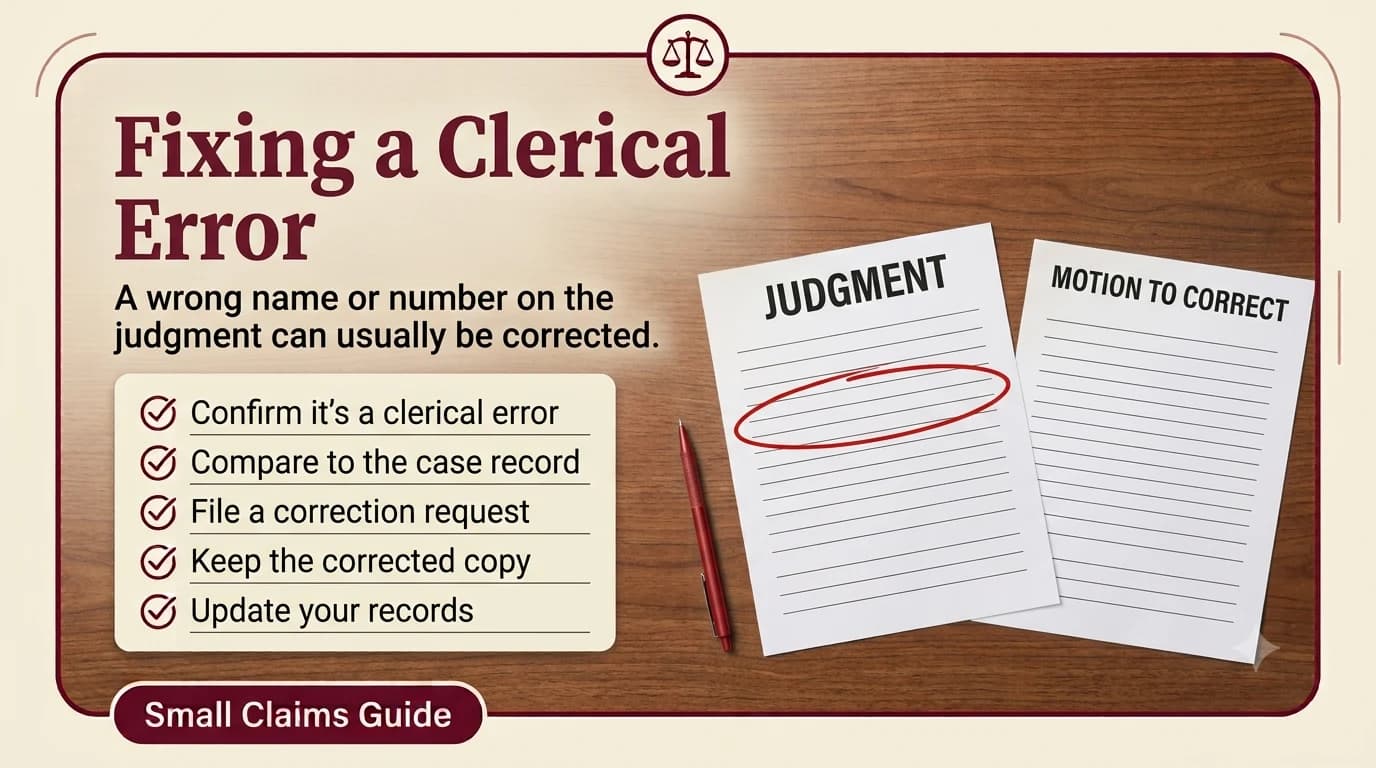
How to Handle a Clerical Error in a Small Claims Judgment
A clerical error is different from disagreement with the judge’s decision.
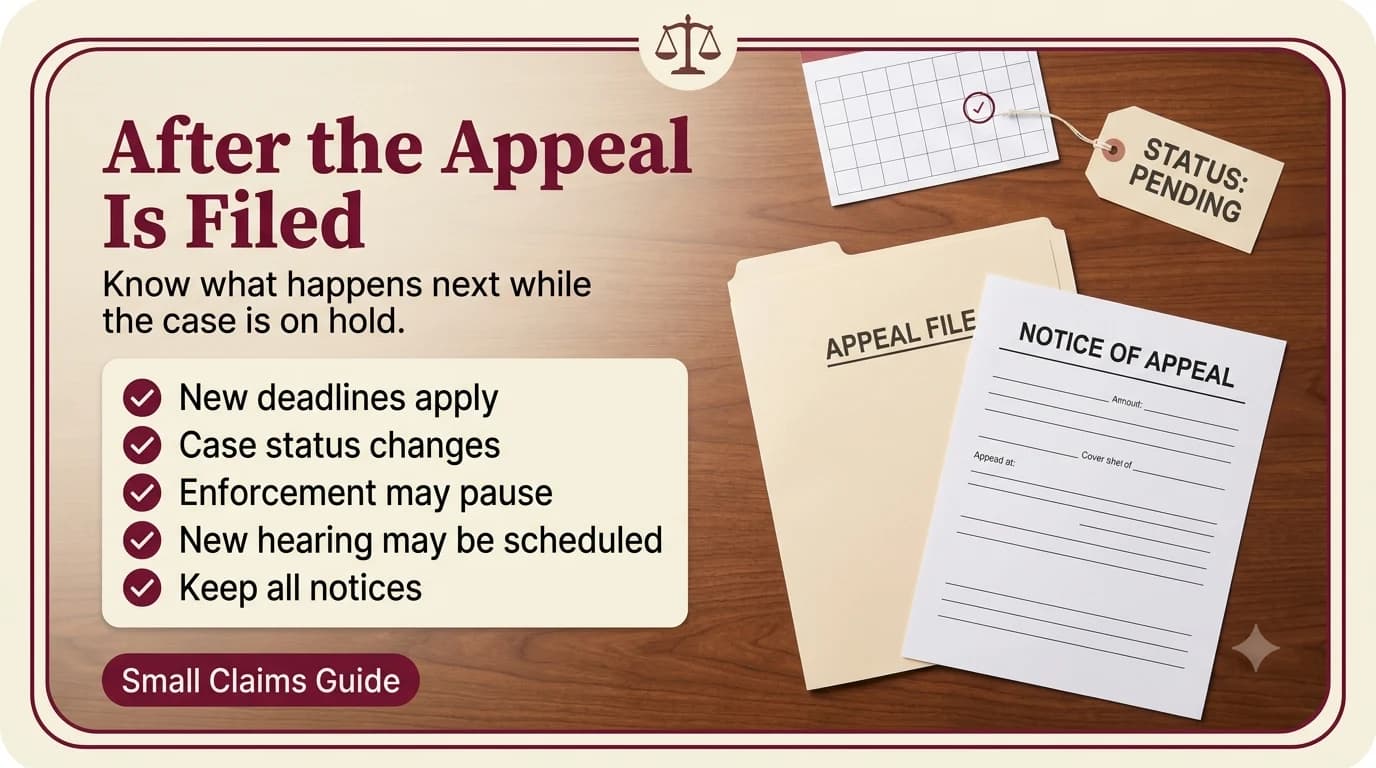
What Happens After a Small Claims Appeal Is Filed?
Filing an appeal starts a separate procedural track with its own acceptance, service, fee, scheduling, record, and possible stay requirements.
If You Are the Defendant
Respond to the papers, build a defense file, and evaluate settlement or counterclaim options
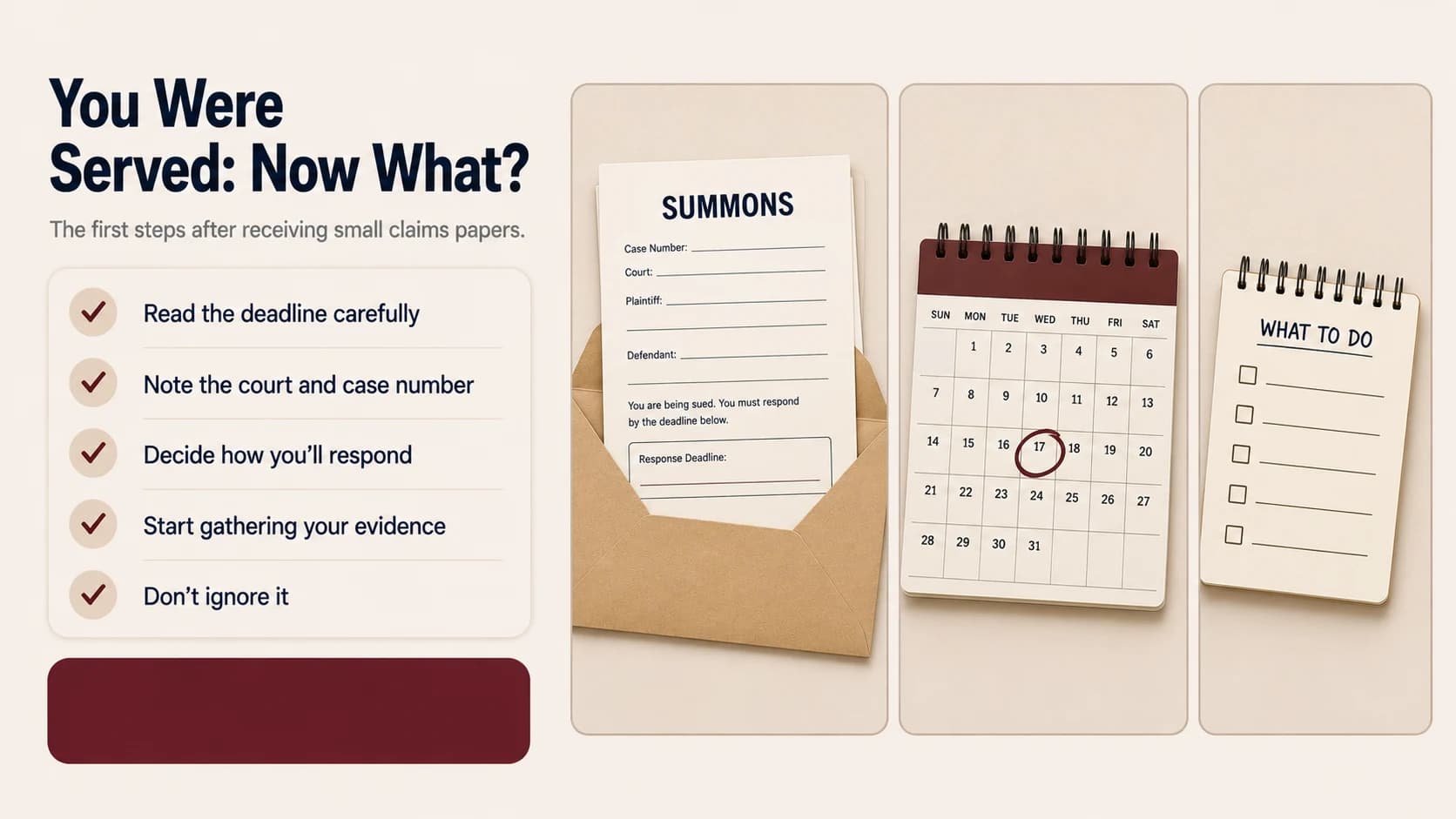
You Were Served With Small Claims Papers: What to Do First
When you are served, first verify the court, case number, hearing date, plaintiff, amount claimed, and response instructions.
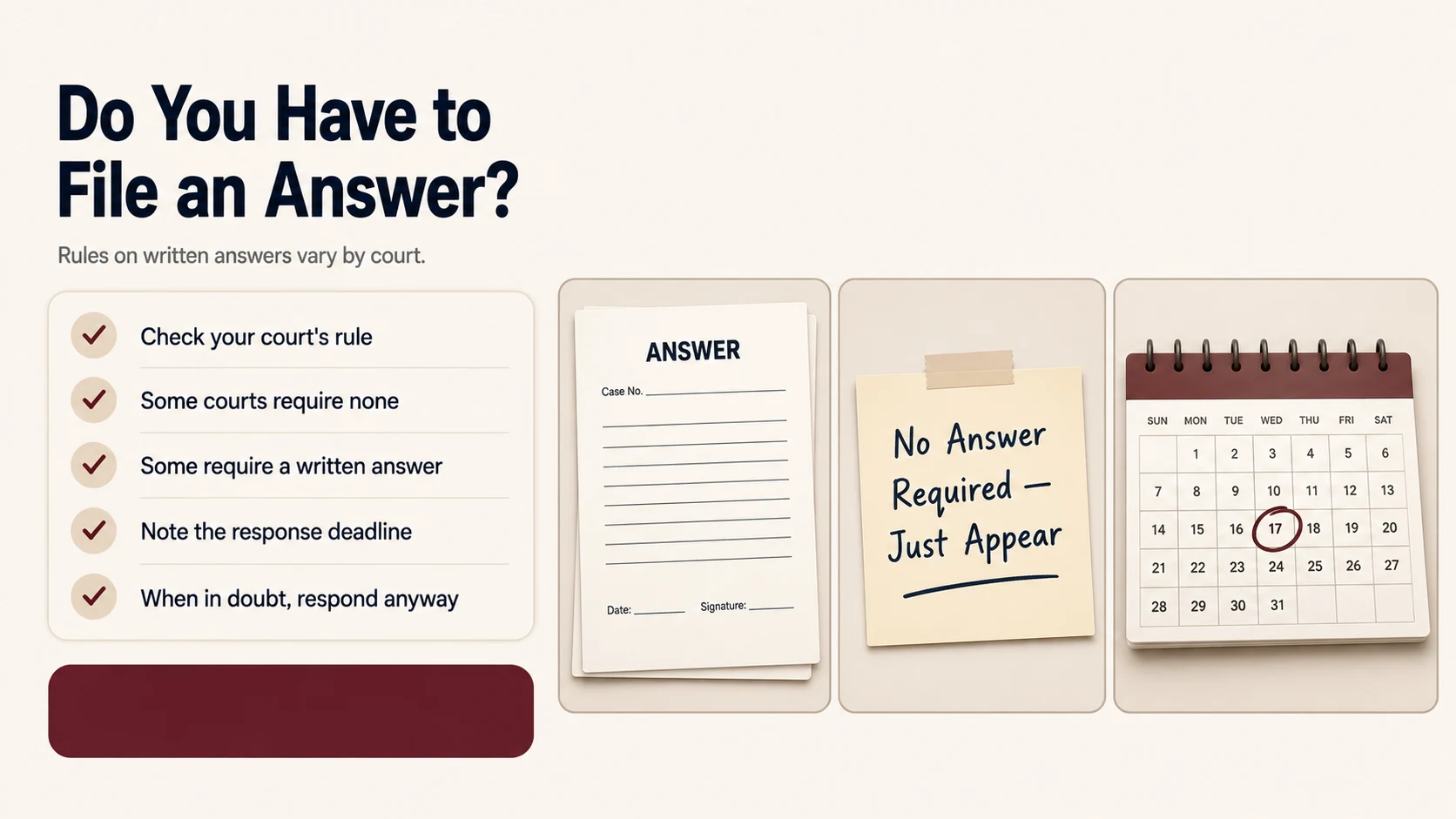
Do Small Claims Defendants Have to File an Answer?
There is no nationwide rule that every small-claims defendant must file a written answer.
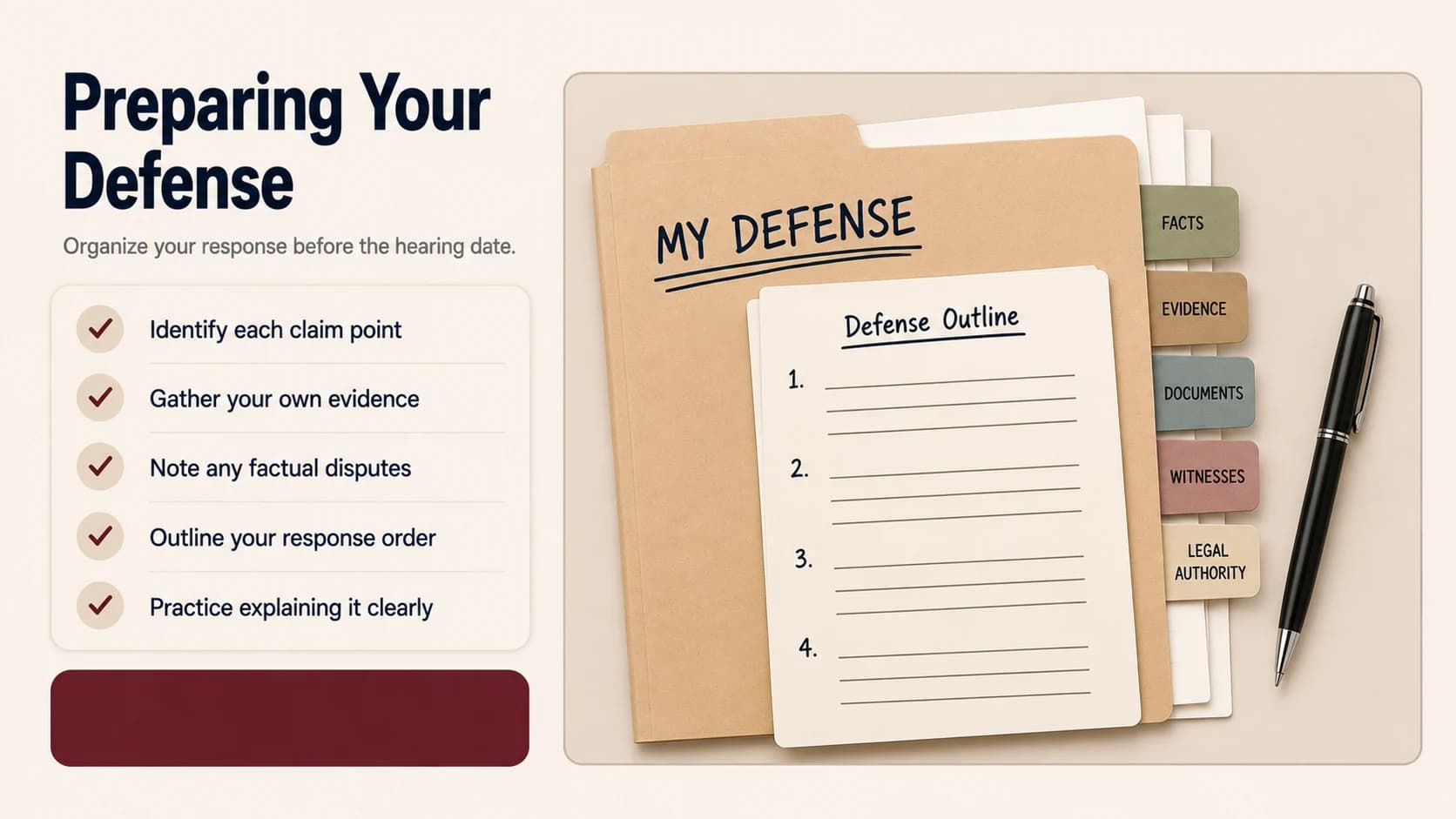
How to Prepare a Defense for a Small Claims Hearing
A defense should answer the plaintiff’s specific claim with facts and evidence.
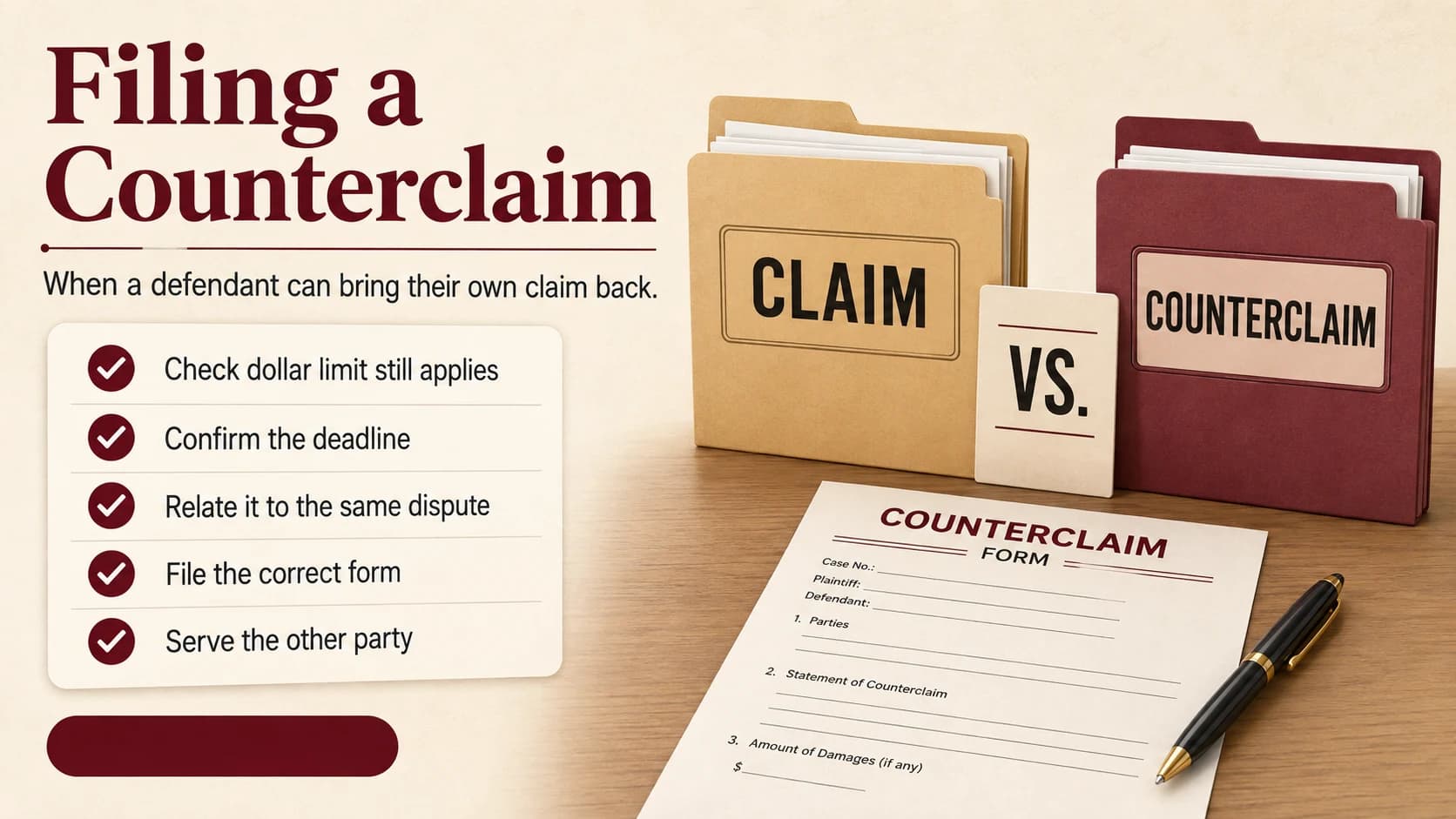
Can You File a Counterclaim in Small Claims Court?
A counterclaim is the defendant’s own claim against the plaintiff.
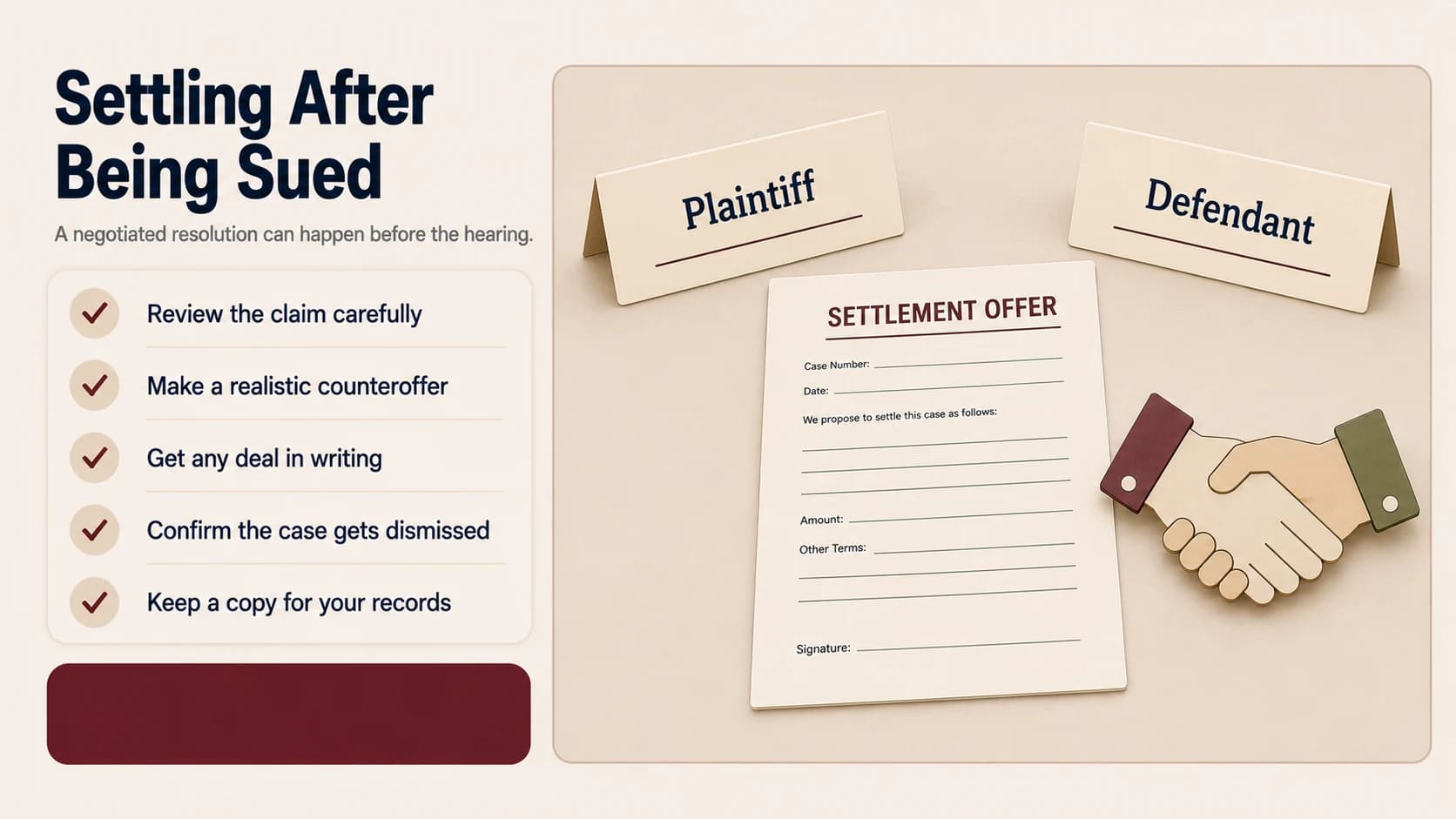
How to Negotiate a Settlement After You Have Been Sued in Small Claims
Being sued does not prevent settlement; the parties can still negotiate terms, but the written agreement and the court case status must be handled clearly.
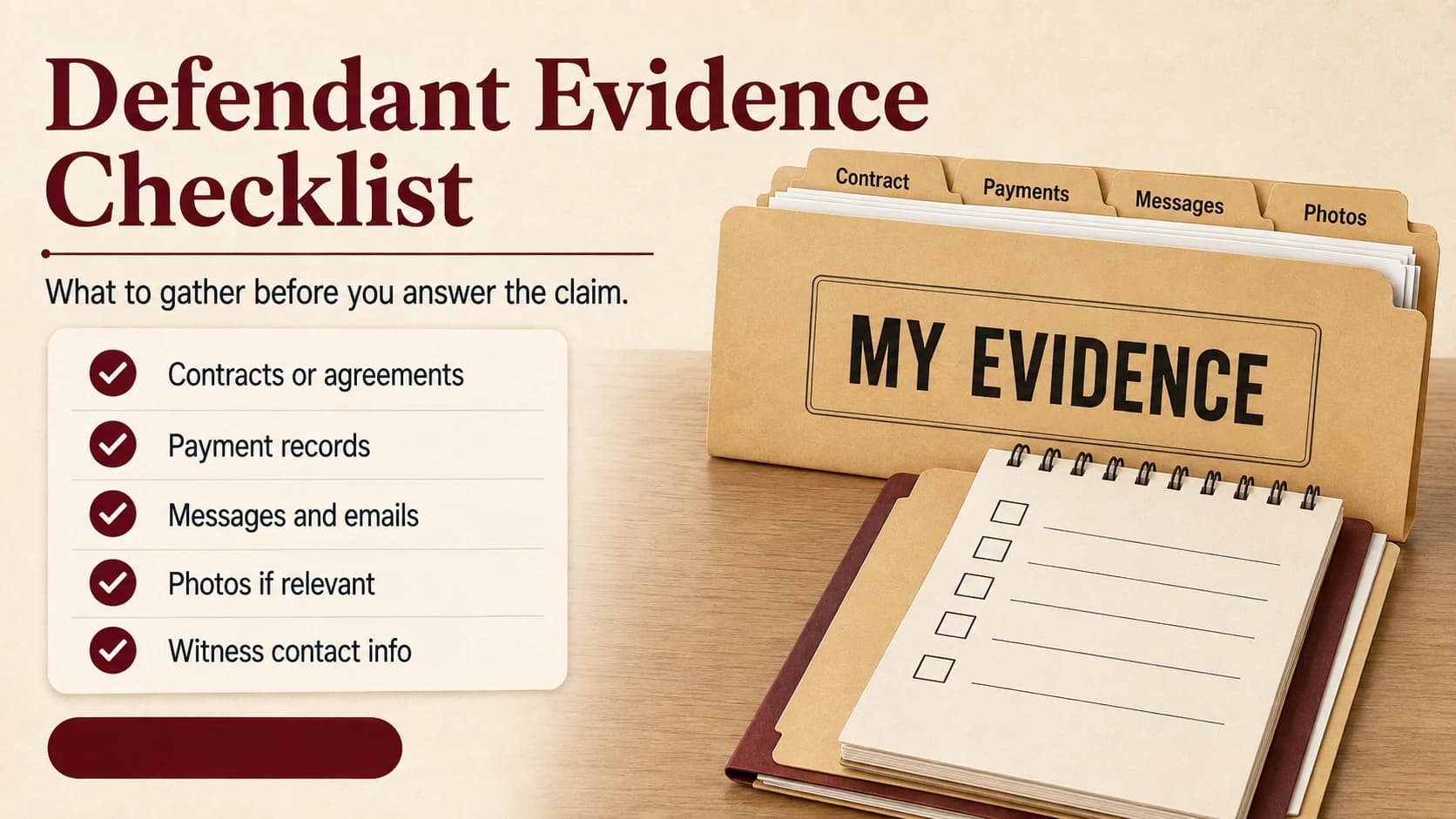
Small Claims Defendant Evidence Checklist
The defendant’s evidence file should be organized around the plaintiff’s allegations.
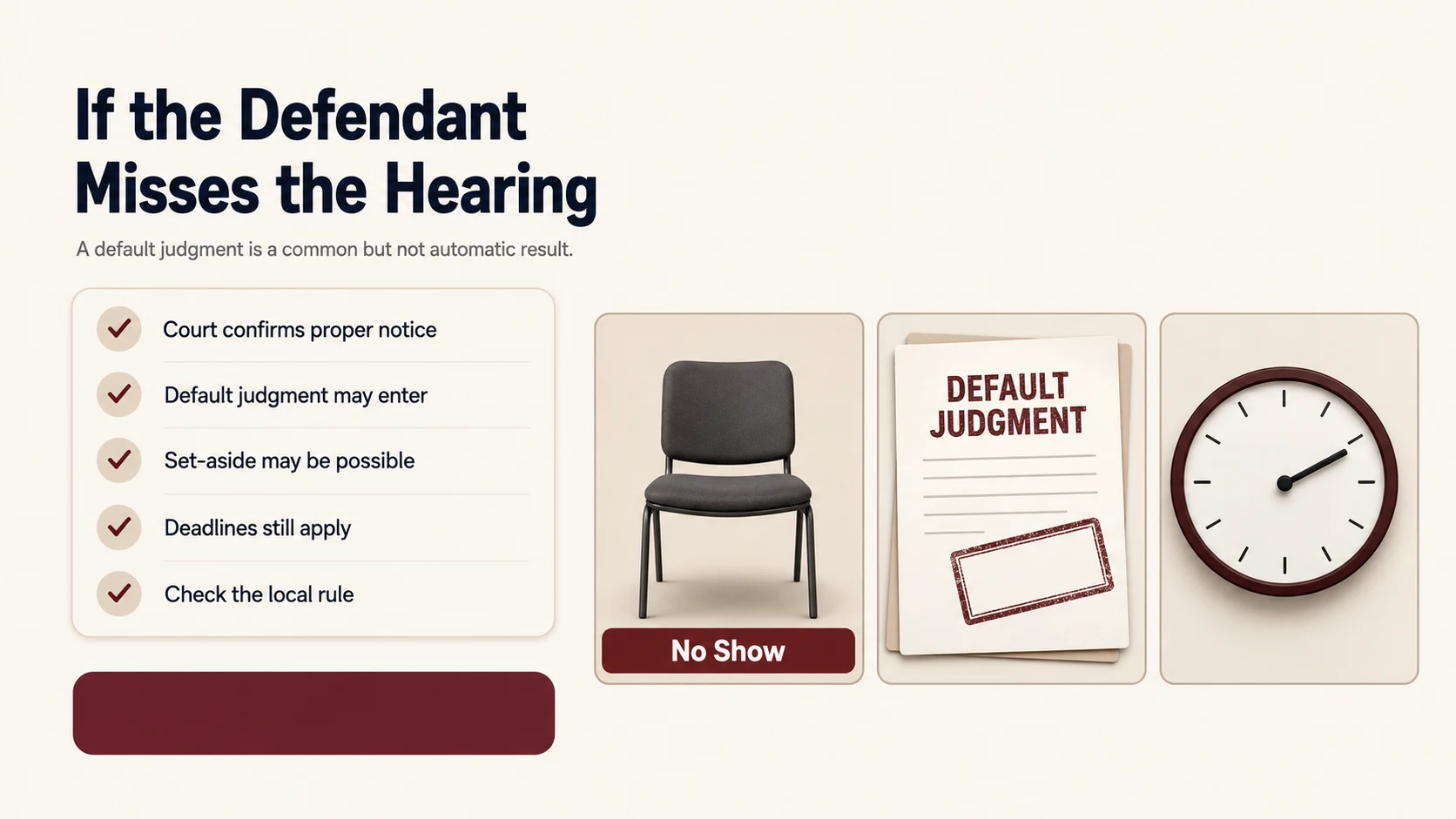
What If a Small Claims Defendant Misses the Hearing?
If you missed the hearing, do not assume the case is over or that nothing can be done.
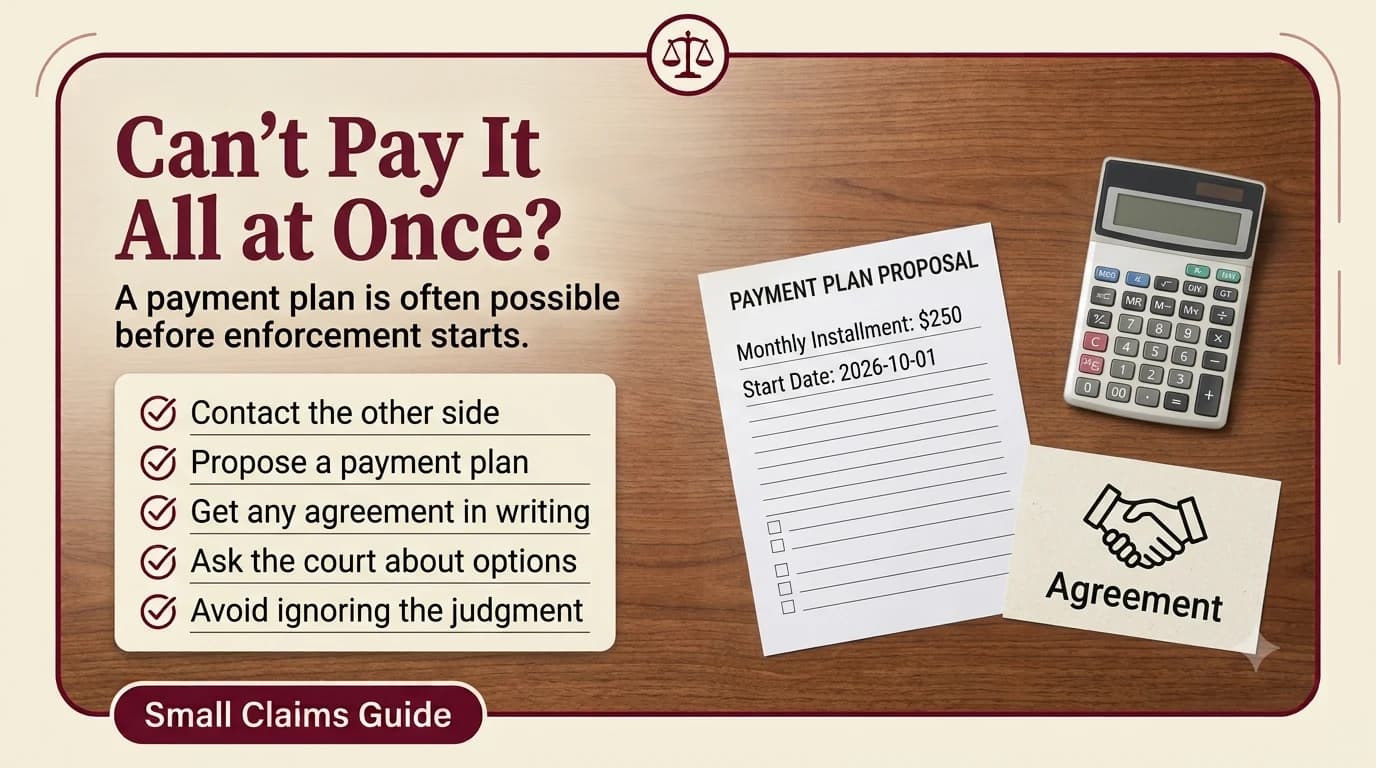
What If You Cannot Pay a Small Claims Judgment All at Once?
If you cannot pay a small-claims judgment in one lump sum, check the current balance, local payment procedures, possible exemptions, and any enforcement notices before proposing installments.